Exercise comparisons
520 comparisons between exercises that people often mix up or swap for each other. Each one shows the differences in a table and tells you when each exercise is the better fit.
Log both exercises in REPS Club
- Your weight and reps from last time are already filled in
- The rest timer starts by itself after every set
- The plan knows the equipment at your gym
 Androidcoming soon
Free to download. Try REPS Pro free for 7 days.
Chest Exercises
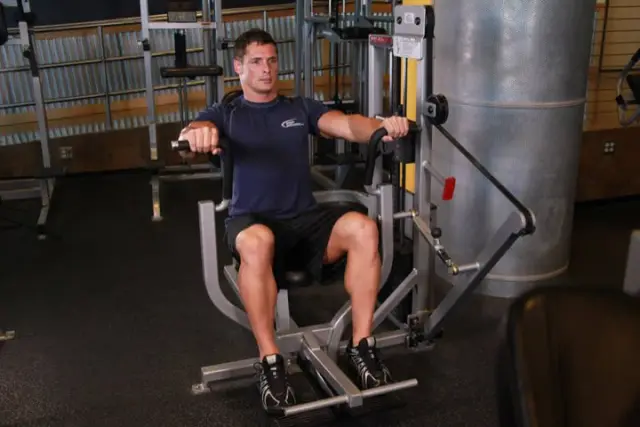 Machine Chest Press vs Bench PressThe Machine Chest Press moves on a fixed path, while the Bench Press makes you stabilize the bar yourself.
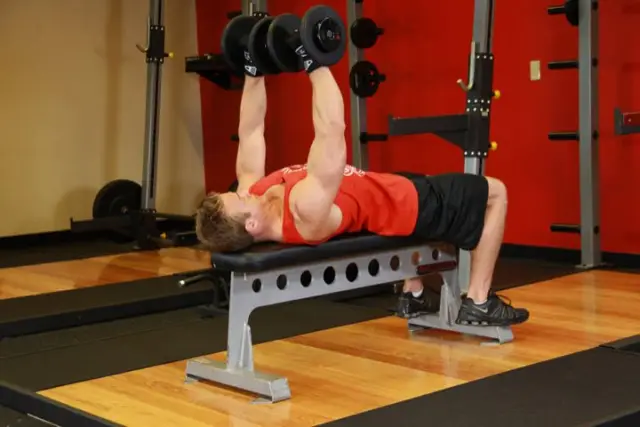 Dumbbell Bench Press vs Bench PressThe Dumbbell Bench Press lets each arm work on its own through a deeper range, and the Bench Press lets you press more weight with one bar.
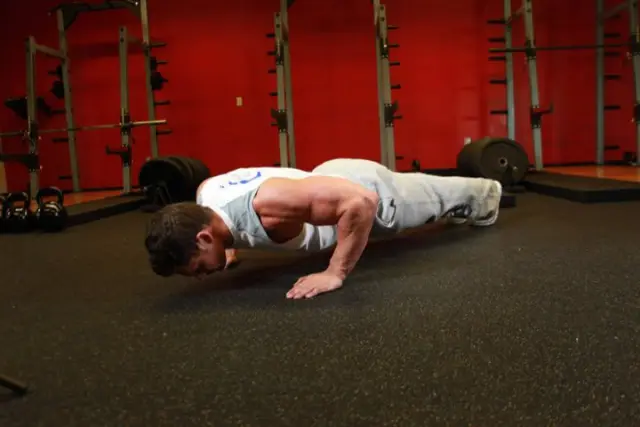 Push-Ups vs Bench PressPush-Ups need no equipment and move only part of your body weight, while the Bench Press lets you choose the load freely.
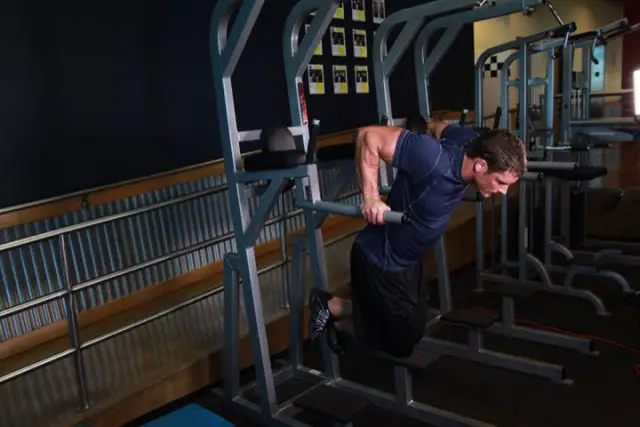 Dips vs Bench PressDips press your body weight up on parallel bars, while the Bench Press presses a barbell off your chest.
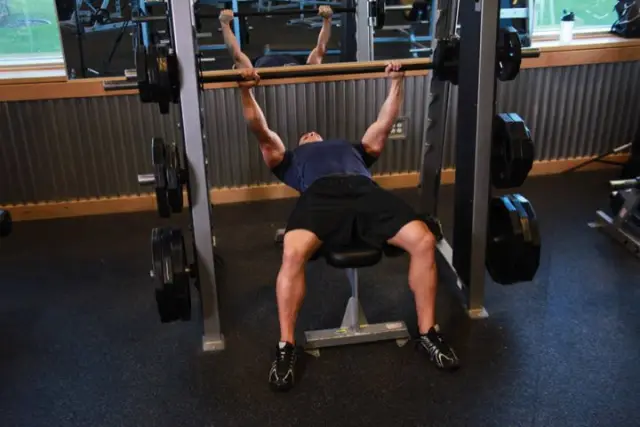 Smith Machine Bench Press vs Bench PressThe Smith Machine Bench Press runs the bar on a fixed track, while the Bench Press makes you keep the bar on course yourself.
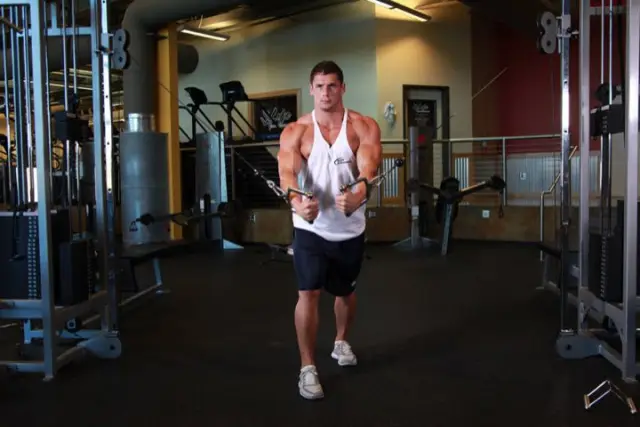 Cable Fly vs Pec Deck FlyYou do the Cable Fly standing and free on the cables, and the Pec Deck Fly seated on a fixed path.
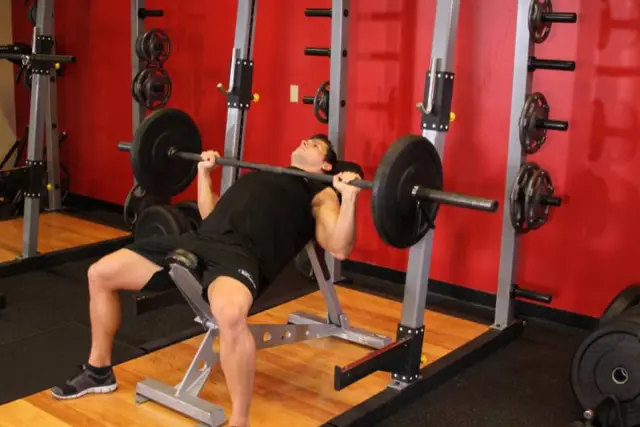 Incline Bench Press vs Bench PressYou press the Incline Bench Press on an angled bench, which favors your upper chest and front delts, and you press the Bench Press flat with more weight.Push-Ups vs Incline Push-UpsPush-Ups keep your hands and feet at the same height, while Incline Push-Ups put your hands on a raised surface, which makes the exercise easier.Push-Ups vs Decline Push-UpsPush-Ups keep your hands and feet at the same height, while Decline Push-Ups raise your feet, which shifts more load to your upper chest and front delts.Push-Ups vs Diamond Push-UpsPush-Ups use a shoulder-width hand position and spread the work over your chest, triceps and front delts, while Diamond Push-Ups bring your hands together under your chest and put more work on your triceps.Push-Ups vs Wide Push-UpsPush-Ups use a hand position just outside your shoulders, while Wide Push-Ups place your hands clearly wider, which puts more focus on your chest and less on your triceps.Push-Ups vs Suspended Push-UpPush-Ups keep your hands on the floor, while the Suspended Push-Up puts your hands in straps that move freely, so your core and shoulders must work harder.Push-Ups vs Bench DipsPush-Ups train your chest, triceps and front delts with your hands under your shoulders, while Bench Dips put your hands behind you on a bench and focus on your triceps.Push-Ups vs Plyo Push-UpsPush-Ups move at a controlled speed, while Plyo Push-Ups push so hard that your hands leave the floor and train explosive power.
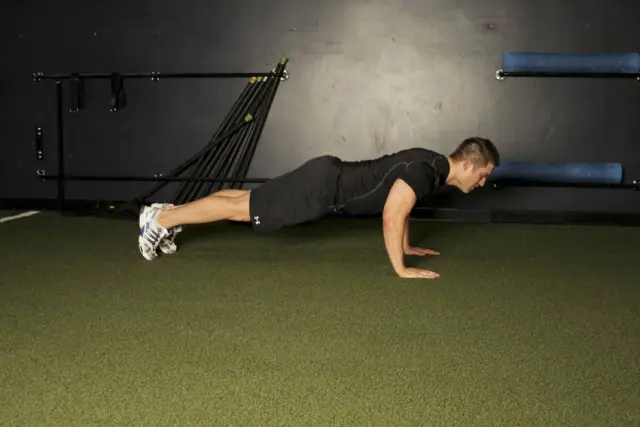 Plyo Push-Ups vs Medicine Ball Chest PassPlyo Push-Ups launch your body off the floor, while the Medicine Ball Chest Pass throws a ball away from your chest.
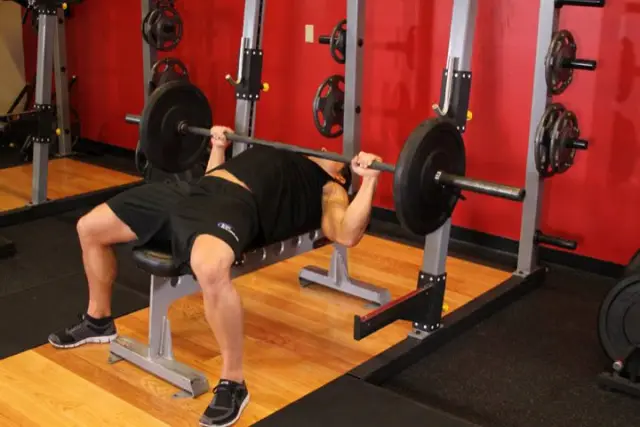 Bench Press vs Decline Bench PressThe Bench Press is flat and trains your whole chest, while the Decline Bench Press puts your head below your hips and shifts the work to your lower chest and triceps.Bench Press vs Floor PressIn the Bench Press you lie on a bench and the bar goes down to your chest, while in the Floor Press you lie on the floor and the floor stops your elbows.Bench Press vs Wide-Grip Bench PressThe Bench Press uses a grip a little wider than your shoulders, while the Wide-Grip Bench Press puts your hands clearly wider on the bar.Bench Press vs Seated Cable Chest PressThe Bench Press has you press a heavy bar that you must balance, while the Seated Cable Chest Press has you press cable handles with steady resistance.Bench Press vs Resistance Band Bench PressThe Bench Press uses plates on a barbell, while the Resistance Band Bench Press uses the pull of a band that gets harder as you press up.Bench Press vs Reverse-Grip Bench PressThe Bench Press uses an overhand grip, while the Reverse-Grip Bench Press uses an underhand grip with your palms facing you.Bench Press vs Powerlifting Bench PressThe Bench Press is the style most people use in the gym, while the Powerlifting Bench Press adds a tight upper-back arch, leg drive and a pause on the chest.Bench Press vs Bench Press with ChainsThe Bench Press keeps the weight the same all the way up, while the Bench Press with Chains adds chains so the load grows as you press.Dumbbell Bench Press vs Decline Dumbbell Bench PressThe Dumbbell Bench Press is on a flat bench and trains your whole chest, while the Decline Dumbbell Bench Press uses a decline bench and puts more work on your lower chest.Dumbbell Bench Press vs Neutral-Grip Dumbbell Bench PressIn the Dumbbell Bench Press your palms face forward or slightly in, while in the Neutral-Grip Dumbbell Bench Press your palms face each other.Dumbbell Bench Press vs Seated Cable Chest PressThe Dumbbell Bench Press has you balance two free weights, while the Seated Cable Chest Press has you push cable handles with steady tension.Dumbbell Bench Press vs One-Arm Dumbbell Bench PressThe Dumbbell Bench Press has you press with both arms at once, while the One-Arm Dumbbell Bench Press has you press one dumbbell with one arm and hold your trunk against the tilt.Dumbbell Bench Press vs Dumbbell Floor PressThe Dumbbell Bench Press is on a bench with a long range at the bottom, while the Dumbbell Floor Press is on the floor and the floor stops your elbows.
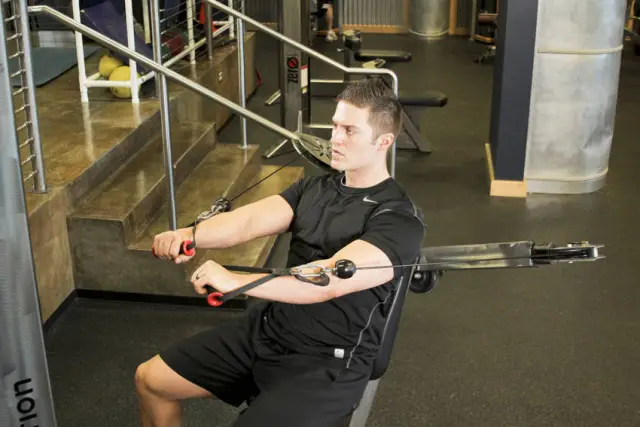 Seated Cable Chest Press vs Standing Cable Chest PressIn the Seated Cable Chest Press you sit with your back on a pad, while in the Standing Cable Chest Press you stand and press the handles forward.
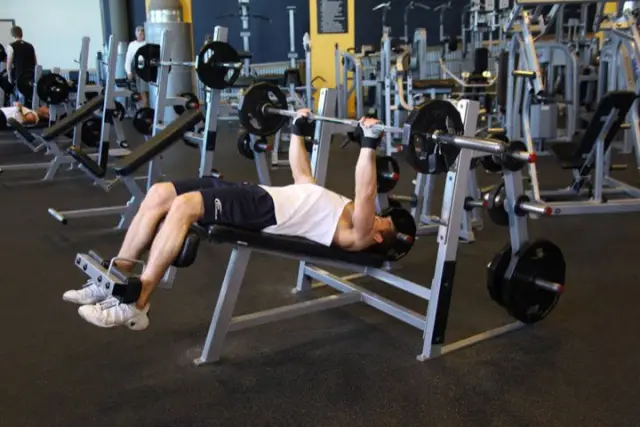 Decline Bench Press vs Decline Dumbbell Bench PressThe Decline Bench Press uses a barbell on a decline bench, while the Decline Dumbbell Bench Press uses two dumbbells.Decline Bench Press vs Smith Machine Decline PressThe Decline Bench Press uses a free barbell, while the Smith Machine Decline Press uses a bar that runs on a fixed path.Decline Bench Press vs Decline Machine Chest PressThe Decline Bench Press has you balance a barbell, while the Decline Machine Chest Press is a seated machine with handles that move downward on a set path.Cable Fly vs Dumbbell FlyThe Cable Fly keeps tension on your chest through the whole arc, while the Dumbbell Fly loads your chest most in the stretch.
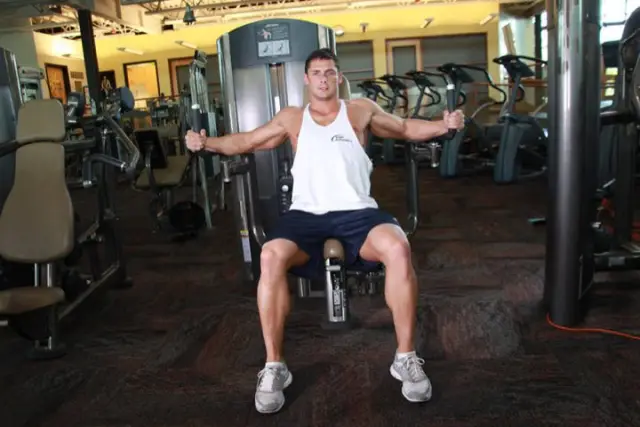 Pec Deck Fly vs Dumbbell FlyThe Pec Deck Fly guides your arms on a machine, and the Dumbbell Fly has you control the weights yourself on a flat bench.Cable Fly vs Low Cable FlyThe Cable Fly brings the handles together at chest height, and the Low Cable Fly pulls them up from the low pulley.
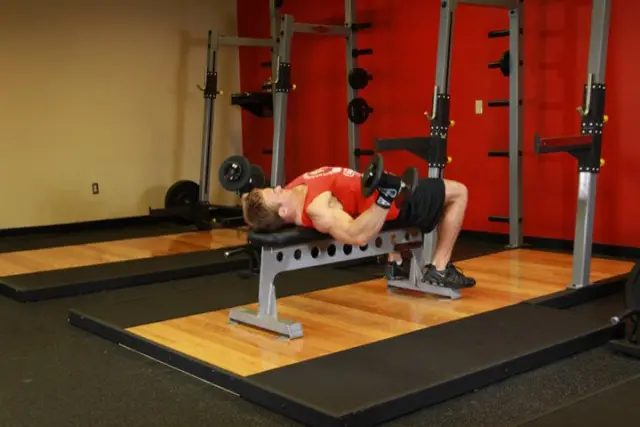 Dumbbell Fly vs Incline Dumbbell FlyThe Dumbbell Fly is done on a flat bench, and the Incline Dumbbell Fly raises the bench to shift the work to your upper chest.
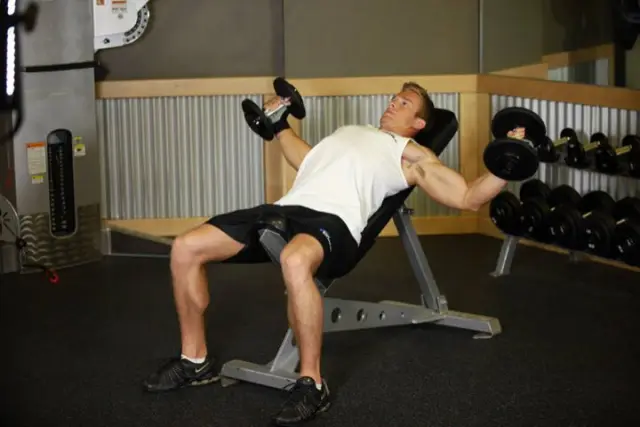 Incline Dumbbell Fly vs Incline Cable FlyThe Incline Dumbbell Fly uses dumbbells on an incline bench, and the Incline Cable Fly uses two cables from the same position.Cable Fly vs Resistance Band Chest FlyThe Cable Fly uses a cable stack, and the Resistance Band Chest Fly uses a band that gets harder as it stretches.Dumbbell Fly vs Flat Bench Cable FlyThe Dumbbell Fly uses weights that pull straight down, and the Flat Bench Cable Fly uses two low cables that keep tension on your chest.Dumbbell Fly vs Decline Dumbbell FlyThe Dumbbell Fly is done on a flat bench, and the Decline Dumbbell Fly lowers your head to shift the work to your lower chest.
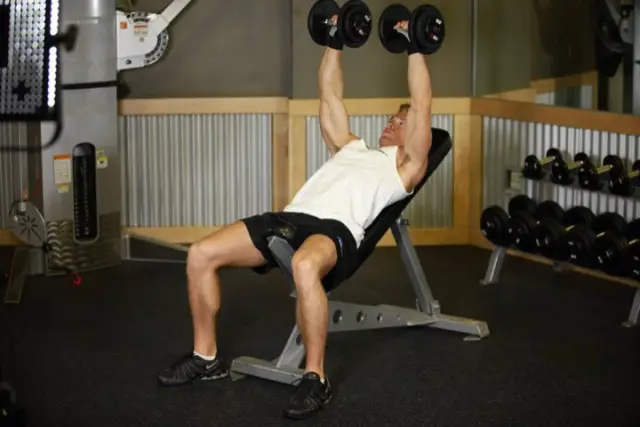 Incline Dumbbell Press vs Incline Bench PressThe Incline Dumbbell Press lets each arm move on its own path, while the Incline Bench Press fixes both hands on one bar.Incline Bench Press vs Smith Machine Incline PressThe Incline Bench Press uses a free bar that you must balance, while the Smith Machine Incline Press guides the bar on a fixed track.Incline Dumbbell Press vs Incline Machine PressThe Incline Dumbbell Press makes you control two free weights, while the Incline Machine Press guides the handles on a fixed path.Incline Dumbbell Press vs Incline Cable Chest PressThe Incline Dumbbell Press has the most tension in the stretched position, while the Incline Cable Chest Press keeps the cables tight through the whole rep.Incline Dumbbell Press vs Neutral-Grip Incline Dumbbell PressThe Incline Dumbbell Press is usually done with your palms facing forward, while the Neutral-Grip Incline Dumbbell Press turns your palms toward each other.Incline Bench Press vs Incline Machine PressThe Incline Bench Press uses a free bar that you must control, while the Incline Machine Press guides your hands on a fixed path.Dips vs Machine Chest PressDips have you push your whole body up on two bars, while the Machine Chest Press has you push handles forward from a seat.Dips vs Assisted DipsDips use your full body weight, while Assisted Dips use a counterweight that carries part of it.Dips vs Ring DipsDips happen on fixed bars, while Ring Dips happen on rings that move freely.
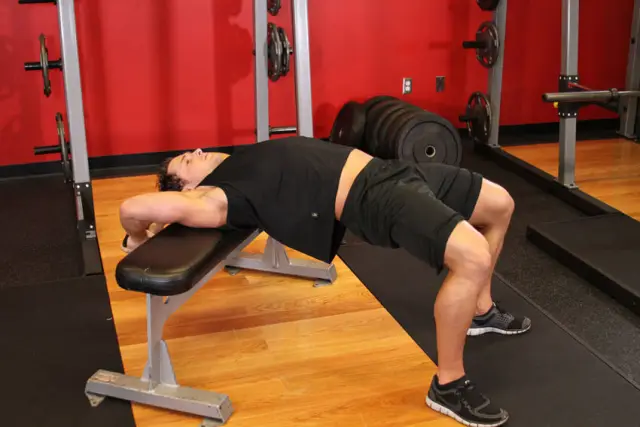 Bent-Arm Dumbbell Pullover vs Straight-Arm Dumbbell PulloverThe Bent-Arm Dumbbell Pullover bends your elbows, so your chest and triceps help more.Incline Dumbbell Press vs Dumbbell Bench PressThe Incline Dumbbell Press tilts the press up and shifts work to your upper chest and front delts.Dumbbell Bench Press vs Dumbbell FlyThe Dumbbell Bench Press is a press that works chest, triceps and front delts together.Incline Dumbbell Press vs Incline Dumbbell FlyThe Incline Dumbbell Press presses the dumbbells up on an incline and works chest, front delts and triceps.Push-Ups vs DipsPush-Ups press your body away from the floor, and Dips press it up between two bars.Push-Ups vs Dumbbell Bench PressPush-Ups use your body weight and need no equipment.
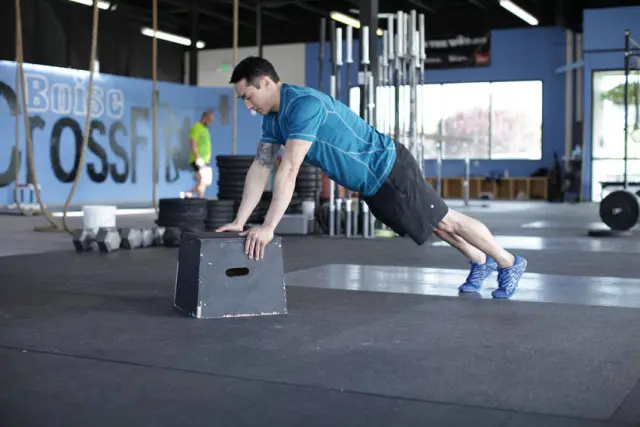 Incline Push-Ups vs Decline Push-UpsIncline Push-Ups put your hands up, so you push less of your body weight.Dumbbell Bench Press vs Smith Machine Bench PressThe Dumbbell Bench Press has you balance two free dumbbells.Dumbbell Bench Press vs Machine Chest PressThe Dumbbell Bench Press makes you control two free weights.Smith Machine Bench Press vs Machine Chest PressThe Smith Machine Bench Press guides a barbell on rails that you load with plates.Decline Bench Press vs DipsThe Decline Bench Press presses a barbell down toward your lower chest on a declined bench.Incline Dumbbell Press vs Smith Machine Incline PressThe Incline Dumbbell Press lets you move two dumbbells freely on an incline.Incline Bench Press vs Reverse-Grip Bench PressThe Incline Bench Press presses a barbell on an incline bench with an overhand grip.
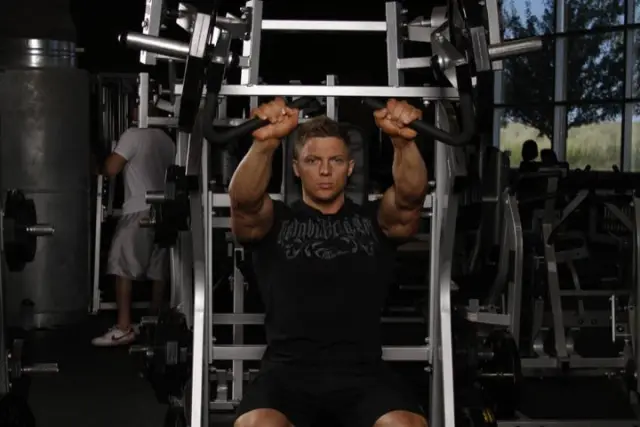 Incline Machine Press vs Smith Machine Incline PressThe Incline Machine Press moves two handles on a machine path.Seated Cable Chest Press vs Machine Chest PressThe Seated Cable Chest Press uses two cables that pull against you from a seated position.Push-Ups vs Resistance Band Bench PressPush-Ups use your body weight and the floor.Dumbbell Fly vs Resistance Band Chest FlyThe Dumbbell Fly loads your chest most in the stretch at the bottom.Cable Fly vs Incline Cable FlyThe Cable Fly brings the handles together at chest height while you stand.Dumbbell Fly vs Bent-Arm Dumbbell PulloverThe Dumbbell Fly opens your arms out to the sides and isolates your chest.
Back Exercises
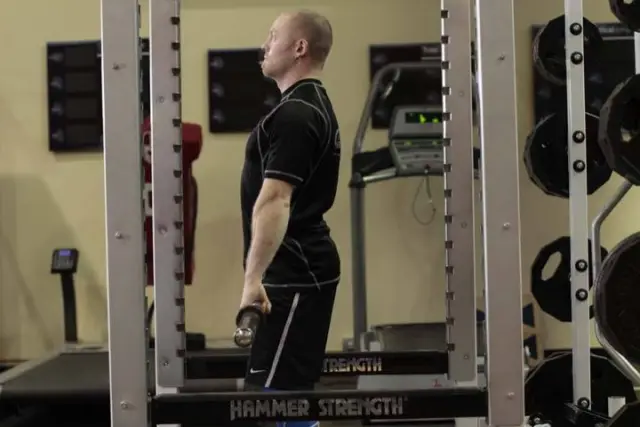 Rack Pulls vs DeadliftRack Pulls start at about knee height and train only the top part, while the Deadlift covers the full range from the floor.
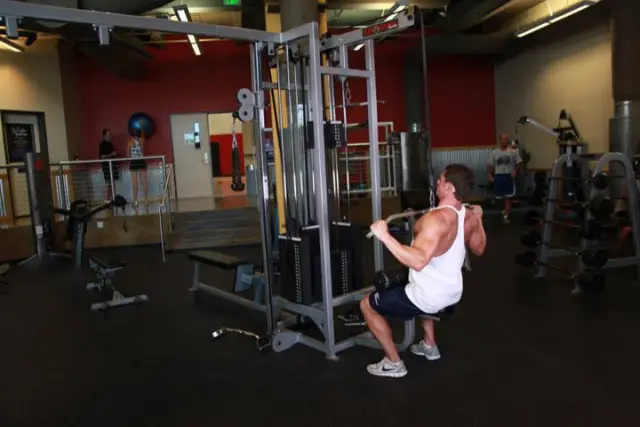 Lat Pulldown vs Seated Cable RowThe Lat Pulldown pulls from above, and the Seated Cable Row pulls straight in toward your stomach.
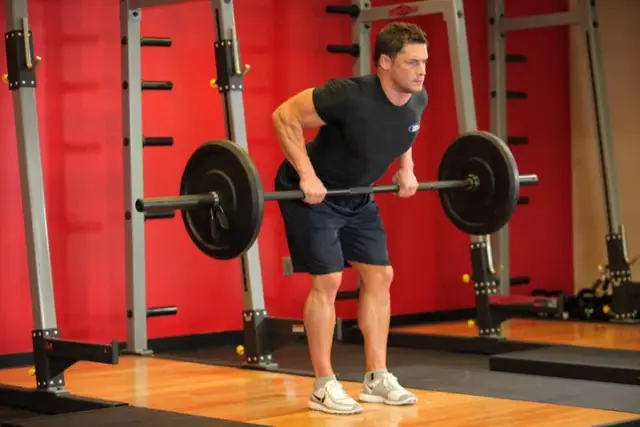 Barbell Row vs Seated Cable RowYou do the Barbell Row bent over on your feet, so your legs and lower back have to hold you, and you do the Seated Cable Row seated with steady pull from the cable.Barbell Row vs T-Bar RowThe Barbell Row uses a free bar, and the T-Bar Row uses a bar that pivots at one end.
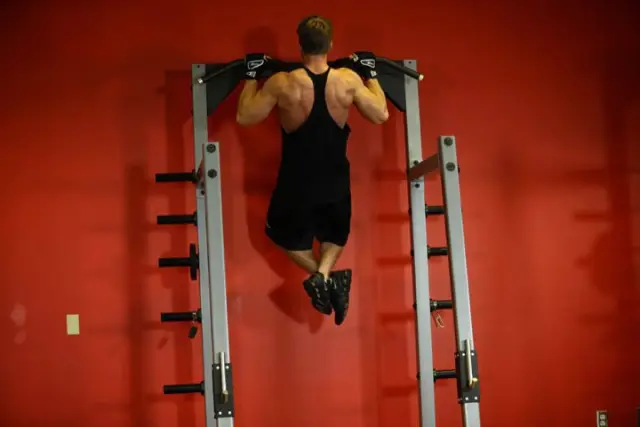 Pull-Ups vs Lat PulldownPull-Ups pull your whole body weight up to the bar, while the Lat Pulldown lets you choose the weight.Barbell Row vs Bent-Over Dumbbell RowThe Barbell Row pulls one bar to your stomach with both hands, while the Bent-Over Dumbbell Row gives each arm its own dumbbell and its own path.Barbell Row vs Single-Arm Dumbbell RowThe Barbell Row is a bent-over pull with a barbell and both arms, while the Single-Arm Dumbbell Row has you support yourself on a bench and pull one dumbbell at a time.Barbell Row vs Chest-Supported Machine RowThe Barbell Row has you hold a bent-over position and pull a bar, while the Chest-Supported Machine Row has you rest your chest on a pad so you cannot use momentum.Barbell Row vs Reverse-Grip Barbell RowThe Barbell Row uses an overhand grip, while the Reverse-Grip Barbell Row uses an underhand grip that puts more load on your biceps.Barbell Row vs Lying Barbell RowIn the Barbell Row you stand bent over and your lower back holds your torso, while in the Lying Barbell Row you lie face down on a high bench that holds your body.Barbell Row vs Inverted RowThe Barbell Row has you pull a loaded bar while bent over, while the Inverted Row has you hang under a bar and pull your chest up with your own body weight.Barbell Row vs Smith Machine Bent-Over RowThe Barbell Row uses a free bar that you must control, while the Smith Machine Bent-Over Row uses a bar on a fixed path.
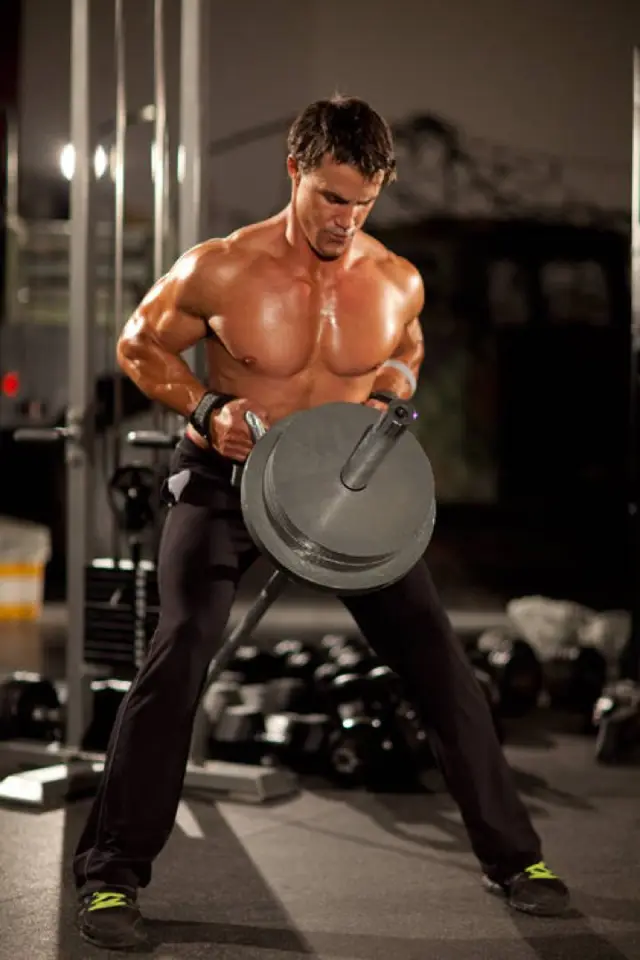 T-Bar Row vs One-Arm Landmine RowThe T-Bar Row has you pull a bar that pivots at one end with both hands, while the One-Arm Landmine Row has you pull the end of the bar with one arm.
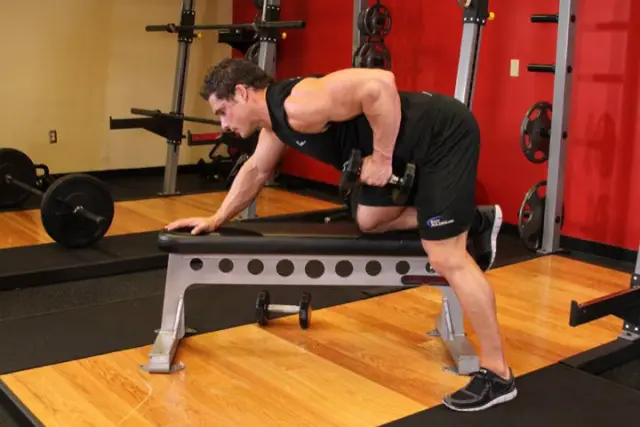 Single-Arm Dumbbell Row vs Seated Cable RowThe Single-Arm Dumbbell Row has you pull a free dumbbell to your hip with one arm, while the Seated Cable Row has you sit and pull a close-grip handle with both arms.Single-Arm Dumbbell Row vs Chest-Supported Dumbbell RowThe Single-Arm Dumbbell Row has you pull one dumbbell while you support yourself on a bench, while the Chest-Supported Dumbbell Row has you lie face down on an incline bench and pull both dumbbells.Single-Arm Dumbbell Row vs Bent-Over Dumbbell RowThe Single-Arm Dumbbell Row has you support yourself on a bench and row one arm at a time, while the Bent-Over Dumbbell Row has you stand bent over and row both dumbbells together.Single-Arm Dumbbell Row vs Single-Arm Cable RowThe Single-Arm Dumbbell Row uses a free dumbbell and gravity, while the Single-Arm Cable Row uses a cable that keeps tension on your back the whole way.Single-Arm Dumbbell Row vs One-Arm Kettlebell RowThe Single-Arm Dumbbell Row uses a dumbbell with your hand on a bench, while the One-Arm Kettlebell Row uses a kettlebell while you hinge forward.
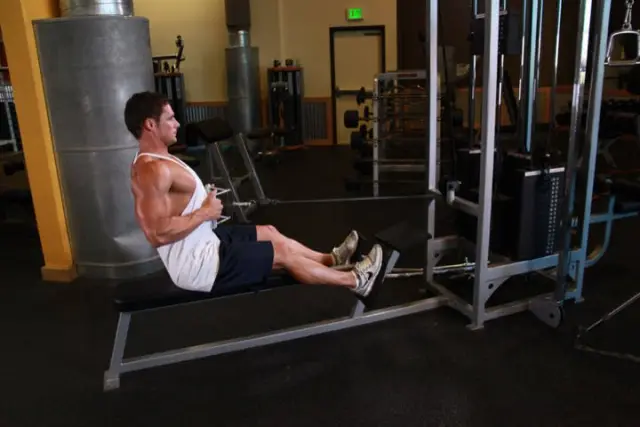 Seated Cable Row vs Chest-Supported Machine RowIn the Seated Cable Row you sit and pull a handle with a long, steady cable path, while in the Chest-Supported Machine Row your chest rests on a pad so you cannot use momentum.Seated Cable Row vs Single-Arm Cable RowThe Seated Cable Row pulls a close-grip handle with both arms, while the Single-Arm Cable Row pulls a handle with one arm and asks your core to hold against the rotation.T-Bar Row vs Chest-Supported Machine RowThe T-Bar Row is a bent-over row on a bar that pivots, so you hold your torso yourself, while the Chest-Supported Machine Row lets your chest rest on a pad.
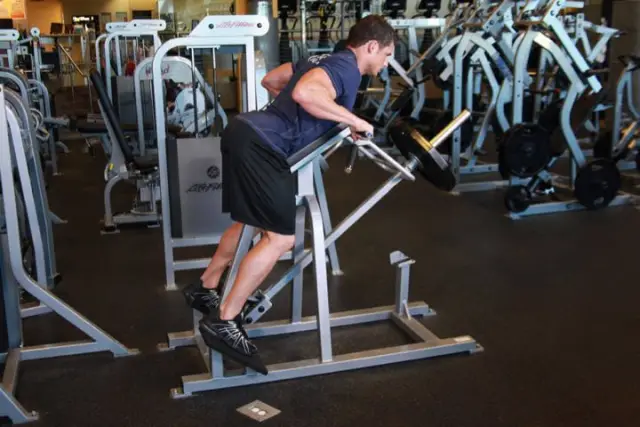 Chest-Supported Machine Row vs Chest-Supported Dumbbell RowThe Chest-Supported Machine Row is a machine with a chest pad and fixed handles, while the Chest-Supported Dumbbell Row has you lie on an incline bench and pull two free dumbbells.
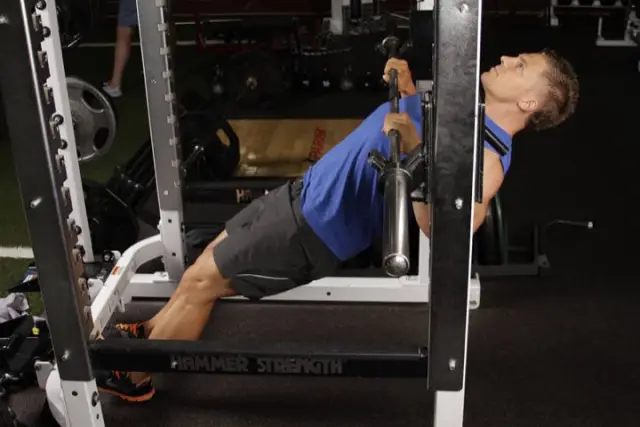 Inverted Row vs Suspended RowThe Inverted Row has you hang under a fixed bar and pull your chest up, while the Suspended Row uses straps or rings that move with your hands.
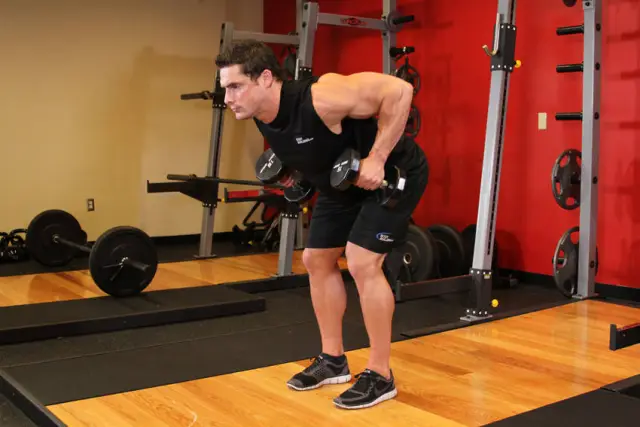 Bent-Over Dumbbell Row vs Chest-Supported Dumbbell RowIn the Bent-Over Dumbbell Row you stand bent over and your trunk holds the position, while in the Chest-Supported Dumbbell Row you lie face down on an incline bench that takes the load off your lower back.
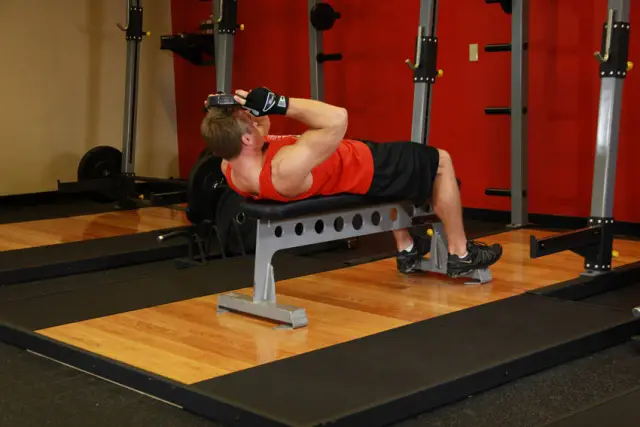 Weighted Neck Flexion (Face Up) vs Seated Neck Harness FlexionThe Weighted Neck Flexion (Face Up) has you lie face up with a plate on your forehead, while the Seated Neck Harness Flexion has you sit with a strap on your head and a weight hanging from it.
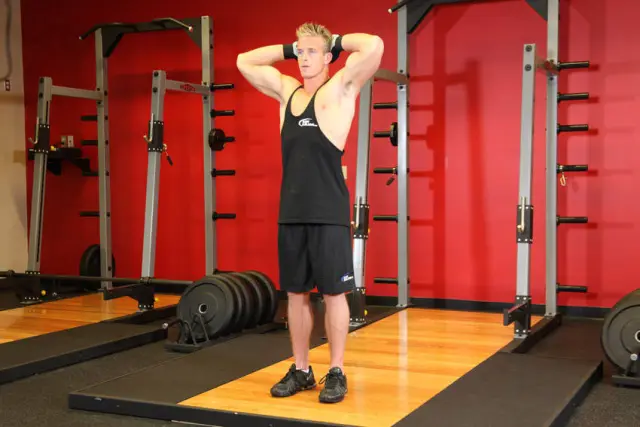 Isometric Neck Hold (Front and Back) vs Seated Neck Harness FlexionThe Isometric Neck Hold (Front and Back) has you press your head against your hand without moving, while the Seated Neck Harness Flexion has you move your head with a weight hanging from a strap.
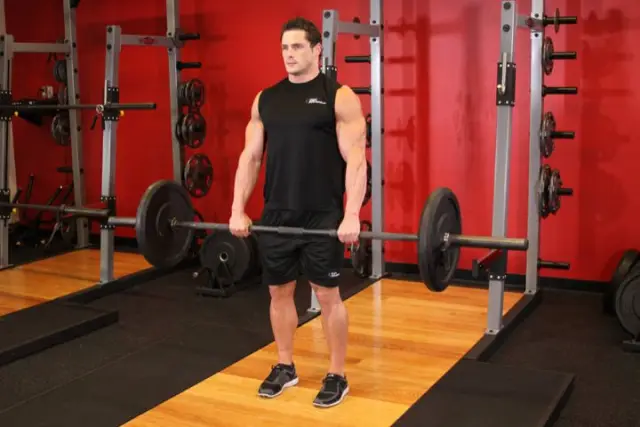 Deadlift vs Trap Bar DeadliftIn Deadlift you pull a straight bar in front of your legs, and in Trap Bar Deadlift you stand inside a hexagon bar.Deadlift vs Deficit DeadliftDeadlift starts from the floor, while Deficit Deadlift has you stand on a low platform so the bar starts lower.Deadlift vs Stiff-Leg DeadliftDeadlift bends your knees as you pull from the floor, while Stiff-Leg Deadlift keeps your legs almost straight.Deadlift vs Machine DeadliftDeadlift has you balance a free bar, while Machine Deadlift guides the weight on a lever machine.
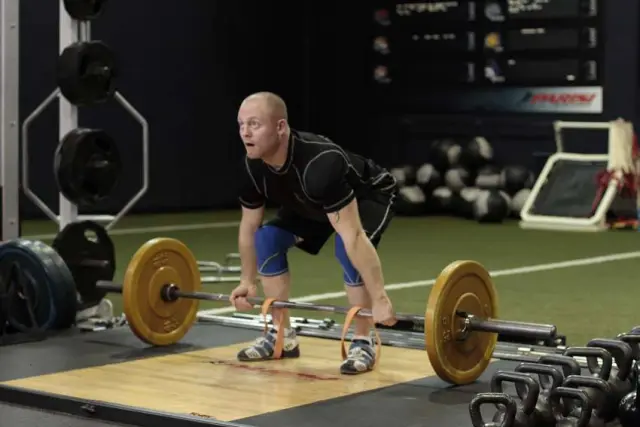 Banded Deadlift vs Chain DeadliftBanded Deadlift adds resistance bands that pull harder as you stand up, while Chain Deadlift adds chains that get heavier as they leave the floor.Pull-Ups vs Chin-UpsPull-Ups use an overhand grip, and Chin-Ups use an underhand grip.Pull-Ups vs Assisted Pull-UpsPull-Ups lift your full body weight, while Assisted Pull-Ups use a machine counterweight that carries part of it.Pull-Ups vs Wide-Grip Pull-UpsPull-Ups use a normal overhand grip, and Wide-Grip Pull-Ups put your hands clearly wider than your shoulders.Pull-Ups vs Weighted Pull-UpsPull-Ups use only your body weight, and Weighted Pull-Ups add a belt or vest with extra load.Pull-Ups vs Neutral-Grip Pull-UpsPull-Ups use a bar with an overhand grip, and Neutral-Grip Pull-Ups use handles with your palms facing each other.
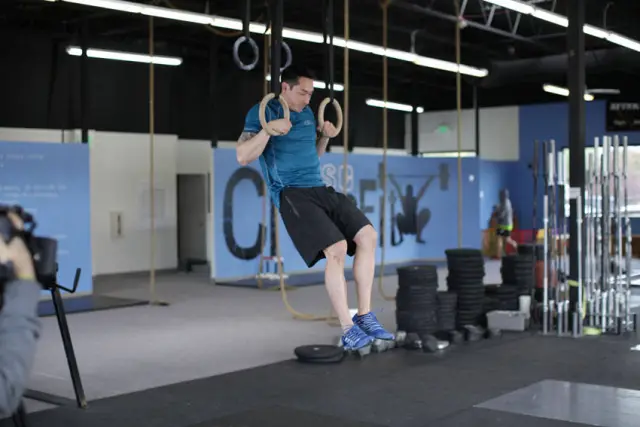 Muscle-Up vs Kipping Muscle-UpThe Muscle-Up is a strict pull over the bar or rings into a dip, and the Kipping Muscle-Up uses a swing to get over.Lat Pulldown vs Wide-Grip Lat PulldownThe Lat Pulldown uses a shoulder-width grip, and the Wide-Grip Lat Pulldown puts your hands far out on the bar.Lat Pulldown vs Neutral-Grip Lat PulldownThe Lat Pulldown uses a straight bar with an overhand grip, and the Neutral-Grip Lat Pulldown uses handles with your palms facing each other.Lat Pulldown vs Underhand Lat PulldownThe Lat Pulldown uses an overhand grip, and the Underhand Lat Pulldown turns your palms toward you.Lat Pulldown vs Close-Grip Lat PulldownThe Lat Pulldown uses a shoulder-width grip, and the Close-Grip Lat Pulldown uses a narrow grip and pulls to your upper chest.Lat Pulldown vs Assisted Pull-UpsThe Lat Pulldown moves a weight down to you while you sit, and Assisted Pull-Ups lift your body with a machine counterweight.Wide-Grip Lat Pulldown vs Close-Grip Lat PulldownThe Wide-Grip Lat Pulldown puts your hands far apart, and the Close-Grip Lat Pulldown uses a narrow grip with a long pulling range.
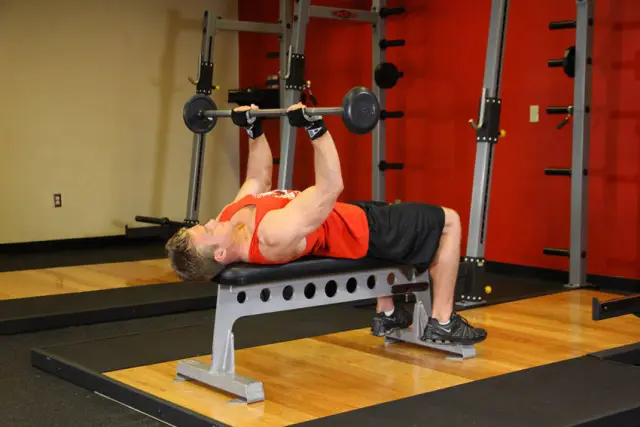 Bent-Arm Barbell Pullover vs Bent-Arm Dumbbell PulloverThe Bent-Arm Barbell Pullover uses a bar with both hands fixed on it, while the Bent-Arm Dumbbell Pullover uses one dumbbell that you hold with both hands.
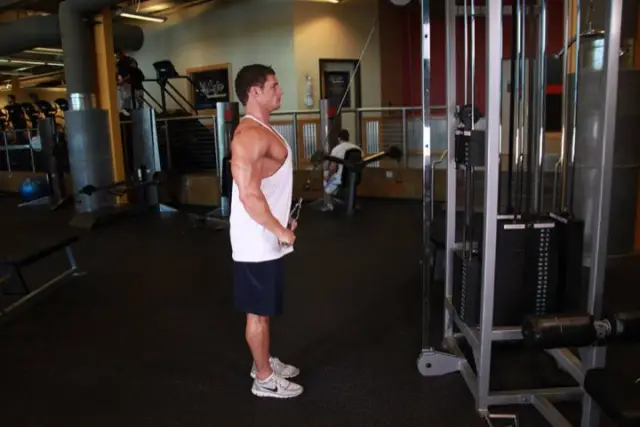 Straight-Arm Pulldown vs Straight-Arm Dumbbell PulloverThe Straight-Arm Pulldown uses a cable, so the tension stays on your lats through the whole rep.Straight-Arm Pulldown vs Rope Straight-Arm PulldownThe Straight-Arm Pulldown uses a straight bar, while the Rope Straight-Arm Pulldown uses a rope that lets your hands move apart at the bottom.
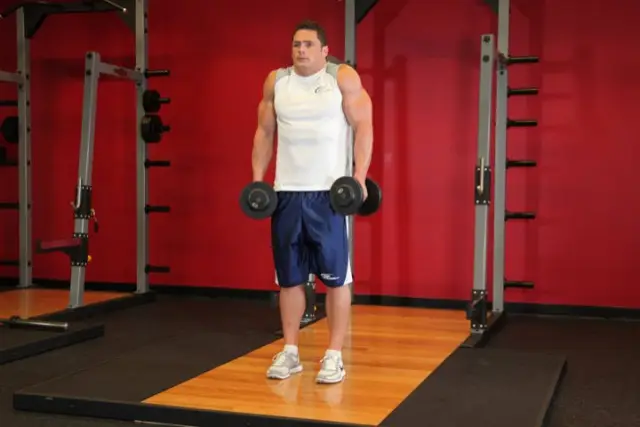 Shrugs vs Barbell ShrugsShrugs with dumbbells let your arms hang at your sides, while Barbell Shrugs hold the bar in front of your thighs.
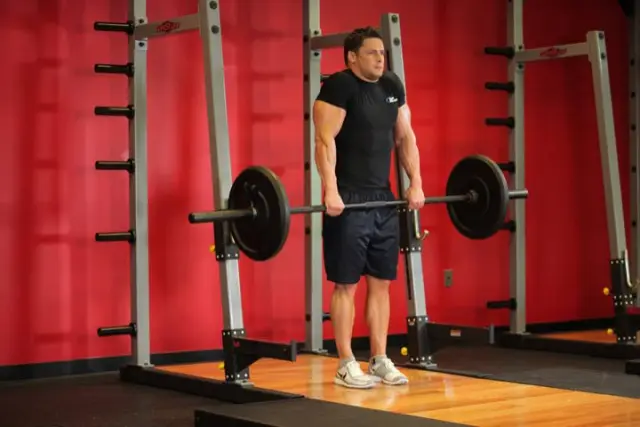 Barbell Shrugs vs Machine ShrugBarbell Shrugs use a free bar that you must hold and balance, while the Machine Shrug guides the path with handles at your sides.Shrugs vs Cable ShrugShrugs with dumbbells use gravity, so the tension drops at the bottom.Barbell Shrugs vs Behind-the-Back Barbell ShrugBarbell Shrugs hold the bar in front of your thighs, while the Behind-the-Back Barbell Shrug holds it behind them.
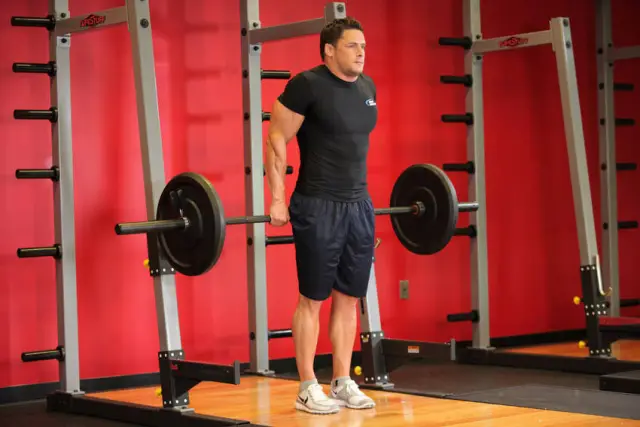 Behind-the-Back Barbell Shrug vs Smith Machine Behind-the-Back ShrugThe Behind-the-Back Barbell Shrug uses a free bar behind your thighs, while the Smith Machine Behind-the-Back Shrug guides the bar on a track.
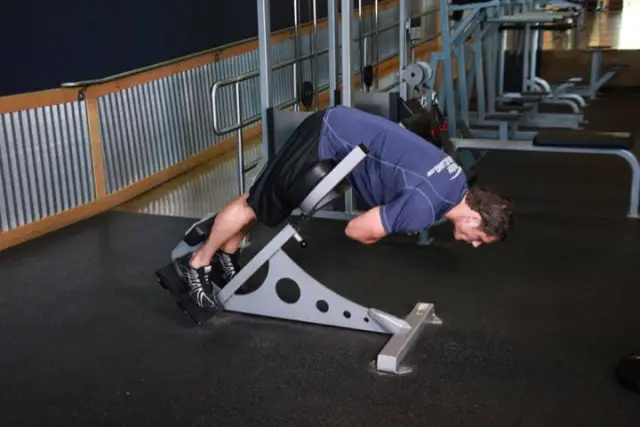 Roman Chair Back Extension vs Exercise Ball Back ExtensionThe Roman Chair Back Extension fixes your legs on a bench and lets you add weight, while the Exercise Ball Back Extension has you lift over a ball that moves under you.Roman Chair Back Extension vs Seated Good MorningThe Roman Chair Back Extension lifts your torso over a bench with your legs fixed, while the Seated Good Morning bends you forward at the hips with a bar on your back.Isometric Neck Hold (Front and Back) vs Weighted Neck Flexion (Face Up)The Isometric Neck Hold presses your head into your hand without moving, while the Weighted Neck Flexion moves your head against a plate.Bent-Over Dumbbell Row vs Neutral-Grip Bent-Over Dumbbell RowThe Bent-Over Dumbbell Row is often done with palms facing back, with the dumbbells close to the body.
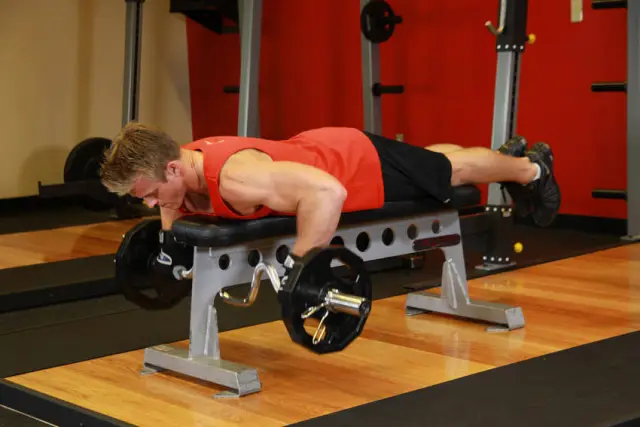 Lying Barbell Row vs Chest-Supported Dumbbell RowThe Seal Row has you lie on a high bench and row a barbell from below.Bent-Over Dumbbell Row vs Alternating Kettlebell RowThe Bent-Over Dumbbell Row is a classic row with a dumbbell in each hand.Bent-Over Dumbbell Row vs Renegade RowThe Bent-Over Dumbbell Row has you stand and focus on the back.Bent-Over Dumbbell Row vs Suspended RowThe Bent-Over Dumbbell Row uses free weights that you can load heavily.Bent-Over Dumbbell Row vs Smith Machine Bent-Over RowThe Bent-Over Dumbbell Row lets each arm move on its own path.Bent-Over Dumbbell Row vs One-Arm Landmine RowThe Bent-Over Dumbbell Row uses dumbbells in a bent-over stance.Barbell Shrugs vs Upright RowBarbell Shrugs lift the shoulders straight up and down to train the upper traps.
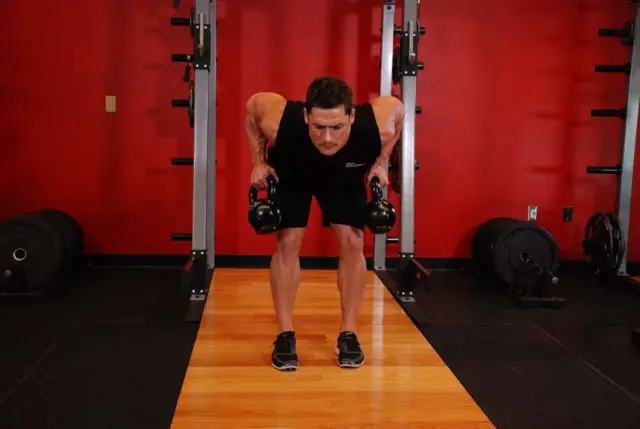 Two-Arm Kettlebell Row vs Alternating Kettlebell RowThe Two-Arm Kettlebell Row pulls both bells at the same time.Behind-the-Back Barbell Shrug vs Cable ShrugBehind-the-Back Barbell Shrug holds the bar behind you so your shoulders sit back.
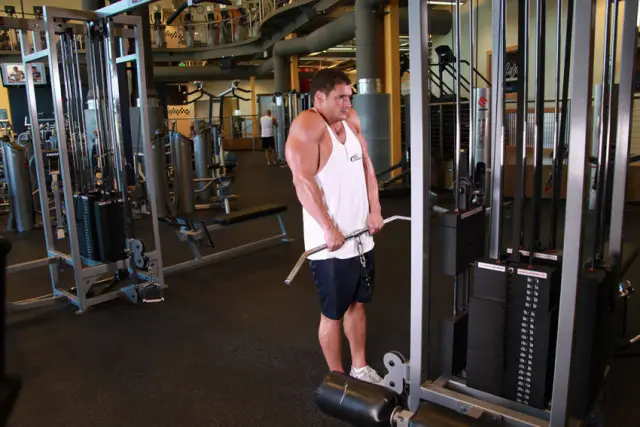 Cable Shrug vs Machine ShrugCable Shrug uses a cable that you hold in your hands.Behind-the-Back Barbell Shrug vs Machine ShrugBehind-the-Back Barbell Shrug uses a free bar behind your body.
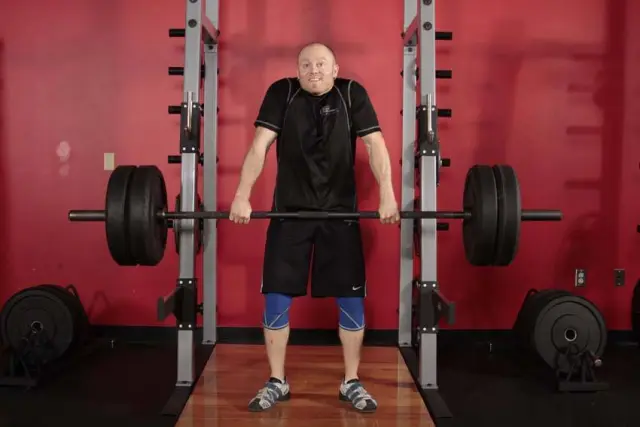 Clean Shrug vs Snatch ShrugClean Shrug uses a narrower grip, and Snatch Shrug uses a wide grip.
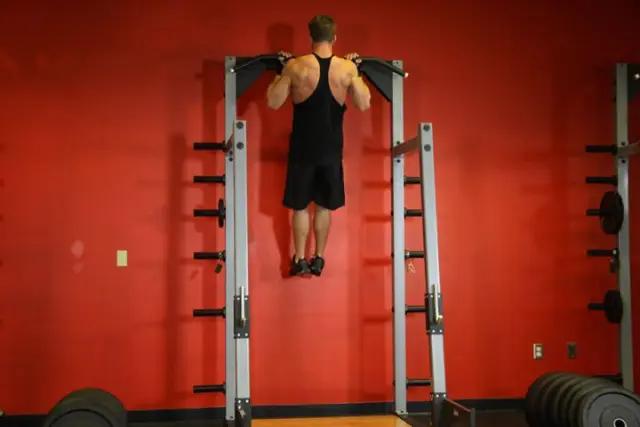 Chin-Ups vs Lat PulldownChin-Ups have you pull your own body up to the bar with an underhand grip, while the Lat Pulldown has you pull a bar down to your chest on a cable machine.Pull-Ups vs Barbell RowPull-Ups pull your body up to a bar from above, while the Barbell Row pulls a loaded bar to your belly from a bent-over stance.Deadlift vs Barbell RowThe Deadlift lifts the bar from the floor with your whole back, hips and legs, while the Barbell Row pulls the bar to your belly and keeps your legs still.T-Bar Row vs Seated Cable RowThe T-Bar Row has you pull a loaded handle to your chest from a bent-over stance, while the Seated Cable Row has you pull a cable handle from a seat.T-Bar Row vs Single-Arm Dumbbell RowThe T-Bar Row pulls a loaded handle with both arms at once, while the Single-Arm Dumbbell Row works one side at a time with a free dumbbell.Lat Pulldown vs Machine High RowThe Lat Pulldown pulls a bar down from above, while the Machine High Row pulls handles back and down from a seat with a chest pad.Lat Pulldown vs Straight-Arm PulldownThe Lat Pulldown bends your elbows to pull the bar down, while the Straight-Arm Pulldown keeps your arms long and moves only at the shoulder.Muscle-Up vs Pull-UpsThe Muscle-Up pulls you above the bar and then presses you up over it, while the Pull-Up stops when your chin passes the bar.
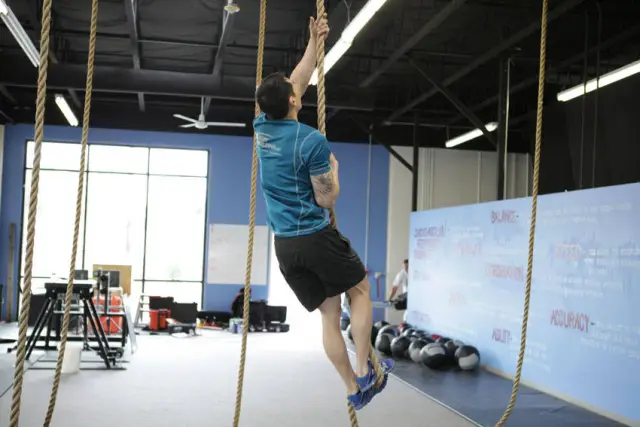 Rope Climb vs Pull-UpsThe Rope Climb has you climb a rope with your hands, and often your legs, while the Pull-Up moves your body up and down a bar.Chest-Supported Machine Row vs Iso-Lateral Row MachineThe Chest-Supported Machine Row has you pull both handles together against a chest pad, while the Iso-Lateral Row Machine lets each arm move on its own.Wide-Grip Lat Pulldown vs Neutral-Grip Lat PulldownThe Wide-Grip Lat Pulldown uses a wide bar and pulls your elbows out to the sides, while the Neutral-Grip Lat Pulldown uses palms facing in and keeps your elbows closer.
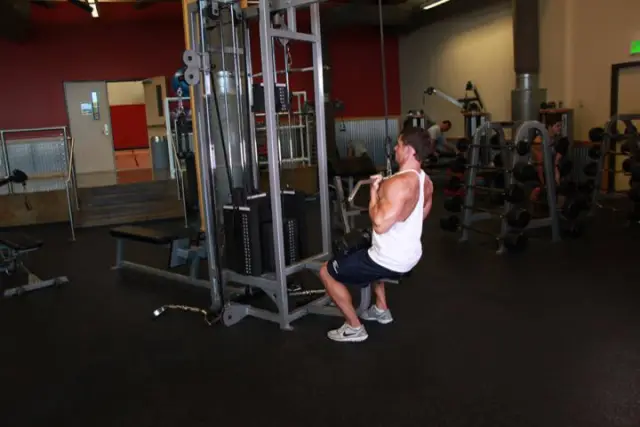 Underhand Lat Pulldown vs Neutral-Grip Lat PulldownThe Underhand Lat Pulldown turns your palms toward you, while the Neutral-Grip Lat Pulldown turns them toward each other.Pull-Ups vs Inverted RowThe Pull-Up pulls your body up to a bar from above, while the Inverted Row pulls your chest to a bar while you hang below it.Chin-Ups vs Neutral-Grip Pull-UpsChin-Ups use an underhand grip and bring in your biceps, while Neutral-Grip Pull-Ups use palms facing each other and are often easier on the shoulders.Chin-Ups vs Underhand Lat PulldownChin-Ups pull your body up with an underhand grip, while the Underhand Lat Pulldown pulls a bar down with the same grip on a machine.
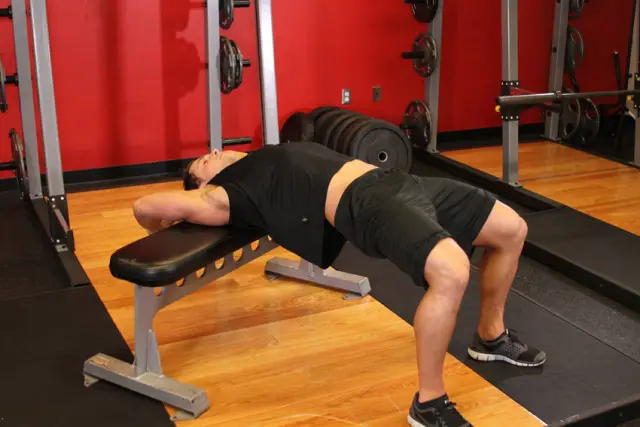 Straight-Arm Dumbbell Pullover vs Bent-Arm Barbell PulloverThe Straight-Arm Dumbbell Pullover keeps your arms long and swings one dumbbell over your head, while the Bent-Arm Barbell Pullover bends your elbows and moves a bar.Lat Pulldown vs One-Arm Lat PulldownThe Lat Pulldown pulls a bar with both arms, while the One-Arm Lat Pulldown pulls a handle with one arm at a time.
Shoulder Exercises
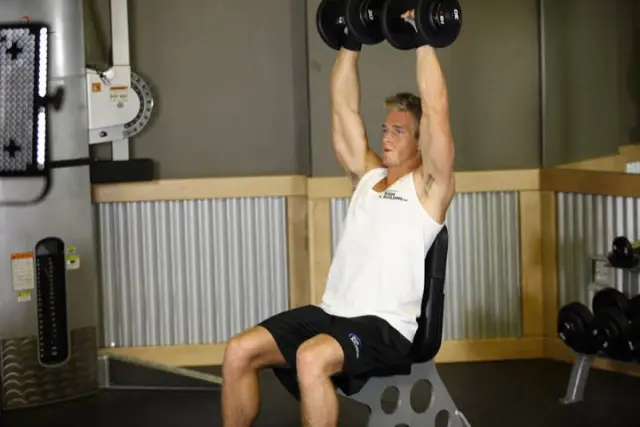 Arnold Press vs Shoulder PressThe Arnold Press rotates the dumbbells on the way up, and the Shoulder Press presses them straight overhead.
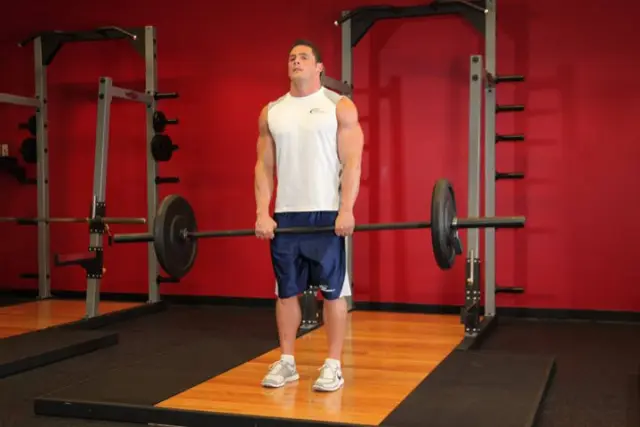 Upright Row vs Lateral RaisesThe Upright Row pulls a bar up along your body and brings in your upper back, while Lateral Raises lift dumbbells out to the side and isolate the side delts.
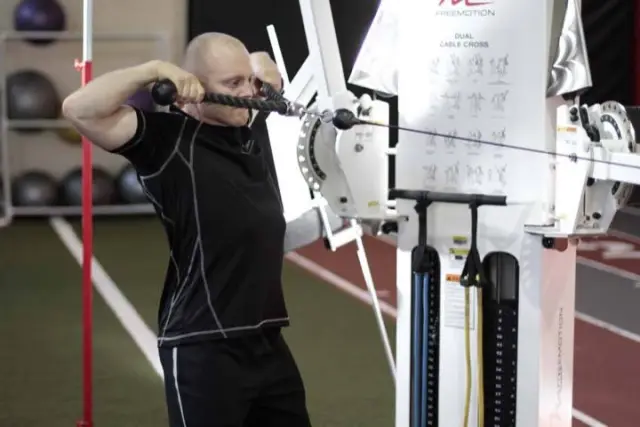 Face Pulls vs Dumbbell Reverse FlyFace Pulls pull a rope toward your face and train rear delts and upper back together, while the Dumbbell Reverse Fly isolates the rear delts with nearly straight arms.
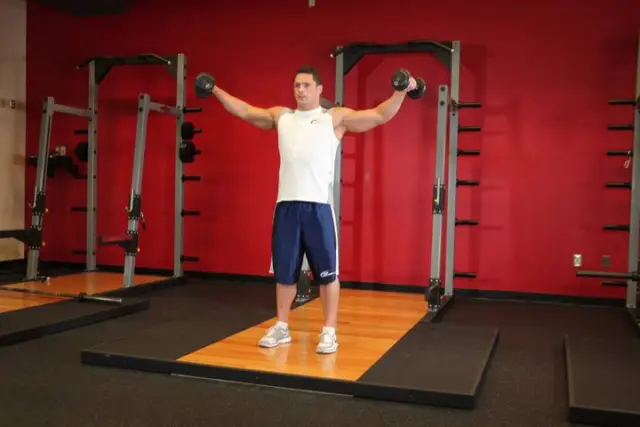 Lateral Raises vs Cable Lateral RaiseLateral Raises use dumbbells, which give almost no resistance at the bottom, while the Cable Lateral Raise keeps tension through the whole range.
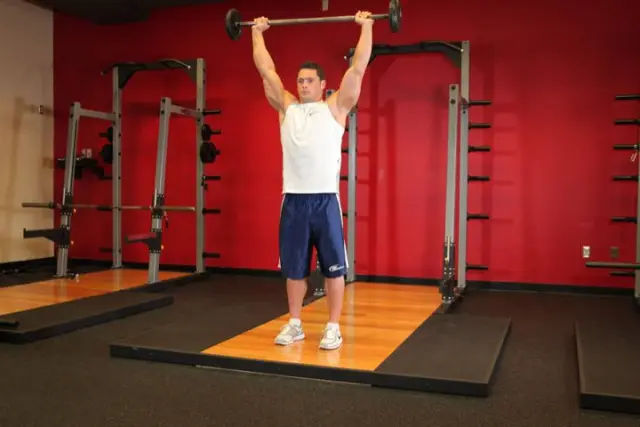 Overhead Press vs Shoulder PressYou press the Overhead Press with a barbell and the Shoulder Press with two dumbbells.
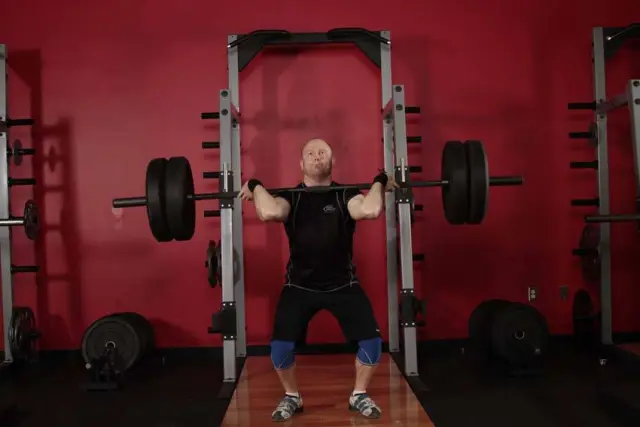 Split Jerk vs Power JerkThe Split Jerk catches the bar in a split stance, while the Power Jerk catches it with a shallow dip and your feet in place.Split Jerk vs Squat JerkThe Split Jerk catches the bar in a split stance, while the Squat Jerk catches it in a deep overhead squat.
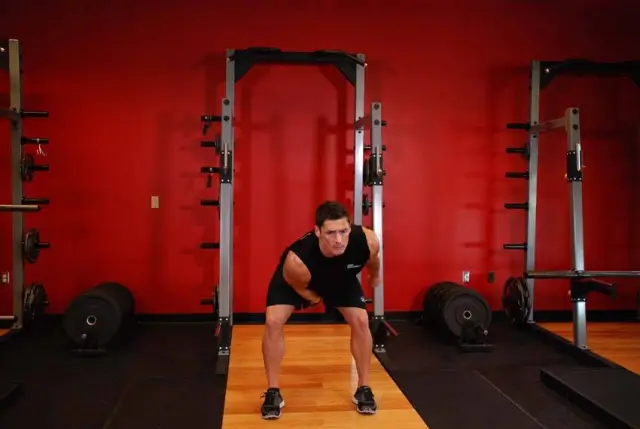 One-Arm Kettlebell Snatch vs Double Kettlebell SnatchThe One-Arm Kettlebell Snatch swings one bell overhead, while the Double Kettlebell Snatch swings two.Overhead Press vs Seated Barbell Shoulder PressIn the Overhead Press you stand and press the bar overhead, while in the Seated Barbell Shoulder Press you sit and your legs and hips stay out of it.
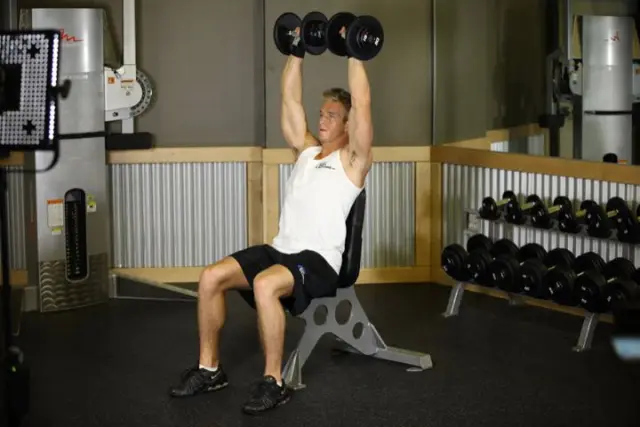 Shoulder Press vs Machine Shoulder PressThe Shoulder Press with dumbbells lets each arm move freely, while the Machine Shoulder Press guides the weight on a fixed path.Overhead Press vs Push PressThe Overhead Press is a strict press where only your upper body moves the bar.Overhead Press vs Behind-the-Neck PressIn the Overhead Press the bar travels in front of your face, while in the Behind-the-Neck Press it moves behind your head with a wider grip.Overhead Press vs Machine Shoulder PressThe Overhead Press has you balance a free bar while standing, and the Machine Shoulder Press has you sit and push along a fixed path.Overhead Press vs Smith Machine Shoulder PressThe Overhead Press uses a free bar that you balance, and the Smith Machine Shoulder Press guides the bar on rails while you sit.
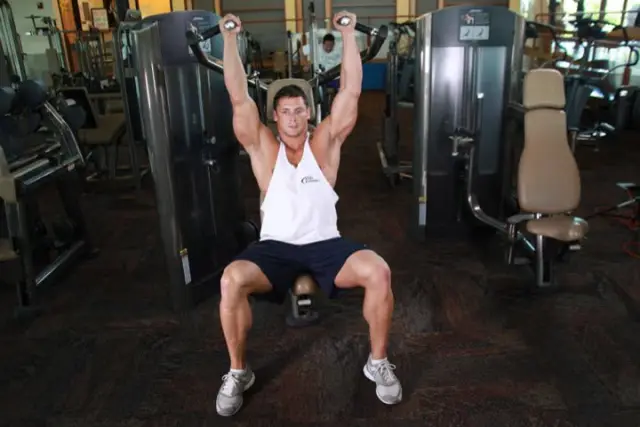 Machine Shoulder Press vs Smith Machine Shoulder PressBoth presses guide the weight, but the Machine Shoulder Press moves on a fixed arc and the Smith Machine Shoulder Press moves the bar straight up and down.Overhead Press vs Landmine PressThe Overhead Press sends the bar straight overhead, while the Landmine Press pushes one end of a fixed bar up and forward on an angled path.Shoulder Press vs Standing Dumbbell PressThe Shoulder Press is usually done seated with back support, and the Standing Dumbbell Press has you stand with the weights.Shoulder Press vs One-Arm Dumbbell Shoulder PressThe Shoulder Press moves two dumbbells at the same time, while the One-Arm Dumbbell Shoulder Press trains one side at a time.Shoulder Press vs Cable Shoulder PressThe Shoulder Press with dumbbells loads you most at the start, while the Cable Shoulder Press keeps steady tension through the whole rep.Overhead Press vs Handstand Push-UpThe Overhead Press uses a barbell that you can load in small steps, and the Handstand Push-Up has you press your own body weight upside down against a wall.Overhead Press vs Bradford PressThe Overhead Press locks out the bar at the top, while the Bradford Press moves the bar from the front of your head to the back and never fully locks out.Shoulder Press vs Seated Barbell Shoulder PressThe Shoulder Press with dumbbells lets your arms move on their own paths, while the Seated Barbell Shoulder Press uses one bar that you press straight up.Lateral Raises vs Machine Lateral RaiseWith Lateral Raises you lift dumbbells out to the sides, and with Machine Lateral Raise you push against pads on a fixed path.Lateral Raises vs Seated Dumbbell Lateral RaiseIn Lateral Raises you stand and lift the dumbbells out to the sides, in Seated Dumbbell Lateral Raise you sit on a bench.Lateral Raises vs Dumbbell Front RaiseLateral Raises lift the weight out to the sides to hit the side delts, and Dumbbell Front Raise lifts it in front of you to hit the front delts.
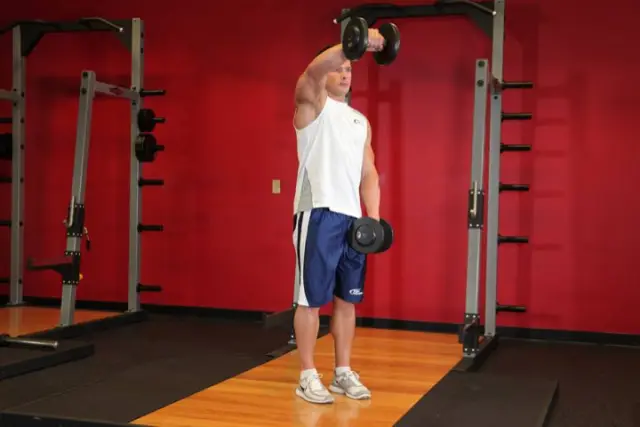 Dumbbell Front Raise vs Barbell Front RaiseIn Dumbbell Front Raise you lift two dumbbells in front of you, and in Barbell Front Raise you lift a barbell with both hands.Dumbbell Front Raise vs Cable Front RaiseDumbbell Front Raise uses free weights that are heaviest in the middle of the lift, while Cable Front Raise uses a cable that pulls evenly from start to end.Dumbbell Front Raise vs Front Plate RaiseDumbbell Front Raise uses two dumbbells, while Front Plate Raise uses one weight plate held with both hands.Lateral Raises vs Dumbbell ScaptionLateral Raises lift the dumbbells straight out to the sides, while Dumbbell Scaption lifts them on a diagonal in front of you with your thumbs up.Lateral Raises vs Band Lateral RaiseLateral Raises use dumbbells that are hardest at the top, while Band Lateral Raise uses a band that gets harder the higher you lift.Lateral Raises vs One-Arm Dumbbell Lateral RaiseLateral Raises train both arms at the same time, while One-Arm Dumbbell Lateral Raise trains one arm at a time and let you hold on with your free hand.
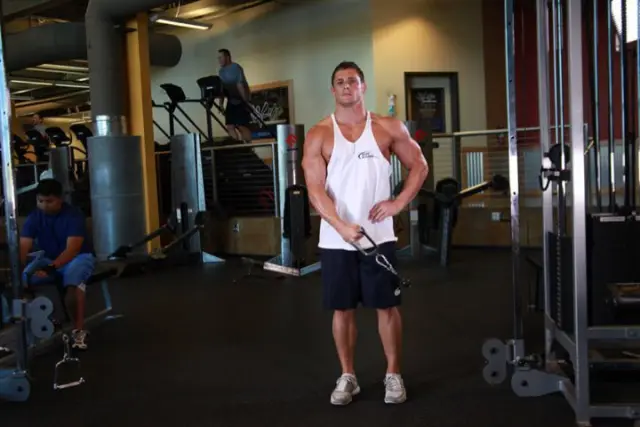 Cable Lateral Raise vs Machine Lateral RaiseCable Lateral Raise uses a single cable that you hold in one hand, while Machine Lateral Raise has you push against pads with both arms.Cable Lateral Raise vs Seated Cable Lateral RaiseCable Lateral Raise is done standing and Seated Cable Lateral Raise is done on a bench.Upright Row vs Dumbbell Upright RowIn Upright Row you pull a barbell up along your body, and in Dumbbell Upright Row you pull two dumbbells.Upright Row vs Cable Upright RowUpright Row uses a barbell that is heaviest at the top, while Cable Upright Row uses a cable that keeps steady tension on you.Upright Row vs Smith Machine Upright RowUpright Row has you balance a free barbell, while Smith Machine Upright Row guides the bar on fixed rails.
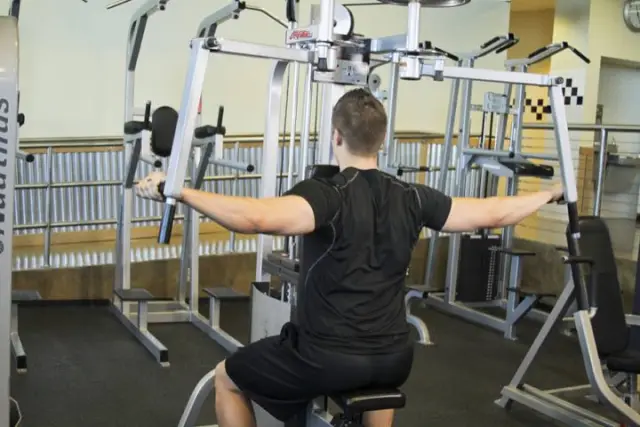 Reverse Pec Deck vs Dumbbell Reverse FlyThe Reverse Pec Deck uses a machine that guides your arms back, and the Dumbbell Reverse Fly has you hold dumbbells with your torso bent over.Reverse Pec Deck vs Cable Rear Delt FlyThe Reverse Pec Deck uses a machine with a fixed path, and the Cable Rear Delt Fly uses two cables with even tension.
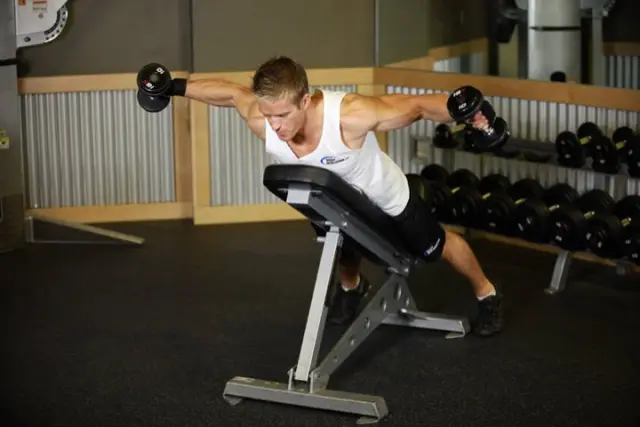 Dumbbell Reverse Fly vs Cable Rear Delt FlyThe Dumbbell Reverse Fly pulls against gravity, and the Cable Rear Delt Fly pulls two cables across with even tension.Dumbbell Reverse Fly vs Band Reverse FlyThe Dumbbell Reverse Fly uses weights, and the Band Reverse Fly uses a resistance band.Dumbbell Reverse Fly vs Bent-Over Rear Delt Raise With Head on BenchThe Dumbbell Reverse Fly has you hold a bent-over position, and the Bent-Over Rear Delt Raise With Head on Bench rests your head on a bench to take strain off your lower back.Dumbbell Reverse Fly vs Lying Dumbbell Rear Lateral RaiseThe Dumbbell Reverse Fly is done bent over, and the Lying Dumbbell Rear Lateral Raise has you lie face down on a bench.Dumbbell Reverse Fly vs Barbell Rear Delt RowThe Dumbbell Reverse Fly is an isolation move with light weights, and the Barbell Rear Delt Row is a bent-over row with a wide grip and flared elbows.
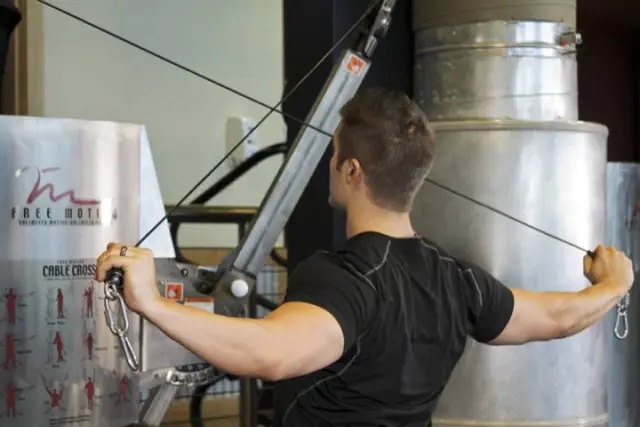 Cable Rear Delt Fly vs Cable Rope Rear Delt RowThe Cable Rear Delt Fly sweeps your arms across with almost straight elbows, and the Cable Rope Rear Delt Row pulls a rope toward your upper chest with high elbows.
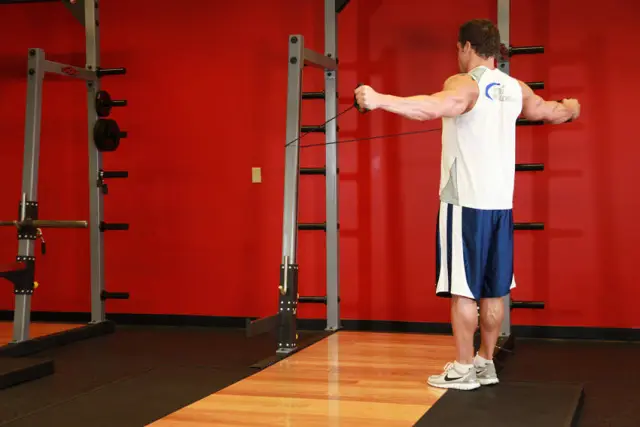 Band Reverse Fly vs Band Pull-ApartThe Band Reverse Fly raises your arms out to the sides with a band, and the Band Pull-Apart pulls the band apart in front of you.Overhead Press vs Arnold PressThe Overhead Press drives a barbell straight up from your shoulders, while the Arnold Press rotates dumbbells through a longer arc.Shoulder Press vs Lateral RaisesShoulder Press is a compound press that works the shoulders and triceps.Lateral Raises vs One-Arm Incline Lateral RaiseLateral Raises are done standing with both arms.Cable Lateral Raise vs Band Lateral RaiseThe Cable Lateral Raise uses a cable stack, so the tension stays the same through the whole lift.
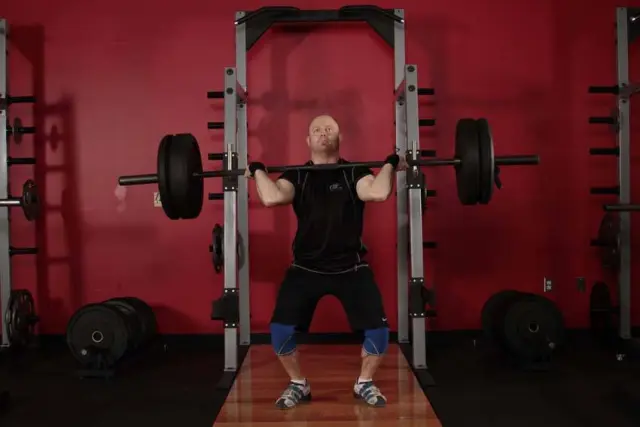 Push Press vs Power JerkThe Push Press uses a small leg dip to start the bar, then you press it overhead with your arms.
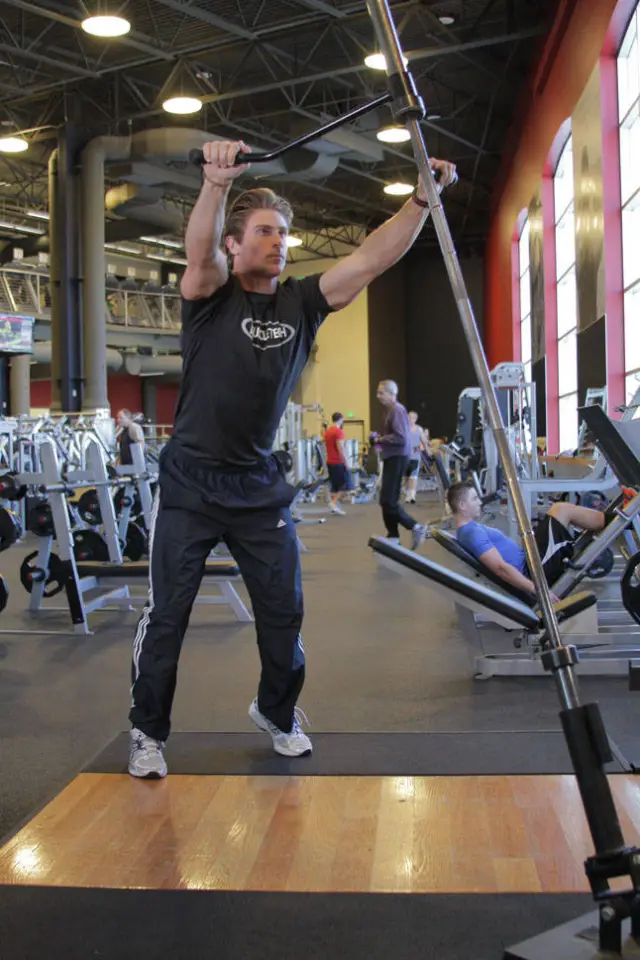 Landmine Press vs Single-Arm Landmine PressThe Landmine Press pushes the end of the bar up and forward with both hands.Shoulder Press vs One-Arm Kettlebell PressThe Shoulder Press with dumbbells trains both arms at once with a stable grip.
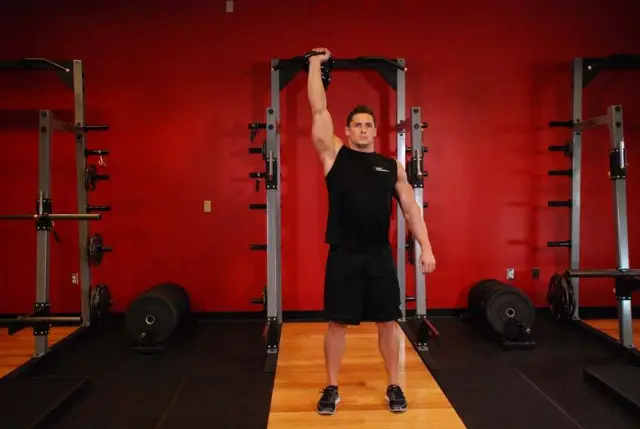 One-Arm Kettlebell Press vs Double Kettlebell PressThe One-Arm Kettlebell Press trains one side at a time.One-Arm Kettlebell Press vs One-Arm Kettlebell Push PressThe One-Arm Kettlebell Press uses only your shoulder and arm to lift the bell.
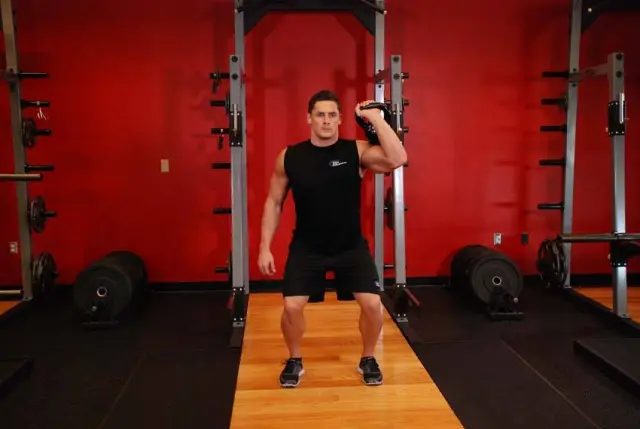 One-Arm Kettlebell Push Press vs One-Arm Kettlebell JerkIn the Push Press you dip once, drive up, and press the bell out with your arm.One-Arm Kettlebell Snatch vs One-Arm Kettlebell Clean and JerkThe One-Arm Kettlebell Snatch swings the bell from the floor to overhead in one move.
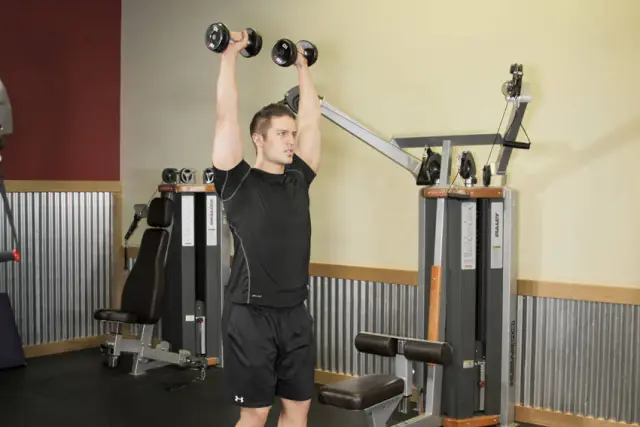 Standing Dumbbell Press vs Standing Alternating Dumbbell PressThe Standing Dumbbell Press lifts both dumbbells at the same time.Shoulder Press vs Smith Machine Shoulder PressThe Shoulder Press with dumbbells lets your arms move freely, so you must balance the weights.
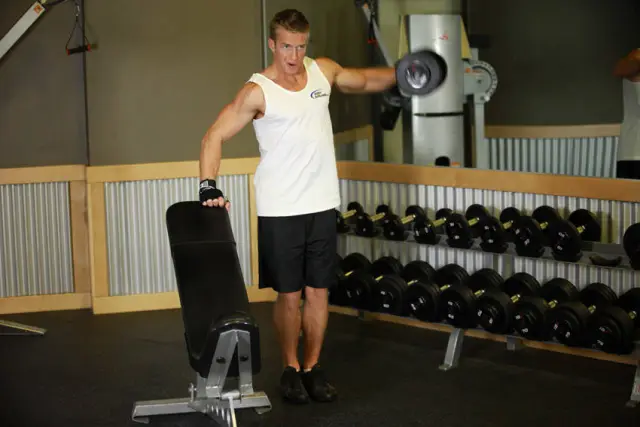 One-Arm Dumbbell Lateral Raise vs One-Arm Incline Lateral RaiseThe One-Arm Dumbbell Lateral Raise is done standing and lifts one arm out to the side.Standing Dumbbell Press vs Neutral-Grip Standing Dumbbell PressThe Standing Dumbbell Press is often done with palms facing forward.
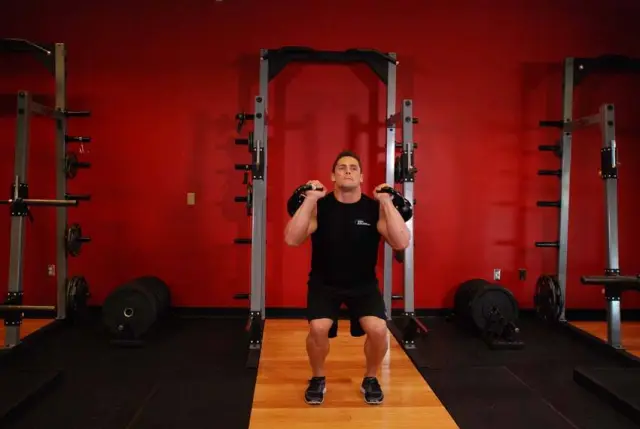 Double Kettlebell Push Press vs Double Kettlebell JerkThe Double Kettlebell Push Press uses one dip and then you press both bells overhead.
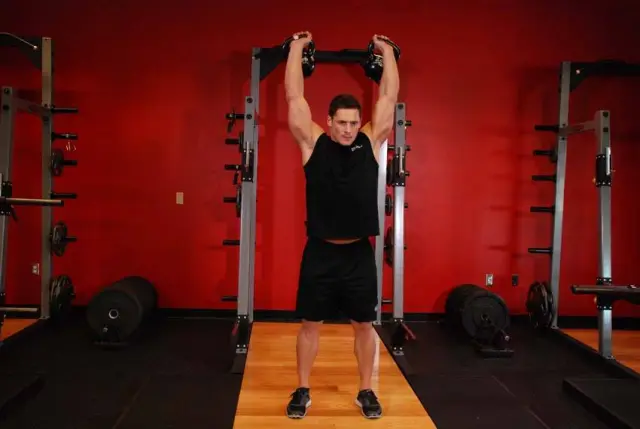 Double Kettlebell Press vs Double Kettlebell Push PressThe Double Kettlebell Press lifts both bells with your shoulders and arms alone.Push Press vs Split JerkThe Push Press uses one leg dip and you press the bar overhead while you stand tall.
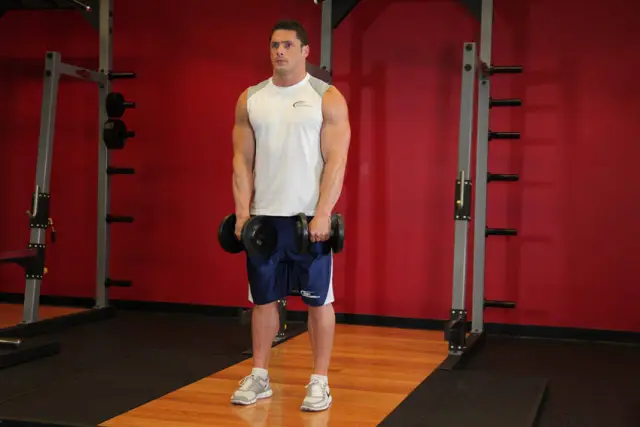 Dumbbell Upright Row vs Cable Upright RowThe Dumbbell Upright Row uses two free dumbbells, so your hands can move on a natural path.Machine Shoulder Press vs Cable Shoulder PressThe Machine Shoulder Press guides the handles on a fixed path.Shoulder Press vs Landmine PressThe Shoulder Press moves dumbbells straight overhead.Face Pulls vs Reverse Pec DeckFace Pulls pull a rope toward your face on the cable machine and work your rear delts and upper back.Face Pulls vs Cable Rear Delt FlyFace Pulls pull a rope toward your face, and the Cable Rear Delt Fly pulls two cables out to the sides.Face Pulls vs Band Pull-ApartFace Pulls use a cable and rope you can load.Cable Rear Delt Fly vs Band Reverse FlyThe Cable Rear Delt Fly uses a cable machine with a stack of weights.Dumbbell Reverse Fly vs Seated Bent-Over Rear Delt RaiseThe Dumbbell Reverse Fly has you bend over while you stand.Dumbbell Reverse Fly vs Band Pull-ApartThe Dumbbell Reverse Fly lifts dumbbells out to the sides while you bend over.Face Pulls vs Cable Row to NeckFace Pulls pull a rope toward your face with your elbows high.Dumbbell Front Raise vs Incline Dumbbell Front RaiseThe Dumbbell Front Raise is done standing, while the Incline Dumbbell Front Raise is done chest-down on a tilted bench.
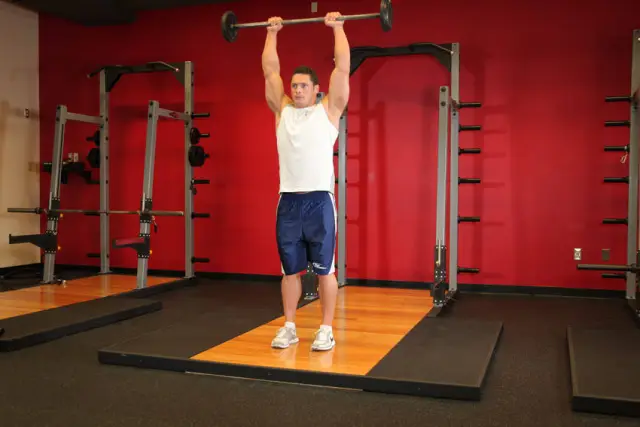 Barbell Front Raise vs Front Plate RaiseThe Barbell Front Raise lifts a bar in front of you, while the Front Plate Raise lifts one plate with both hands.
Bicep Exercises
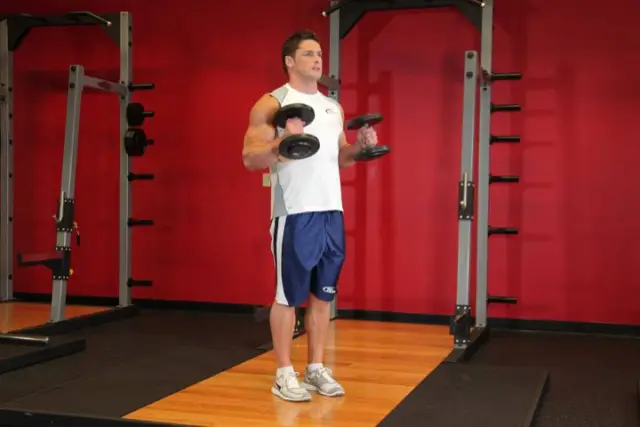 Hammer Curls vs Barbell CurlHammer Curls use a neutral grip with dumbbells, and the Barbell Curl uses an underhand grip on a bar.Hammer Curls vs Reverse CurlHammer Curls use a neutral grip with dumbbells, and the Reverse Curl uses an overhand grip on a bar.
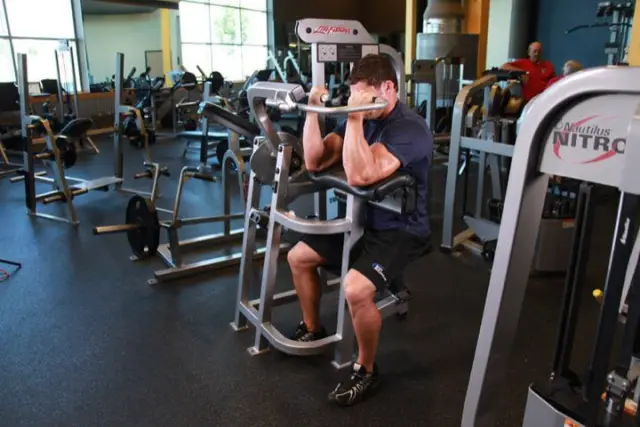 Preacher Curl vs Spider CurlThe Preacher Curl rests your upper arms on a pad at the machine, and the Spider Curl has you lie chest-down on an incline bench with a barbell and hanging arms.
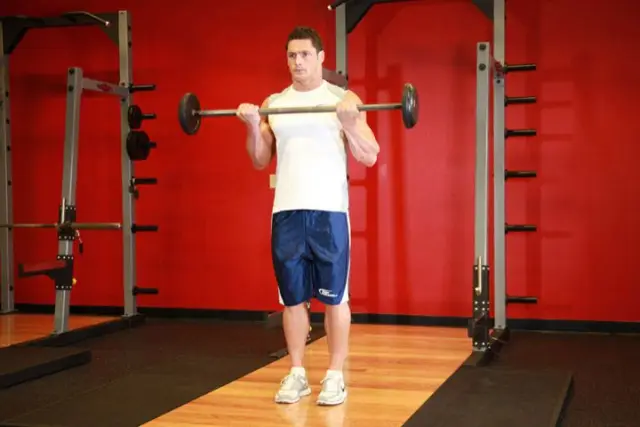 Barbell Curl vs EZ-Bar CurlThe Barbell Curl uses a straight bar with your palms fully facing up, while the EZ-Bar Curl uses a bent bar that turns your wrists a little.Barbell Curl vs Dumbbell CurlThe Barbell Curl moves both arms together on one bar, while the Dumbbell Curl lets each arm work on its own.
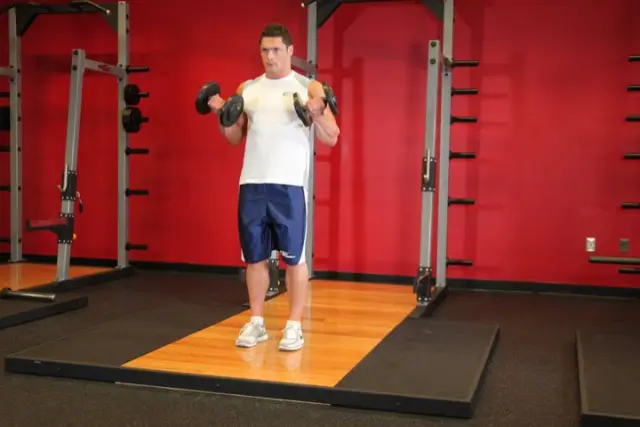 Dumbbell Curl vs Cable CurlThe Dumbbell Curl is hardest in the middle of the rep, while the Cable Curl keeps tension on your biceps from bottom to top.Barbell Curl vs Cable CurlThe Barbell Curl lets you load heavy, but the tension drops at the bottom.
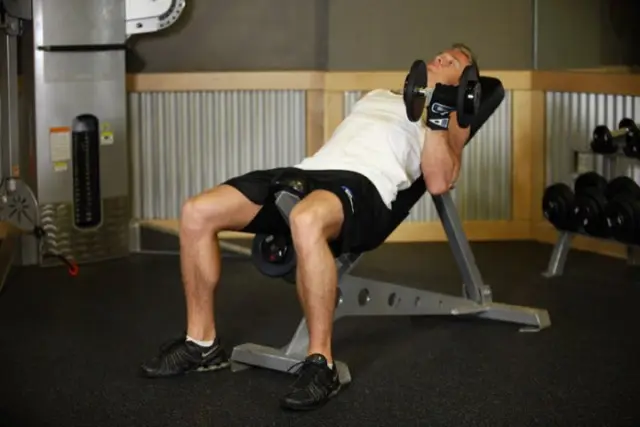 Incline Dumbbell Curl vs Preacher CurlThe Incline Dumbbell Curl has you lean back so your arms hang behind your body and your biceps stretch a lot.
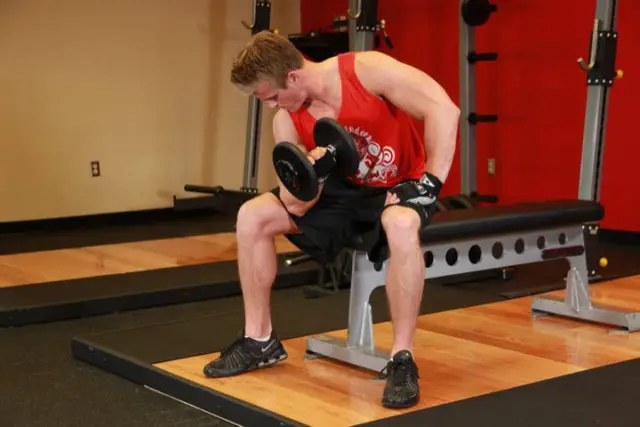 Concentration Curl vs Preacher CurlThe Concentration Curl has you sit and curl one dumbbell with your elbow braced against your thigh.Incline Dumbbell Curl vs Concentration CurlThe Incline Dumbbell Curl works both arms on an angled bench with a long stretch, while the Concentration Curl works one arm at a time with a short, hard squeeze.Dumbbell Curl vs EZ-Bar CurlDumbbell Curls let each arm turn freely, while the EZ-Bar Curl locks both hands on a bent bar.Dumbbell Curl vs Machine Bicep CurlDumbbell Curls need you to control the weight, while the Machine Bicep Curl guides it for you on a pad.
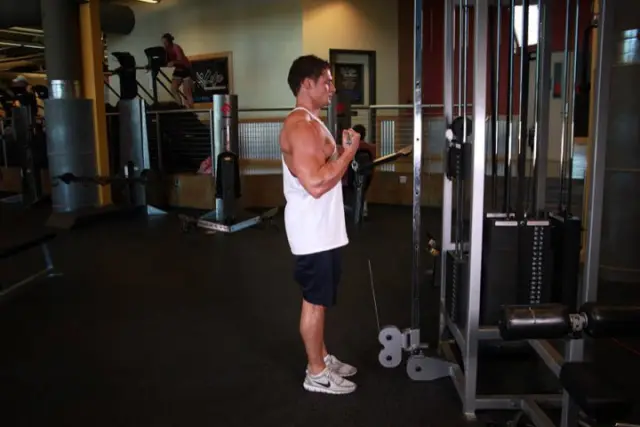 Cable Curl vs Machine Bicep CurlThe Cable Curl keeps tension on your biceps while you stand and move freely, and the Machine Bicep Curl rests your arms on a pad on a fixed path.
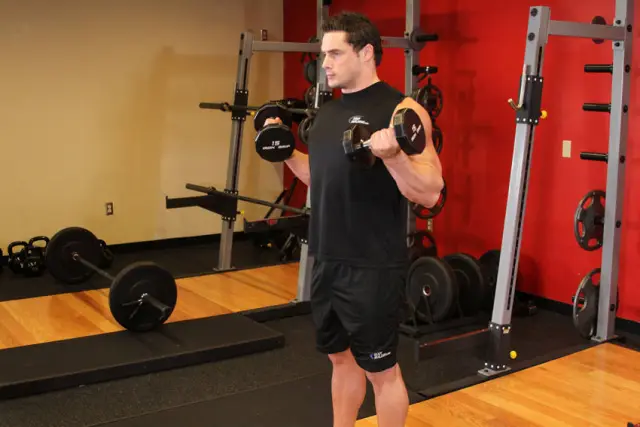 Zottman Curl vs Dumbbell CurlThe Zottman Curl curls up with palms up and lowers with palms down, so it trains your biceps and forearms.Barbell Curl vs Barbell Preacher CurlThe Barbell Curl is done standing and lets you use your body a little, while the Barbell Preacher Curl rests your arms on a pad so only your biceps work.
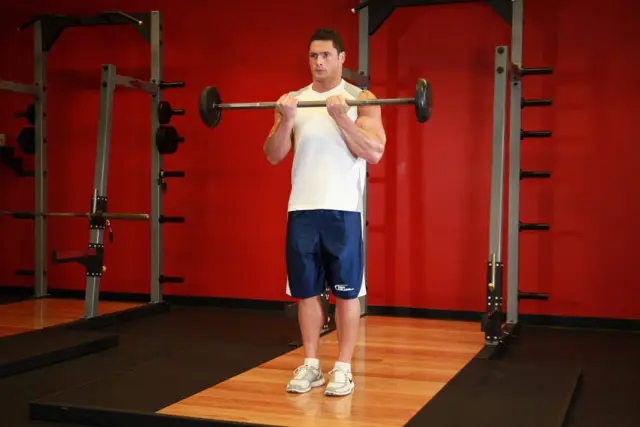 Close-Grip Barbell Curl vs Wide-Grip Barbell CurlThe Close-Grip Barbell Curl puts your hands inside shoulder width, and the Wide-Grip Barbell Curl puts them outside.Barbell Curl vs Drag CurlIn the Barbell Curl the bar moves in an arc away from your body, while in the Drag Curl the bar slides up along your body as your elbows move back.Incline Dumbbell Curl vs Spider CurlThe Incline Dumbbell Curl has you lean back with your arms hanging behind your body for a deep stretch.Hammer Curls vs Cable Hammer CurlHammer Curls use free dumbbells, while the Cable Hammer Curl uses a rope on a cable with steady tension.Hammer Curls vs Cross-Body Hammer CurlHammer Curls lift the dumbbell straight up, while the Cross-Body Hammer Curl curls it across your body toward the opposite shoulder.Hammer Curls vs Incline Hammer CurlHammer Curls are done standing or sitting upright, while the Incline Hammer Curl has you lean back on an incline bench so your biceps stretch at the bottom.
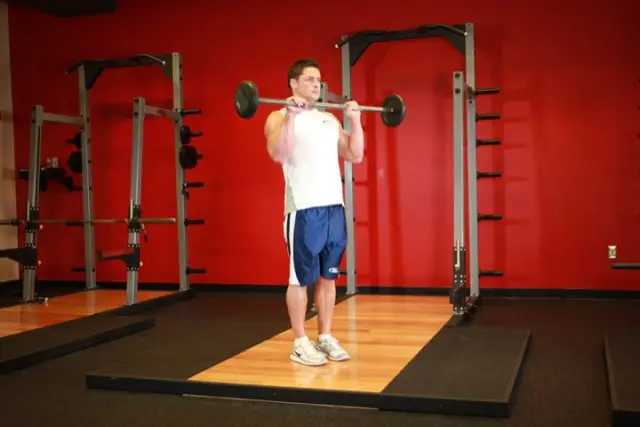 Reverse Curl vs Reverse Cable CurlThe Reverse Curl uses a barbell with an overhand grip, while the Reverse Cable Curl uses a cable with an overhand grip.Preacher Curl vs Cable Preacher CurlThe Preacher Curl on the machine follows a fixed path with an arm pad, while the Cable Preacher Curl uses a cable that keeps tension all the way.Dumbbell Curl vs Hammer CurlsThe Dumbbell Curl turns your palm up and trains the biceps, while the Hammer Curl keeps your palm facing in and adds more work for the forearm and the muscle under the biceps.Dumbbell Curl vs Alternating Dumbbell CurlThe Dumbbell Curl lifts both dumbbells at the same time, while the Alternating Dumbbell Curl lifts one at a time.Dumbbell Curl vs Incline Dumbbell CurlThe Dumbbell Curl is done standing or sitting upright, while the Incline Dumbbell Curl is done on a tilted bench so your arms hang behind your body.
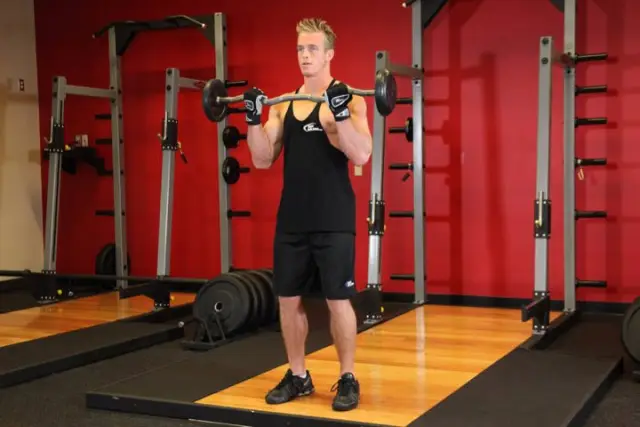 EZ-Bar Curl vs Cable CurlThe EZ-Bar Curl uses a bent bar that you lift against gravity, while the Cable Curl uses a cable that pulls on you the whole way.Barbell Curl vs Close-Grip Barbell CurlThe Barbell Curl uses a shoulder-width grip, while the Close-Grip Barbell Curl brings your hands closer together.Preacher Curl vs Machine Bicep CurlThe Preacher Curl has you curl over an angled pad, while the Machine Bicep Curl guides both arms on a seat.Hammer Curls vs Zottman CurlThe Hammer Curl keeps your palms facing in the whole time, while the Zottman Curl lifts with palms up and lowers with palms down.Incline Dumbbell Curl vs Incline Hammer CurlThe Incline Dumbbell Curl turns your palms up on a tilted bench, while the Incline Hammer Curl keeps them facing in.Concentration Curl vs Spider CurlThe Concentration Curl is done seated with your arm braced on your thigh, while the Spider Curl is done chest-down on an incline bench with your arms hanging.Cable Curl vs High Cable CurlThe Cable Curl pulls from a low pulley, while the High Cable Curl pulls from a high pulley with your arms out to the sides.
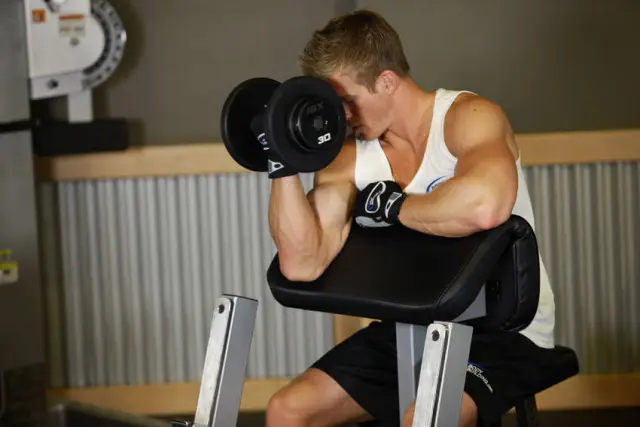 One-Arm Dumbbell Preacher Curl vs Two-Arm Dumbbell Preacher CurlThe One-Arm Dumbbell Preacher Curl works one arm at a time over the pad, while the Two-Arm Dumbbell Preacher Curl works both at once.Barbell Curl vs Reverse CurlThe Barbell Curl uses an underhand grip and trains the biceps, while the Reverse Curl uses an overhand grip and shifts the work to your forearms.Barbell Curl vs Incline Dumbbell CurlThe Barbell Curl lifts a bar while you stand, while the Incline Dumbbell Curl is done on a tilted bench so your arms start behind your body.Incline Dumbbell Curl vs Prone Incline Dumbbell CurlThe Incline Dumbbell Curl is done lying back on a tilted bench, while the Prone Incline Dumbbell Curl is done chest-down on the same bench.Dumbbell Curl vs Concentration CurlThe Dumbbell Curl is done standing with both arms free, while the Concentration Curl is done seated with your arm braced on your thigh.Dumbbell Curl vs Seated Dumbbell CurlThe Dumbbell Curl is done standing, while the Seated Dumbbell Curl is done sitting on a bench.
Tricep Exercises
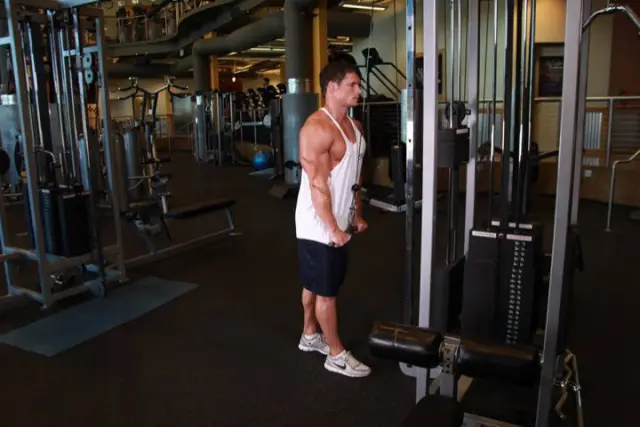 Tricep Pushdown vs Overhead Cable Tricep ExtensionIn the Tricep Pushdown your upper arms stay at your sides, and in the Overhead Cable Tricep Extension your arms are overhead, which stretches the long head of the triceps.
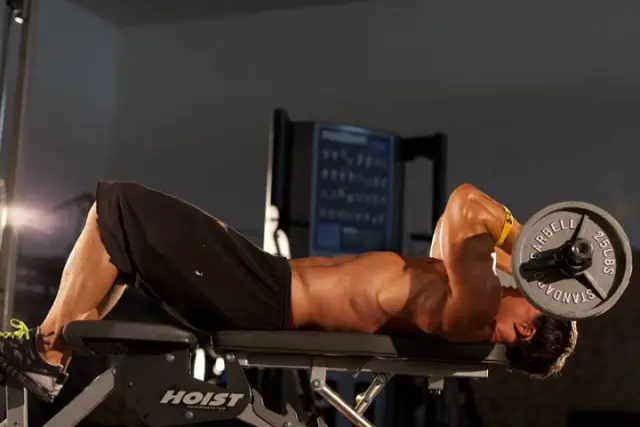 Skull Crushers vs Tricep PushdownYou do Skull Crushers lying down with a barbell, which stretches your triceps a lot, and you do the Tricep Pushdown standing at the cable with your arms at your sides.Tricep Pushdown vs V-Bar Tricep PushdownThe Tricep Pushdown uses a rope that you pull apart at the bottom, while the V-Bar Tricep Pushdown uses a fixed angled bar.Skull Crushers vs Close-Grip Bench PressSkull Crushers isolate your triceps by bending only your elbows, while Enges Bankdrücken is a pressing lift where your chest and shoulders help.Skull Crushers vs Dumbbell Overhead Tricep ExtensionSkull Crushers have you lie down and lower an EZ bar toward your forehead, while the Dumbbell Overhead Tricep Extension has you stand or sit and lower a dumbbell behind your head.
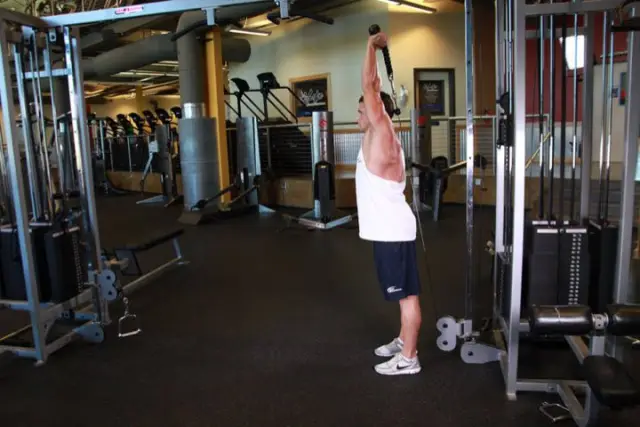 Overhead Cable Tricep Extension vs Dumbbell Overhead Tricep ExtensionThe Overhead Cable Tricep Extension keeps constant tension through the cable, while the Dumbbell Overhead Tricep Extension relies on gravity and a free weight.
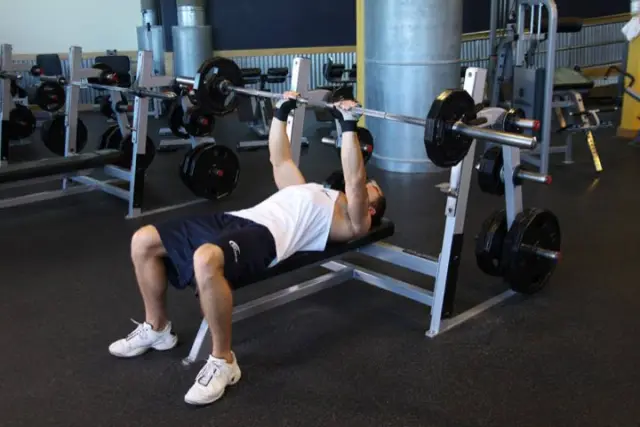 Close-Grip Bench Press vs Bench DipsThe Close-Grip Bench Press lets you load a barbell and press it from a bench, while Bench Dips use only your body weight with your hands on a bench.
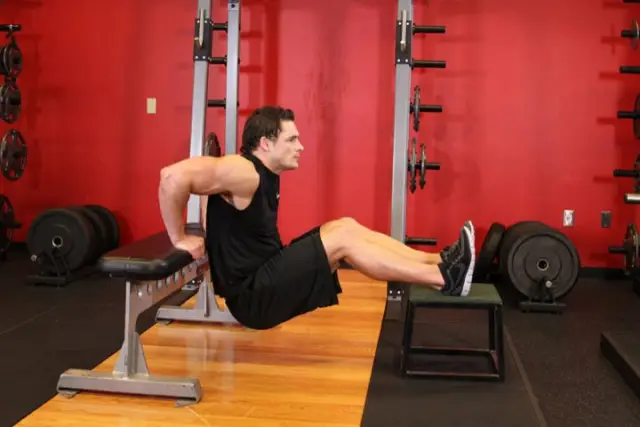 Bench Dips vs Seated Dip MachineBench Dips have you lower your own body with your hands behind you on a bench, while Dips an der Maschine sitzend have you push two handles down from a seat.Close-Grip Bench Press vs Diamond Push-UpsThe Close-Grip Bench Press moves a barbell with a shoulder-width grip, while Diamond Push-Ups use your body weight with your hands in a diamond under your chest.Bench Dips vs Diamond Push-UpsBench Dips have you lower your body with your hands behind you, while Diamond Push-Ups keep your hands under your chest on the floor.Tricep Pushdown vs Reverse-Grip Triceps PushdownThe Tricep Pushdown uses a rope with an overhand grip, while the Reverse-Grip Triceps Pushdown uses a straight bar with your palms facing up.Tricep Pushdown vs Dumbbell Triceps KickbackThe Tricep Pushdown works your triceps against a cable with steady tension, while the Dumbbell Triceps Kickback works against gravity and is hardest at the top.Skull Crushers vs JM PressSkull Crushers bend only your elbows and keep the bar moving over your head, while the JM Press moves the bar in a short arc over your upper chest and lets your upper arms shift forward.Skull Crushers vs Decline EZ Bar Triceps ExtensionSkull Crushers are done lying flat on a bench, while the Decline EZ Bar Triceps Extension is done on a decline bench.Overhead Cable Tricep Extension vs One-Arm Cable Overhead Triceps ExtensionThe Overhead Cable Tricep Extension works both arms together with a rope, while the One-Arm Cable Overhead Triceps Extension works one side at a time.Tricep Pushdown vs Machine Tricep ExtensionThe Tricep Pushdown has you stand and push a rope down on a cable, while the Machine Tricep Extension has you sit with your arms on a pad and straighten your elbows.Skull Crushers vs Lying Dumbbell Triceps ExtensionSkull Crushers use one EZ bar with a fixed grip, while the Lying Dumbbell Triceps Extension uses two dumbbells that can move freely.Skull Crushers vs Tate PressSkull Crushers lower a bar toward your forehead with your elbows pointing forward, while the Tate Press lowers two dumbbells to your chest with your elbows pointing out.
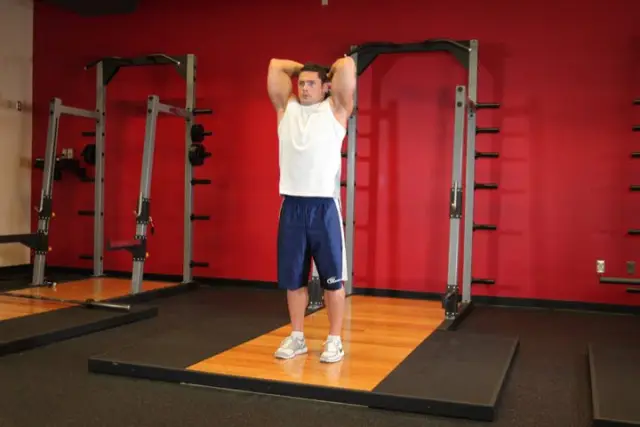 Dumbbell Overhead Tricep Extension vs One-Arm Dumbbell Overhead Triceps ExtensionThe Dumbbell Overhead Tricep Extension holds one dumbbell in both hands, while the One-Arm Dumbbell Overhead Triceps Extension works one arm at a time with a lighter dumbbell.Skull Crushers vs Band Skull CrusherSkull Crushers use an EZ bar on a bench, while the Band Skull Crusher uses a resistance band that gets harder as your arms straighten.Tricep Pushdown vs One-Arm Cable Triceps PushdownThe Tricep Pushdown works both arms together with a rope, while the One-Arm Cable Triceps Pushdown works one arm at a time with a single handle and an underhand grip.Dumbbell Overhead Tricep Extension vs Standing Barbell Overhead Triceps ExtensionThe Dumbbell Overhead Tricep Extension uses one dumbbell held in both hands, while the Standing Barbell Overhead Triceps Extension uses a barbell that you lower behind your head.
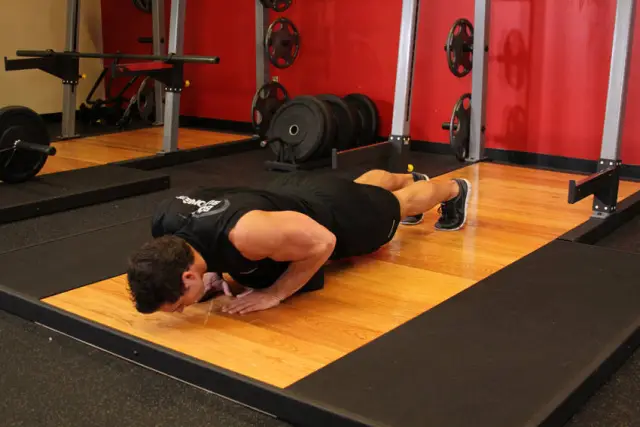 Diamond Push-Ups vs Wide Push-UpsDiamond Push-Ups bring your hands together under your chest and focus on your triceps, while Wide Push-Ups spread your hands and focus on your chest.
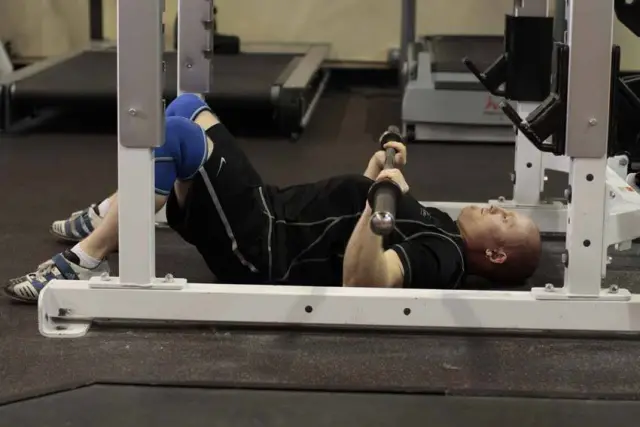 Floor Press vs Dumbbell Floor PressThe Floor Press uses a barbell on the floor, while the Dumbbell Floor Press uses two dumbbells.Skull Crushers vs Overhead Cable Tricep ExtensionSkull Crushers has you lower a bar toward your forehead while you lie on a bench, and the Overhead Cable Tricep Extension has you press the cable overhead from a standing or split stance.Tricep Pushdown vs Close-Grip Bench PressThe Tricep Pushdown isolates your triceps on a cable, while the Close-Grip Bench Press presses a barbell with a narrow grip and also uses your chest and shoulders.Close-Grip Bench Press vs Floor PressThe Close-Grip Bench Press lowers the bar to your chest on a bench, and the Floor Press stops your upper arms on the floor.Close-Grip Bench Press vs Smith Machine Close-Grip Bench PressThe Close-Grip Bench Press uses a free barbell that you balance yourself, and the Smith Machine Close-Grip Bench Press guides the bar on fixed rails.Close-Grip Bench Press vs Close-Grip Dumbbell PressThe Close-Grip Bench Press presses a barbell with your hands close together, and the Close-Grip Dumbbell Press presses two dumbbells with your palms facing in.Close-Grip Bench Press vs JM PressThe Close-Grip Bench Press is a close-grip press that moves mostly at the shoulder and elbow, and the JM Press mixes a press with a skull crusher so your elbows travel more.
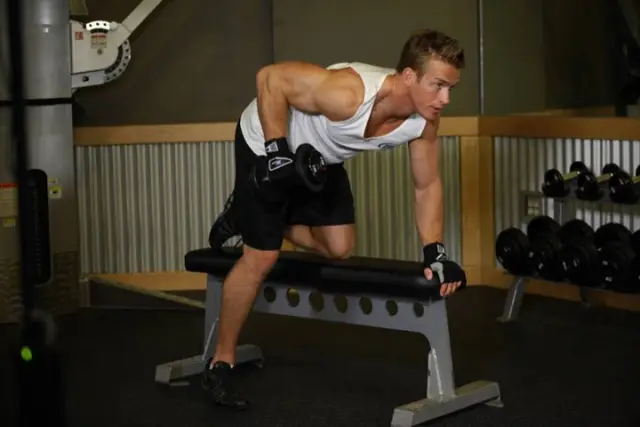 Dumbbell Triceps Kickback vs Cable Tricep KickbackThe Dumbbell Triceps Kickback works your triceps against gravity, so the hardest point sits at the top.Skull Crushers vs Lying Cable Triceps ExtensionSkull Crushers uses a free bar that is hardest at the start, and the Lying Cable Triceps Extension keeps the cable pulling through the whole rep.Skull Crushers vs Behind-the-Head Skull CrusherSkull Crushers lowers the bar toward your forehead, and the Behind-the-Head Skull Crusher lowers it behind your head.Tricep Pushdown vs Bench DipsThe Tricep Pushdown uses a cable and keeps your body still, while Bench Dips has you lower and press your body weight between two benches.Dumbbell Overhead Tricep Extension vs Lying Dumbbell Triceps ExtensionThe Dumbbell Overhead Tricep Extension keeps your arms overhead, and the Lying Dumbbell Triceps Extension has you lie on a bench and lower the dumbbells toward your head.
Forearm Exercises
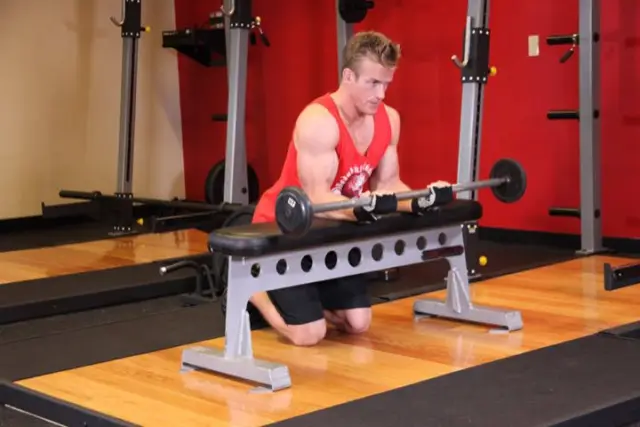 Wrist Curl vs Barbell Reverse Wrist CurlThe Wrist Curl trains the inside of your forearms, while the Barbell Reverse Wrist Curl trains the top of your forearms with an overhand grip.Wrist Curl vs Dumbbell Wrist CurlThe Wrist Curl uses a barbell with both hands on one bar, while the Dumbbell Wrist Curl uses a dumbbell in each hand.Wrist Curl vs Cable Wrist CurlThe Wrist Curl uses a barbell, while the Cable Wrist Curl uses a low cable that keeps tension on your forearms the whole way.Wrist Curl vs Wrist RollerThe Wrist Curl has you curl your wrists on a bench, while the Wrist Roller has you roll a weight up and down a rope on a rod.Wrist Curl vs Reverse CurlThe Wrist Curl bends only your wrists, while the Reverse Curl bends your elbows with an overhand grip.Wrist Curl vs Finger CurlsThe Wrist Curl bends your wrists with your forearms on a bench, while the Finger Curls has you let the bar roll to your fingertips and close your hands.
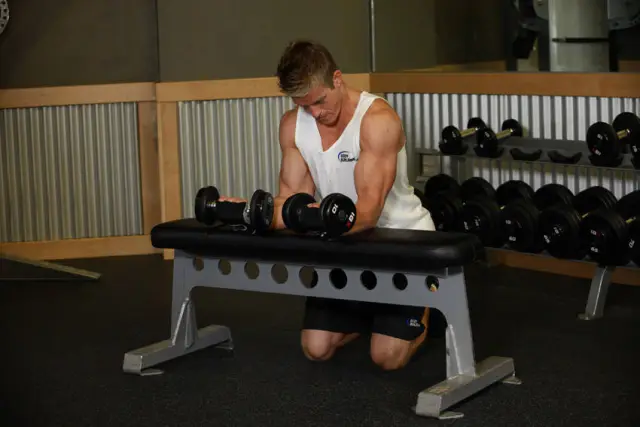 Dumbbell Wrist Curl vs Dumbbell Reverse Wrist CurlThe Dumbbell Wrist Curl trains the inside of your forearms with your palms up, while the Dumbbell Reverse Wrist Curl trains the top of your forearms with your palms down.
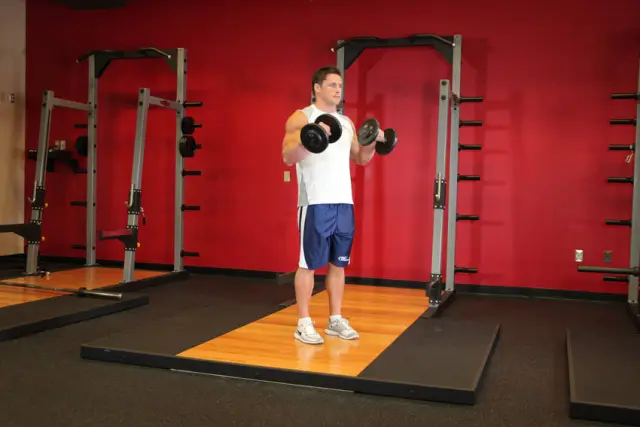 Dumbbell Reverse Curl vs Reverse Cable CurlThe Dumbbell Reverse Curl uses free weights that are hardest in the middle of the curl, and the Reverse Cable Curl keeps the cable tight all the way.
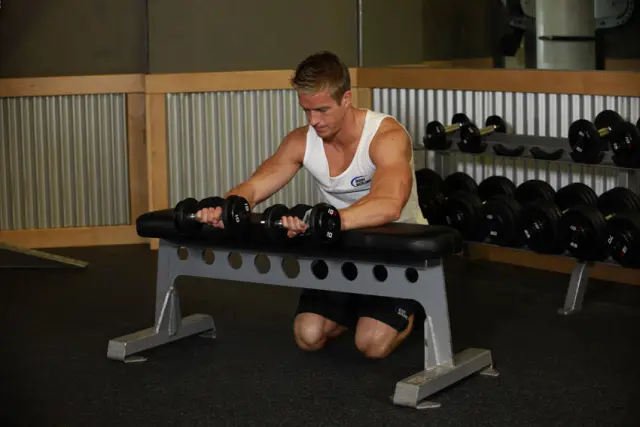 Dumbbell Reverse Wrist Curl vs Barbell Reverse Wrist CurlThe Dumbbell Reverse Wrist Curl lets each wrist move on its own, and the Barbell Reverse Wrist Curl uses one bar for both hands.Dumbbell Wrist Curl vs Cable Wrist CurlThe Dumbbell Wrist Curl uses free weights with a short stretch at the bottom, and the Cable Wrist Curl keeps the cable under tension the whole way.
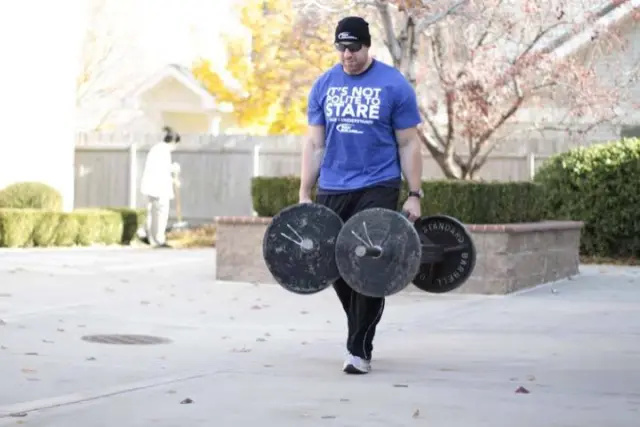 Farmer's Walk vs Plate PinchFarmer's Walk has you carry heavy weights by the handles, and the Plate Pinch has you pinch plates with your fingertips.
Leg Exercises
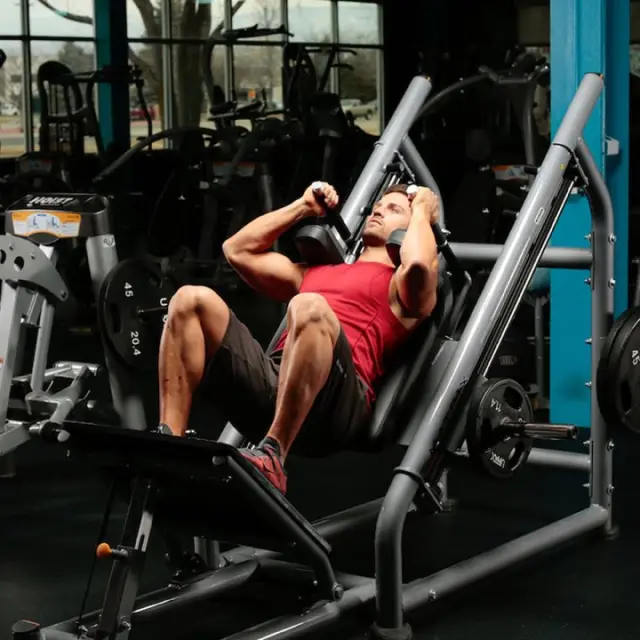 Hack Squat vs Leg PressThe Hack Squat takes you through a deep, upright squat on rails, while the Leg Press has you push a platform from a seat.
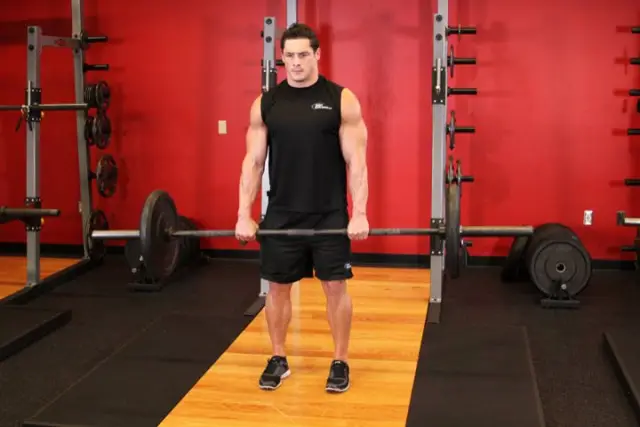 Romanian Deadlift vs DeadliftThe Romanian Deadlift starts at the top and only goes as low as your hamstrings allow, while the Deadlift lifts the bar off the floor on every rep.
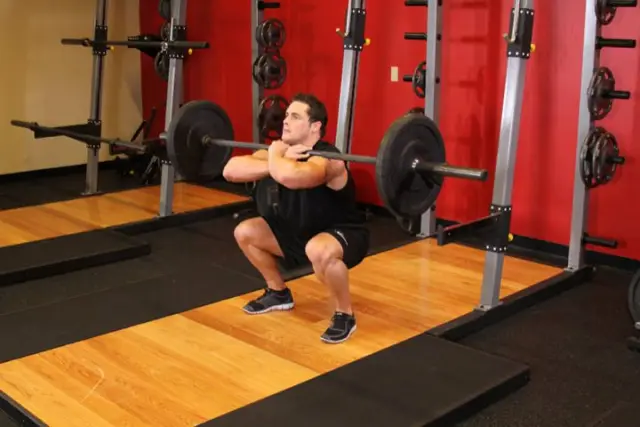 Front Squat vs SquatsIn the Front Squat the bar sits on the front of your shoulders, and in Squats it sits on your upper back.Hack Squat vs SquatsThe Hack Squat guides the weight on rails, while Squats make you stabilize the barbell yourself.
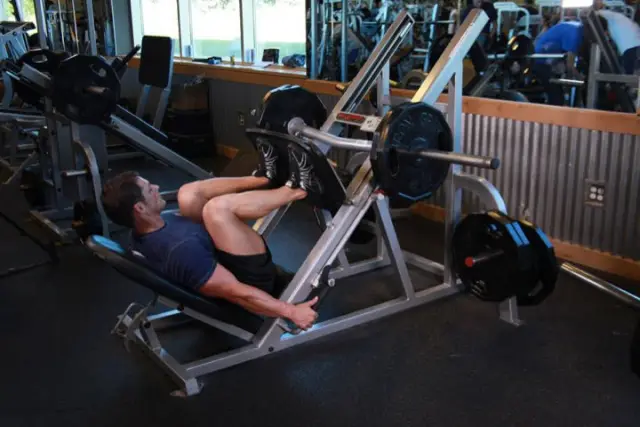 Leg Press vs SquatsSquats make you carry and balance the bar, while the Leg Press takes the balance and the back work away.
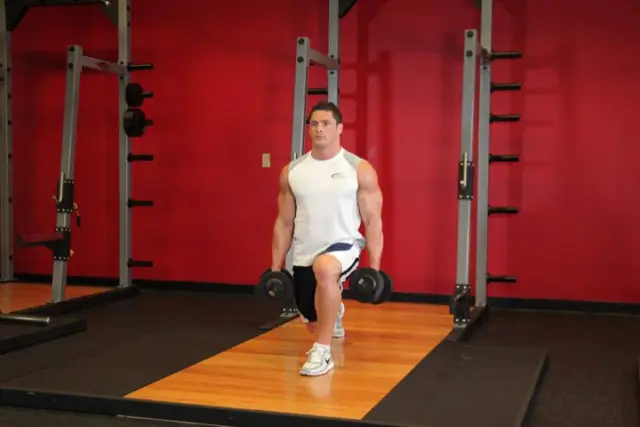 Reverse Lunge vs LungesThe Reverse Lunge happens in place with a step back, while Lunges travel forward step by step.Leg Press vs Leg ExtensionThe Leg Press is a multi-joint lift for quads and glutes, and the Leg Extension moves only the knee and isolates the quads.
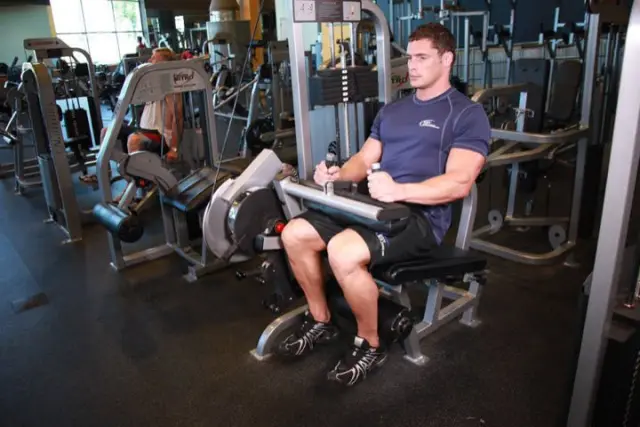 Seated Leg Curl vs Lying Leg CurlIn the Seated Leg Curl your hips are bent, so your hamstrings work in a stretched position, while in the Lying Leg Curl your hips are straight.
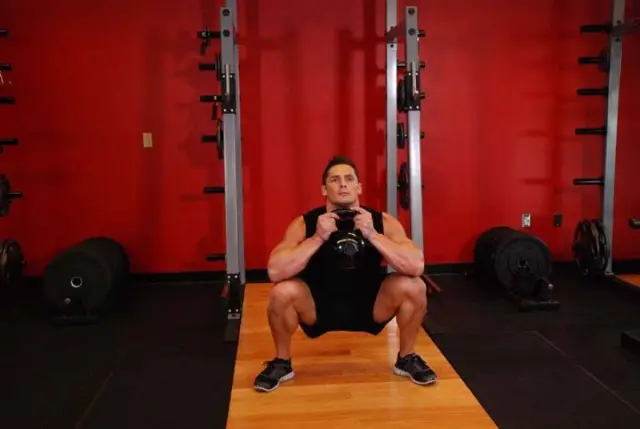 Goblet Squat vs SquatsYou hold one dumbbell in front of your chest for the Goblet Squat, and you carry a barbell on your back for Squats.
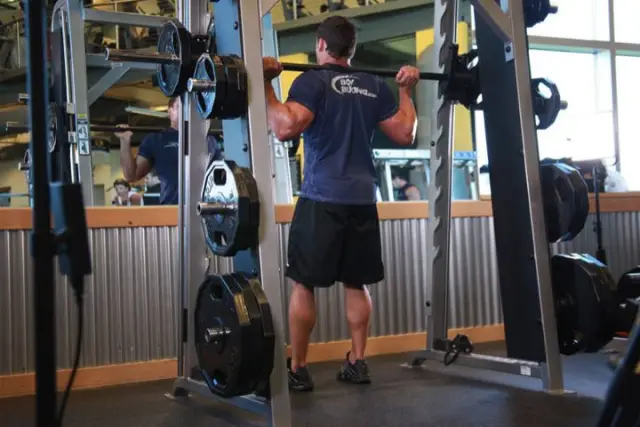 Smith Machine Squat vs SquatsThe Smith Machine Squat runs the bar on a fixed track, while Squats let you set the bar path yourself.
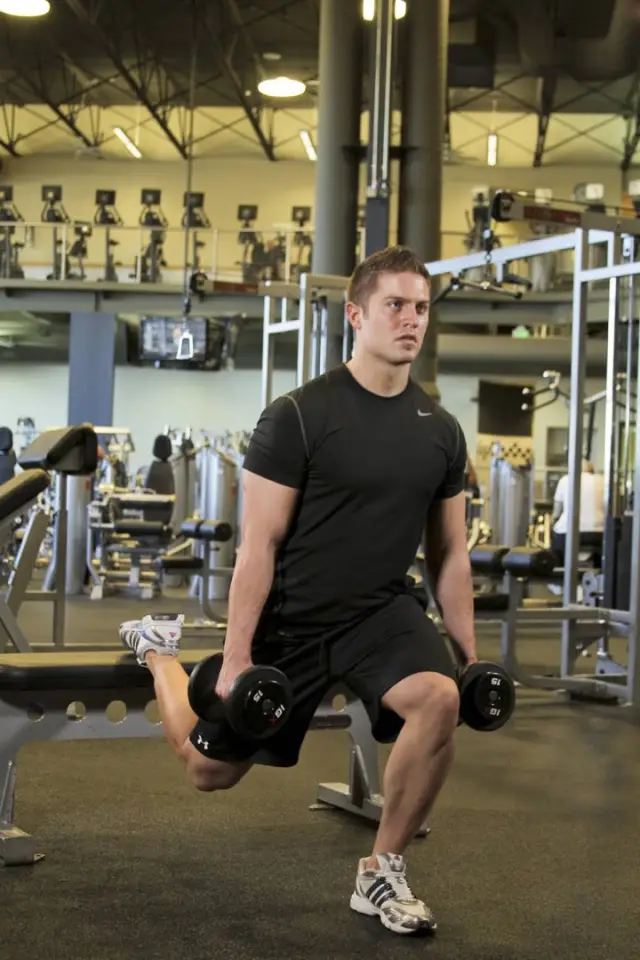 Bulgarian Split Squat vs LungesYou do the Bulgarian Split Squat in place with your back foot on a bench, while Lunges travel forward step by step.
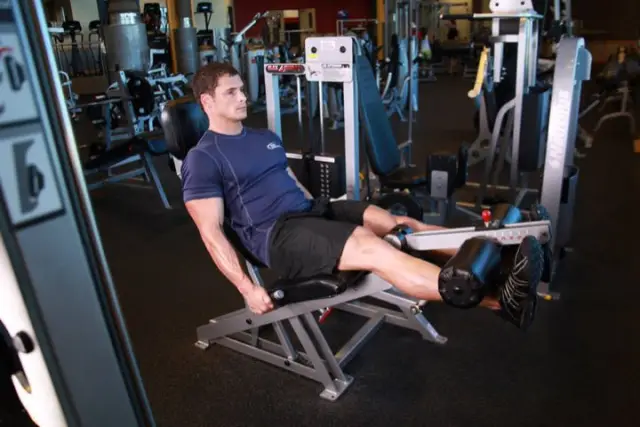 Leg Extension vs SquatsThe Leg Extension moves only the knee and isolates your quads, while Squats train legs, glutes and core together.Romanian Deadlift vs Good MorningsBoth are the same hip hinge, but the Romanian Deadlift holds the bar in your hands and Good Mornings carry it on your back.Hyperextension vs Good MorningsYou do the Hyperextension on a bench with your own body weight, and you do Good Mornings standing with a barbell on your back.
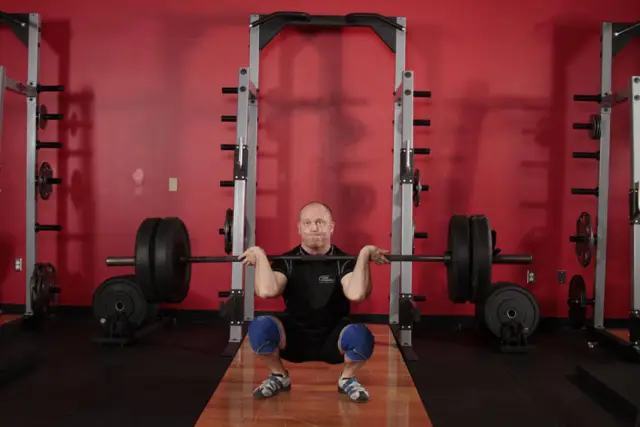 Clean and Jerk vs SnatchThe Clean and Jerk lifts the bar in two steps, first to your shoulders and then overhead.Clean and Jerk vs Clean and PressThe Clean and Jerk drives the bar overhead with a dip and a leg drive, while the Clean and Press uses your shoulders only.
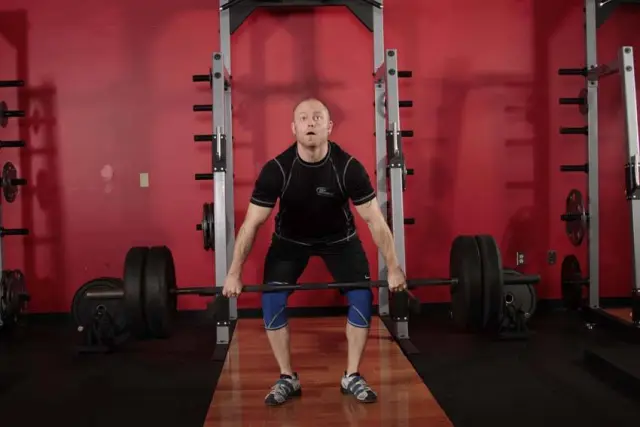 Clean Pull vs Snatch PullThe Clean Pull uses your normal clean grip.Hack Squat vs V-Squat MachineThe Hack Squat has you lean back against an angled pad, while the V-Squat Machine guides the squat through a lever arm with shoulder pads.Leg Press vs V-Squat MachineThe Leg Press has you sit and push a platform away, while the V-Squat Machine has you stand with shoulder pads and squat.Leg Press vs Narrow-Stance Leg PressThe Leg Press uses your normal stance, while the Narrow-Stance Leg Press puts your feet hip width apart at most.Hack Squat vs Barbell Hack SquatThe Hack Squat is done on a machine, while the Barbell Hack Squat holds a bar behind your legs at arm's length.Hack Squat vs Narrow-Stance Hack SquatThe Hack Squat uses your normal foot position, while the Narrow-Stance Hack Squat puts your feet close together.Front Squat vs Double Kettlebell Front SquatThe Front Squat holds a barbell on the front of your shoulders, while the Double Kettlebell Front Squat holds a kettlebell in each hand at your chest.Hack Squat vs Front SquatThe Hack Squat is a guided machine squat, while the Front Squat holds a barbell on the front of your shoulders.
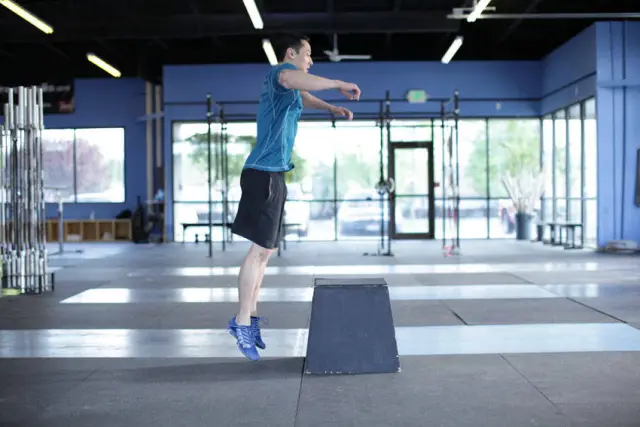 Box Jump vs Depth JumpThe Box Jump has you jump from the floor up onto a box, while the Depth Jump has you step off a box and jump up right after you land.Box Jump vs Jump SquatThe Box Jump has you jump onto a box and land softly on top, while the Jump Squat has you jump straight up from a squat and land on the floor.
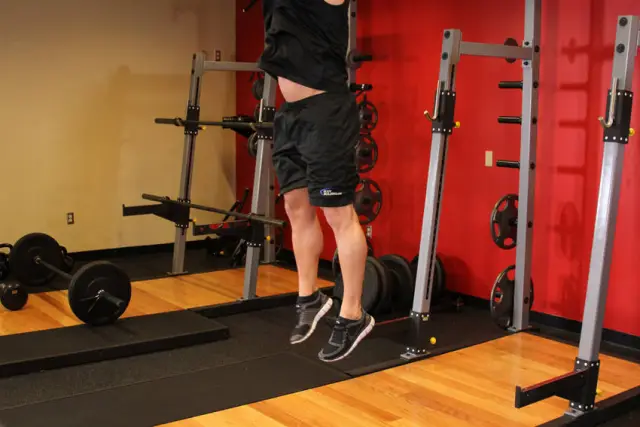 Jump Squat vs Barbell Jump SquatThe Jump Squat uses only your body weight, while the Barbell Jump Squat adds a light bar on your back.Box Jump vs Bench JumpThe Box Jump uses a plyo box, while the Bench Jump uses a bench that you jump onto with both feet.Box Jump vs Standing Long JumpThe Box Jump sends you up onto a box, while the Standing Long Jump sends you forward for distance.Jump Squat vs Split JumpThe Jump Squat has you jump straight up with both feet, while the Split Jump has you jump out of a lunge and switch legs in the air.Jump Squat vs Tuck JumpThe Jump Squat starts from a squat and stays close to the floor, while the Tuck Jump pulls your knees up to your chest in the air.Box Jump vs Continuous Box JumpThe Box Jump has you reset after each rep, while the Continuous Box Jump has you go straight into the next jump.
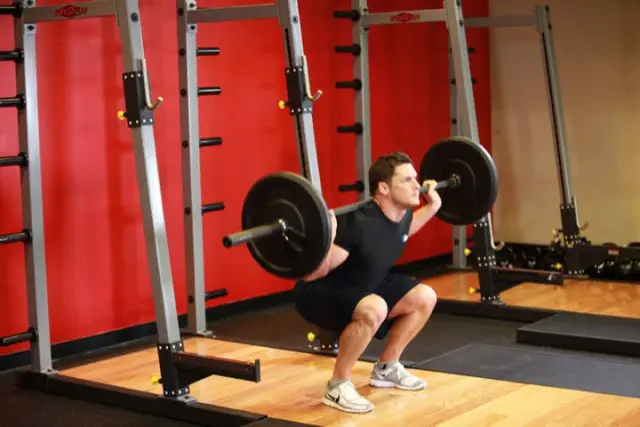 Squats vs Dumbbell SquatSquats use a barbell on your back, while the Dumbbell Squat holds the weight at your sides.Goblet Squat vs Dumbbell SquatThe Goblet Squat holds one dumbbell at your chest, while the Dumbbell Squat holds a dumbbell in each hand at your sides.Squats vs Box SquatSquats have you go down and up without a stop, while the Box Squat has you sit back onto a box and pause before you stand.Squats vs Zercher SquatIn Squats the bar sits on your upper back, while in the Zercher Squat it sits in the crook of your elbows.Squats vs Overhead SquatSquats keep the bar on your back, while the Overhead Squat holds it locked out above your head.Squats vs Wide-Stance Barbell SquatSquats use a stance about shoulder width, while the Wide-Stance Barbell Squat sets your feet clearly wider with toes turned out.
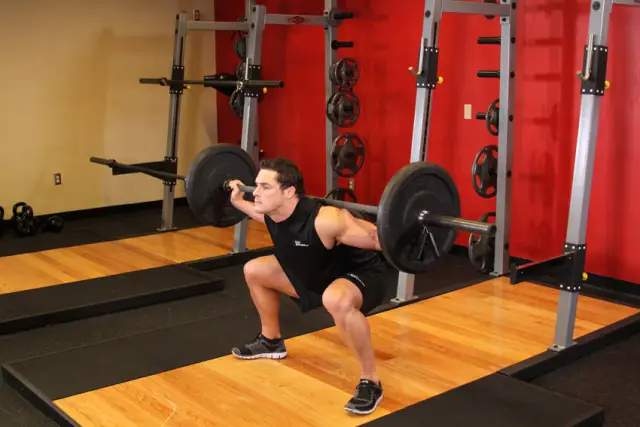 Wide-Stance Barbell Squat vs Narrow Stance SquatThe Wide-Stance Barbell Squat sets your feet wide with toes out, and the Narrow Stance Squat keeps your feet close together.
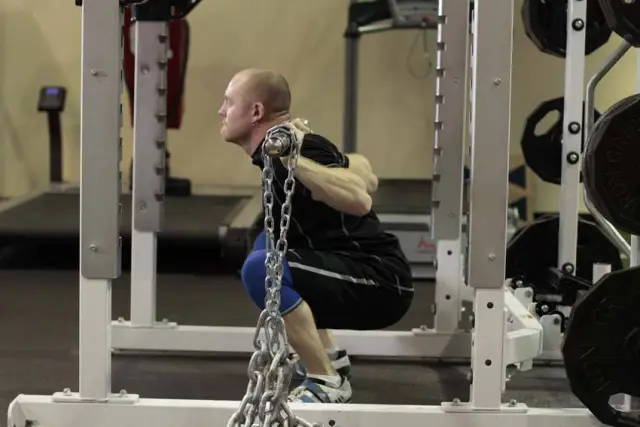 Barbell Squat with Chains vs Barbell Squat with BandsBoth add load as you stand up.
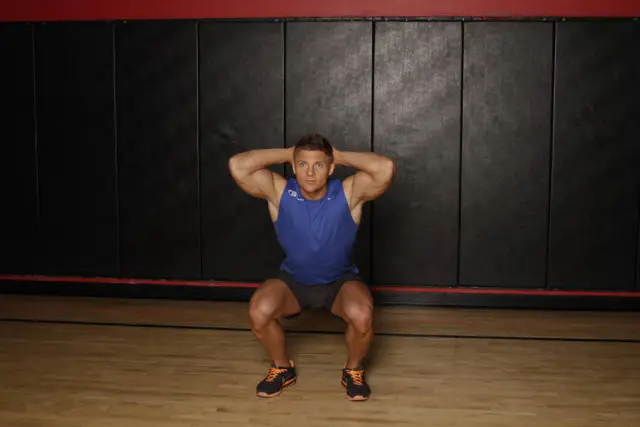 Bodyweight Squat vs Goblet SquatThe Bodyweight Squat uses only your own weight, while the Goblet Squat adds a dumbbell at your chest.Romanian Deadlift vs Stiff-Leg DeadliftIn Romanian Deadlift you keep a soft bend in your knees and push your hips back, while in Stiff-Leg Deadlift you keep your legs almost straight.Romanian Deadlift vs Stiff-Leg Dumbbell DeadliftRomanian Deadlift uses a barbell that you can load heavy, while Stiff-Leg Dumbbell Deadlift uses two dumbbells that hang at your sides.Romanian Deadlift vs Smith Machine Romanian DeadliftIn Romanian Deadlift you control a free barbell, and in Smith Machine Romanian Deadlift the bar runs on a fixed path.Romanian Deadlift vs Single-Leg Romanian DeadliftIn Romanian Deadlift you hinge on both legs with a barbell, and in Single-Leg Romanian Deadlift you hinge on one leg with dumbbells.Romanian Deadlift vs Deficit Romanian DeadliftRomanian Deadlift starts from the floor level, while Deficit Romanian Deadlift has you stand on a low platform so the bar travels farther.
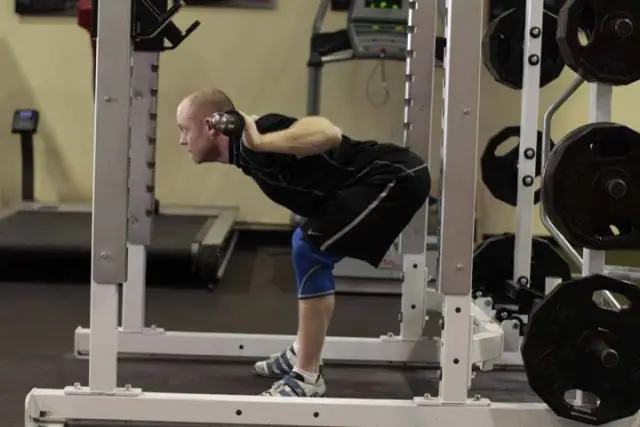 Good Mornings vs Stiff-Leg DeadliftIn Good Mornings the bar rests on your upper back and you hinge forward, while in Stiff-Leg Deadlift you hold the bar in your hands.Hyperextension vs Roman Chair Back ExtensionHyperextension uses an angled bench and Roman Chair Back Extension uses a flat Roman chair with your torso hanging down.Hyperextension vs Reverse HyperextensionHyperextension has you lift your torso over a pad, while Reverse Hyperextension has you swing your legs back and up.Hyperextension vs Exercise Ball Back ExtensionHyperextension uses a fixed bench, while Exercise Ball Back Extension is done over a large ball that moves under you.
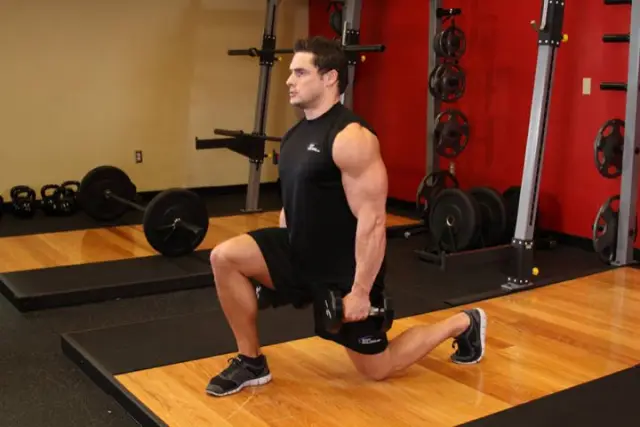 Lunges vs Barbell Walking LungeIn Lunges you hold dumbbells at your sides, and in Barbell Walking Lunge you carry a barbell on your upper back.Lunges vs Bodyweight Walking LungeLunges add dumbbells to the movement, while Bodyweight Walking Lunge uses only your body.Lunges vs Step-UpsIn Lunges you travel forward with every step, and in Step-Ups you stay in place and step onto a box.Bulgarian Split Squat vs Barbell Bulgarian Split SquatBulgarian Split Squat holds dumbbells at your sides, while Barbell Bulgarian Split Squat has you carry a barbell on your upper back.Bulgarian Split Squat vs Step-UpsIn Bulgarian Split Squat your back foot rests on a bench and you squat down on one leg, while in Step-Ups you step up onto a box.Bulgarian Split Squat vs Reverse LungeBulgarian Split Squat keeps your back foot on a bench, while Reverse Lunge has you step back and lower your knee toward the floor.Bulgarian Split Squat vs Single-Leg Leg PressBulgarian Split Squat has you balance with a free weight, while Single-Leg Leg Press has you push a platform from a seat.Reverse Lunge vs Step-UpsIn Reverse Lunge you step back and lower your knee, while in Step-Ups you step up onto a box.
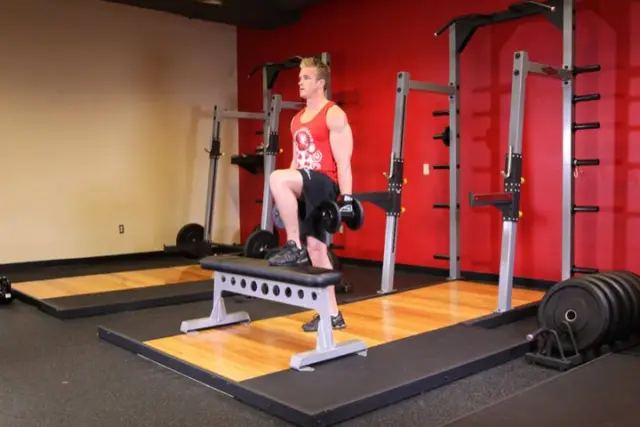 Step-Ups vs Barbell Step-UpIn Step-Ups you hold dumbbells at your sides, and in Barbell Step-Up you carry a barbell on your upper back.Seated Leg Curl vs Standing Leg CurlThe Seated Leg Curl bends your hips and stretches your hamstrings, and the Standing Leg Curl works one leg at a time.
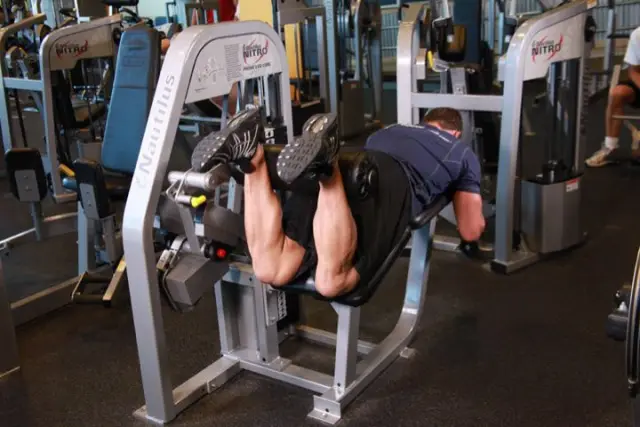 Lying Leg Curl vs Nordic Hamstring CurlThe Lying Leg Curl uses a machine with a set weight, and the Nordic Hamstring Curl has you lower your body forward on your knees with no machine.
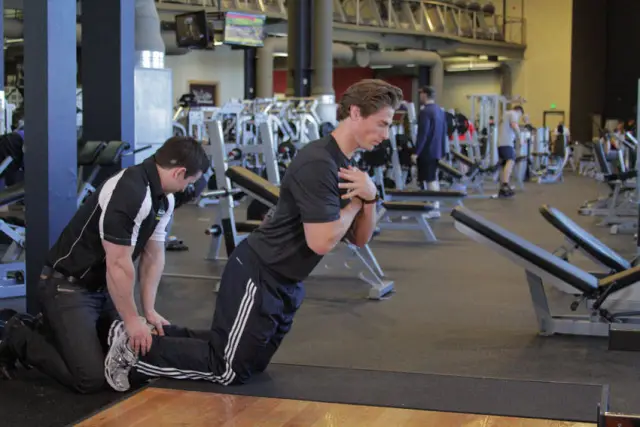 Nordic Hamstring Curl vs Glute Ham RaiseThe Nordic Hamstring Curl lowers your body forward on your knees, and the Glute Ham Raise lifts your torso on a glute ham developer.Lying Leg Curl vs Stability Ball Leg CurlThe Lying Leg Curl uses a machine, and the Stability Ball Leg Curl uses a ball under your heels on the floor.
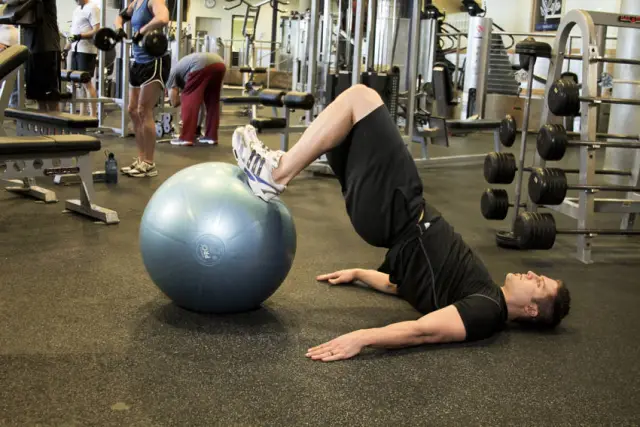 Stability Ball Leg Curl vs Hamstring SlidesThe Stability Ball Leg Curl rolls a ball toward your hips, and Hamstring Slides slide your heel along the floor on a towel.Leg Extension vs Single-Leg Leg ExtensionThe Leg Extension trains both legs together, while the Single-Leg Leg Extension trains one leg at a time.Leg Extension vs Weighted Sissy SquatThe Leg Extension isolates your quads on a machine, while the Weighted Sissy Squat lets your knees travel far forward with your body leaning back.
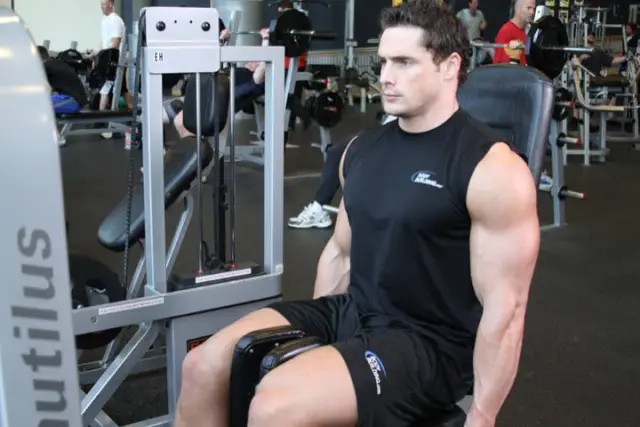 Hip Adduction Machine vs Cable Hip AdductionThe Hip Adduction Machine has you squeeze your legs together from a seat, while Cable Hip Adduction has you pull one leg across your body against a cable.
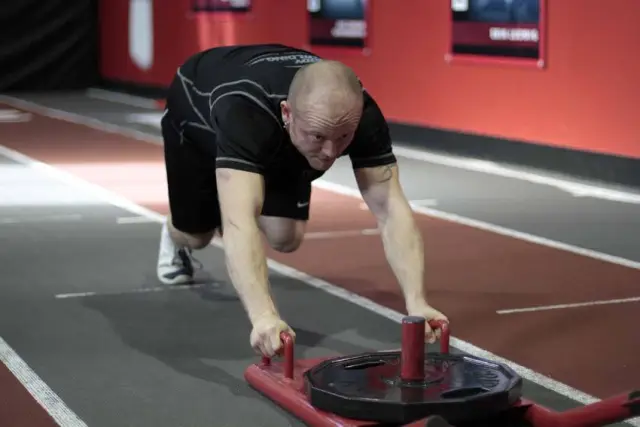 Sled Push vs Sled DragThe Sled Push has you push a loaded sled in front of you, while the Sled Drag has you pull it behind you with a strap or harness.
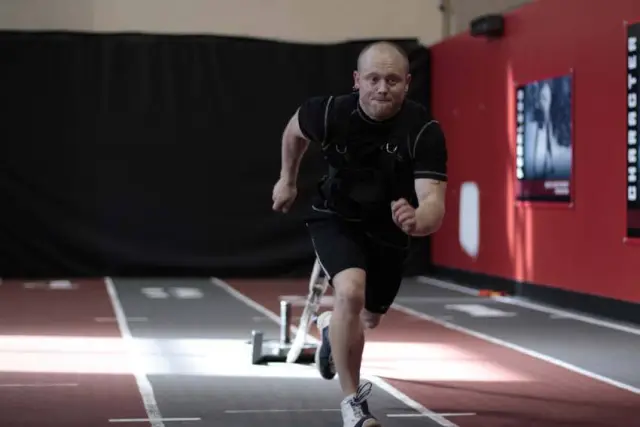 Sled Drag vs Backward Sled DragThe Sled Drag has you walk forward while you pull the sled, while the Backward Sled Drag has you walk backward and pull it toward you.Squats vs Bulgarian Split SquatWith Squats, you squat on two feet and load the bar heavy.Squats vs LungesWith Squats, you stay in one spot and squat with a heavy bar.Squats vs Bodyweight SquatWith Squats, you load a bar and train for strength and size.Squats vs Narrow Stance SquatWith Squats, you use your normal stance.Front Squat vs Goblet SquatWith Front Squat, you hold a barbell on your shoulders in front.Front Squat vs Leg PressFront Squat is a free-weight squat that needs balance, core strength and mobility.Front Squat vs Overhead SquatWith Front Squat, the bar rests on your front shoulders.Front Squat vs Zercher SquatWith Front Squat, the bar sits on your shoulders.Leg Press vs Bulgarian Split SquatLeg Press is a machine where you push a platform with both legs.Leg Press vs Smith Machine SquatLeg Press has you push a platform from a seat, and Smith Machine Squat has you squat under a bar that moves on fixed rails.Leg Press vs Single-Leg Leg PressLeg Press has you push with both legs, and Single-Leg Leg Press has you push with one leg at a time.Leg Press vs Goblet SquatWith Leg Press, you sit and push a loaded platform.Hack Squat vs Smith Machine SquatHack Squat puts you on an angled sled, and Smith Machine Squat has you squat under a bar on vertical rails.Hack Squat vs Bulgarian Split SquatHack Squat is a machine squat on a sled with a back pad.Hack Squat vs Leg ExtensionHack Squat is a compound exercise that trains quads and glutes together.Goblet Squat vs Bulgarian Split SquatGoblet Squat is a two-legged squat with one dumbbell at your chest.Bulgarian Split Squat vs Kettlebell Pistol SquatBulgarian Split Squat puts your back foot on a bench and lets you load dumbbells.Bulgarian Split Squat vs Suspended Split SquatBulgarian Split Squat puts your back foot on a bench.Lunges vs Barbell LungeWith Lunges, you hold dumbbells and walk forward step by step.Lunges vs Smith Machine LungeWith Lunges, you walk with free weights and balance on your own.
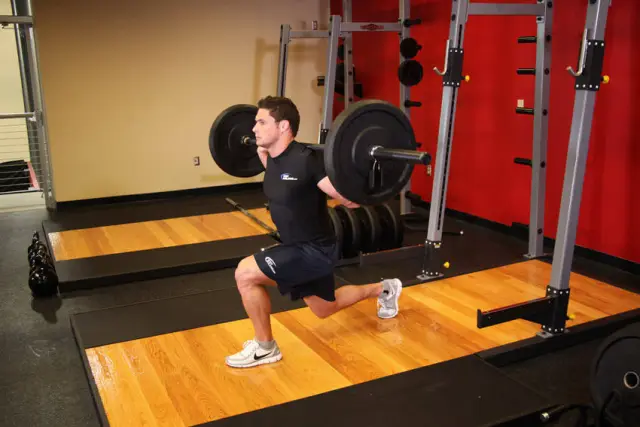 Barbell Lunge vs Barbell Walking LungeBarbell Lunge has you step and return in place with a bar on your back.Barbell Lunge vs Barbell Bulgarian Split SquatBarbell Lunge has you step and return with a bar on your back.Reverse Lunge vs Smith Machine LungeReverse Lunge has you step back with free weights.Step-Ups vs Explosive Step-UpWith Step-Ups, you step onto a box slowly and under control with dumbbells.Box Jump vs Tuck JumpBox Jump has you jump up onto a box and land softly.Box Jump vs Hurdle HopsWith Box Jump, you jump up onto a box.Jump Squat vs Bodyweight SquatJump Squat adds an explosive jump to the squat.Jump Squat vs Rocket JumpJump Squat is a jump from a squat with your arms at your sides or behind.
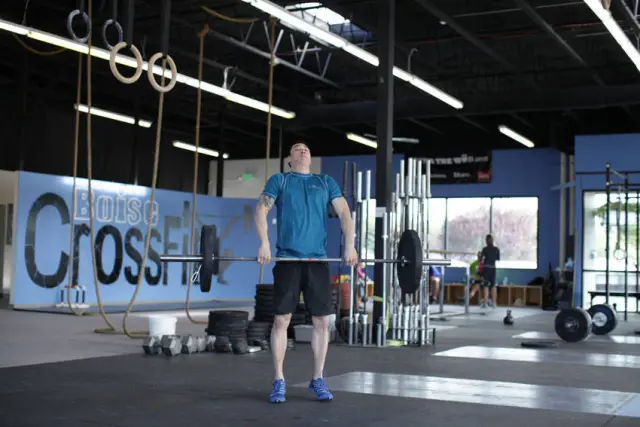 Clean and Press vs Kettlebell ThrusterClean and Press has you pull a barbell to your shoulders and then press it overhead.Hip Adduction Machine vs Standing Band Hip AdductionThe Hip Adduction Machine lets you load your inner thighs with a stack, and the Standing Band Hip Adduction uses a band while you stand.
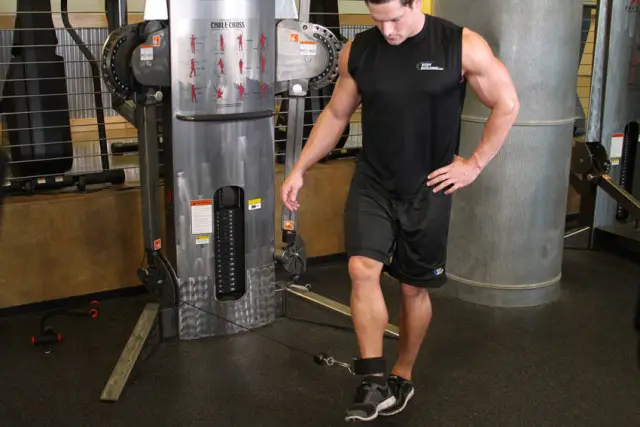 Cable Hip Adduction vs Standing Band Hip AdductionThe Cable Hip Adduction pulls your leg across with a cable, and the Standing Band Hip Adduction uses a band while you stand.Romanian Deadlift vs Leg CurlRomanian Deadlift trains your hamstrings by bending at the hips with a bar.Romanian Deadlift vs Lying Leg CurlRomanian Deadlift lengthens your hamstrings at the hip under a heavy bar.Romanian Deadlift vs HyperextensionRomanian Deadlift hinges with a heavy bar in your hands.Romanian Deadlift vs Cable Pull-ThroughRomanian Deadlift hinges with a barbell, so the load pulls straight down.
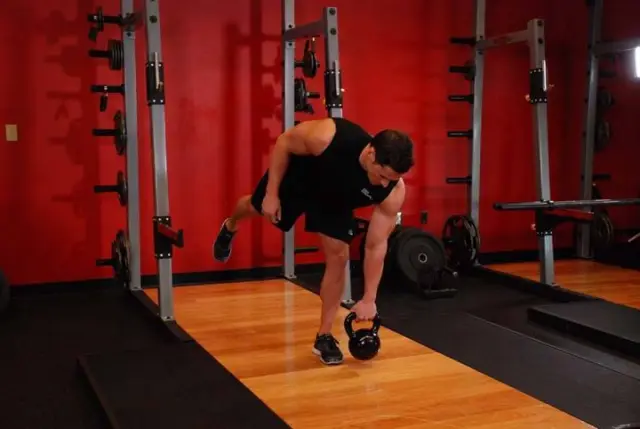 Single-Leg Romanian Deadlift vs Stiff-Leg Dumbbell DeadliftSingle-Leg Romanian Deadlift hinges on one leg, so balance and hip control matter a lot.
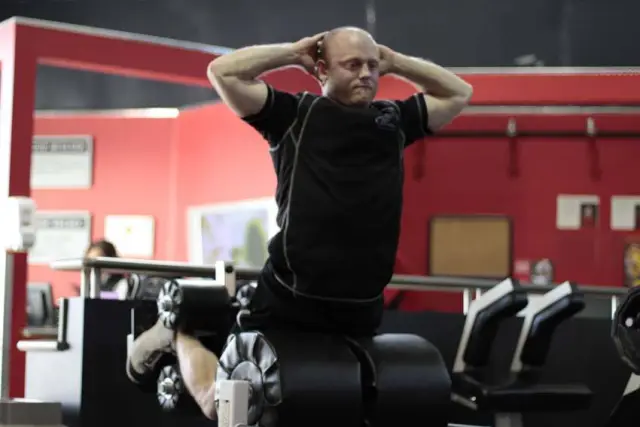 Glute Ham Raise vs HyperextensionGlute Ham Raise uses a machine that locks your feet so you can bend at the knee and hip.Glute Ham Raise vs Leg CurlGlute Ham Raise has you lift your body weight with your hamstrings.Nordic Hamstring Curl vs Leg CurlNordic Hamstring Curl has you lower your body to the floor with only your hamstrings holding you.
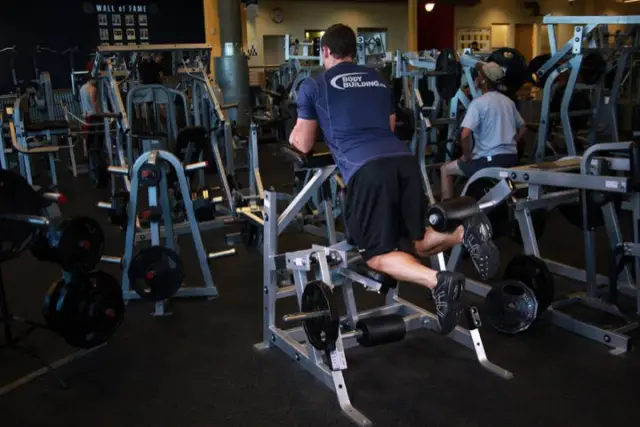 Standing Leg Curl vs Lying Leg CurlStanding Leg Curl works one leg at a time while you stand.Good Mornings vs Band Good MorningGood Mornings hinge your hips with a barbell on your back.Nordic Hamstring Curl vs Hamstring SlidesNordic Hamstring Curl lowers your whole body against gravity from your knees.Glute Ham Raise vs Natural Glute Ham RaiseGlute Ham Raise uses a machine with a pad that supports your body.
Glute Exercises
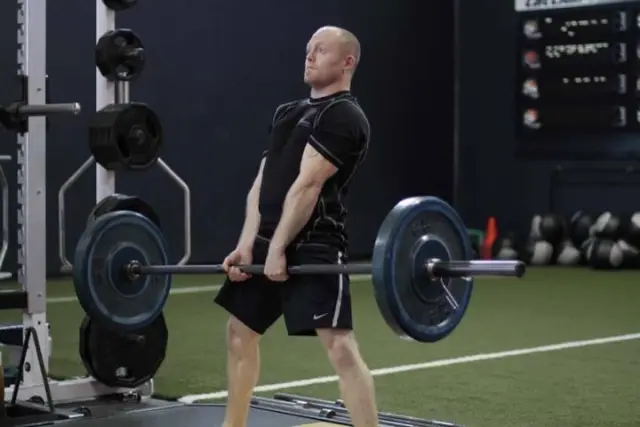 Sumo Deadlift vs DeadliftThe Sumo Deadlift uses a wide stance with your hands inside your legs, and the Deadlift uses a narrow stance with your hands outside.
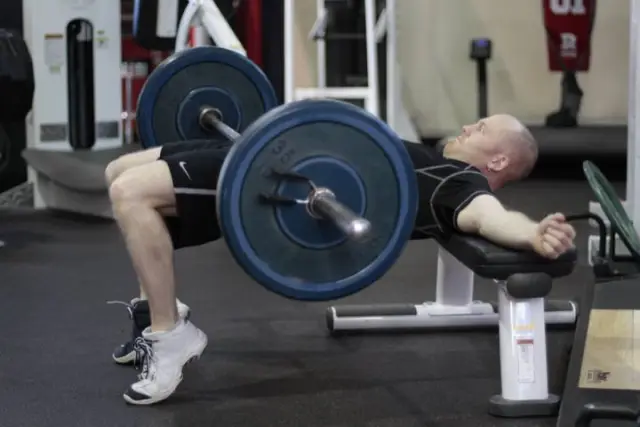 Hip Thrust vs SquatsThe Hip Thrust extends your hips against the bar and mostly hits your glutes, while Squats bend knees and hips and mostly hit your quads.Hip Thrust vs Romanian DeadliftThe Hip Thrust loads your glutes hardest with your hips extended, and the Romanian Deadlift loads glutes and hamstrings hardest in the stretch.
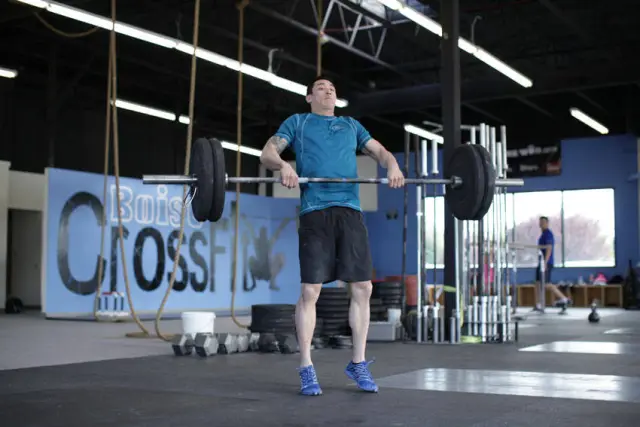 Power Clean vs Barbell CleanThe Power Clean catches the bar in a quarter squat, while the Barbell Clean catches it in a deep squat.
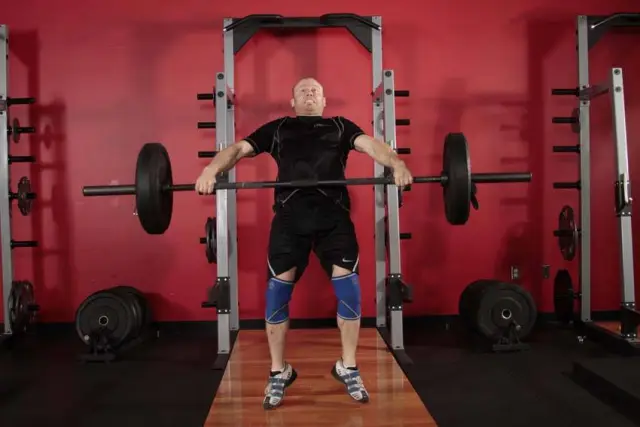 Power Snatch vs SnatchThe Power Snatch catches the bar overhead in a partial squat, while the Snatch catches it in a deep squat.
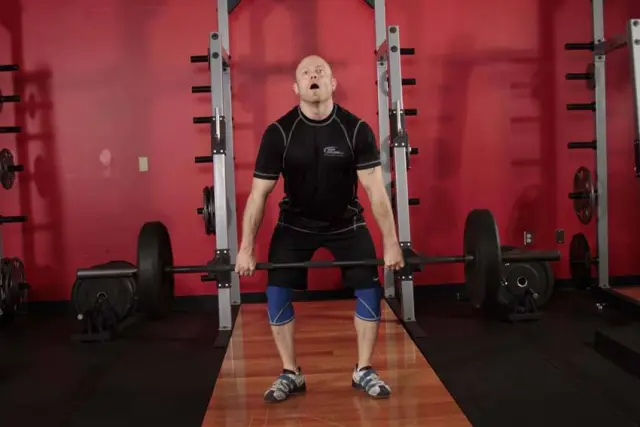 Hang Clean vs Power CleanThe Hang Clean starts with the bar at your thighs, while the Power Clean starts on the floor.
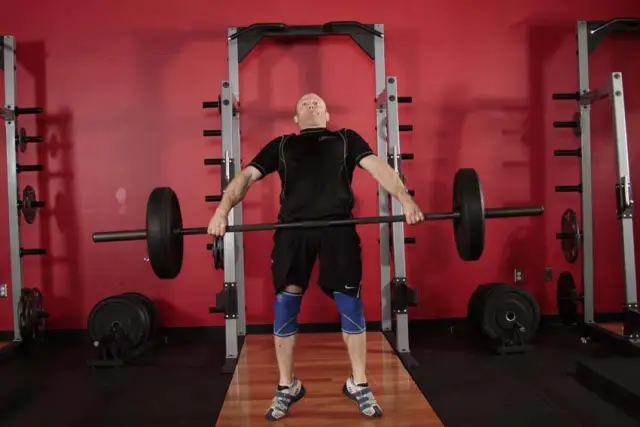 Hang Snatch vs Power SnatchThe Hang Snatch starts with the bar at your hips, while the Power Snatch starts on the floor.
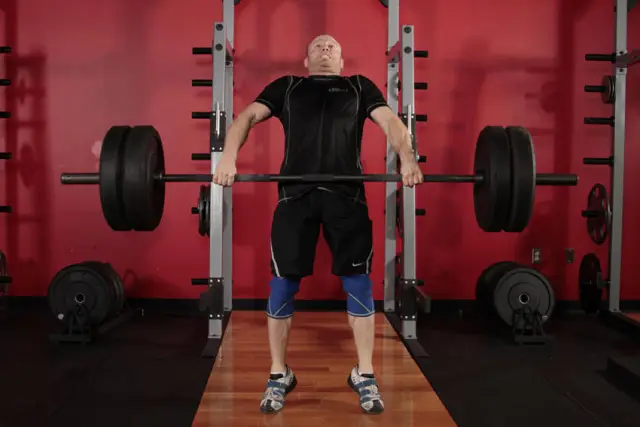 Barbell Clean vs Split CleanThe Barbell Clean catches the bar in a deep squat, while the Split Clean catches it in a split stance.Hang Clean vs Hang Clean Below the KneesThe Hang Clean starts with the bar at your thighs, while the Hang Clean Below the Knees starts just under your knees.Power Clean vs Power Clean from BlocksThe Power Clean starts with the bar on the floor, while the Power Clean from Blocks starts higher on blocks.
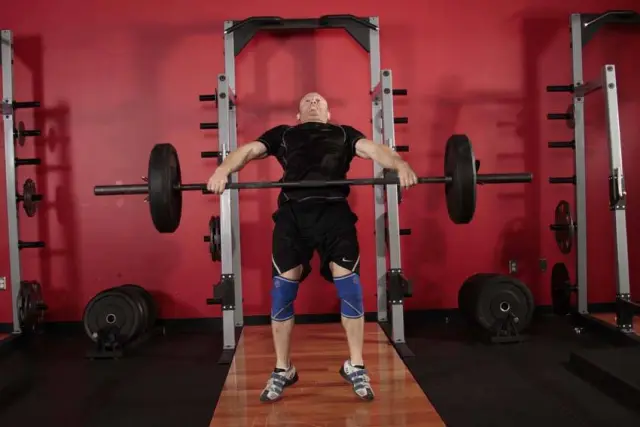 Snatch vs Snatch from BlocksThe Snatch starts with the bar on the floor, while the Snatch from Blocks starts higher on blocks.Snatch vs One-Arm Kettlebell SnatchThe Snatch uses a barbell with both hands, while the One-Arm Kettlebell Snatch swings a single kettlebell overhead.
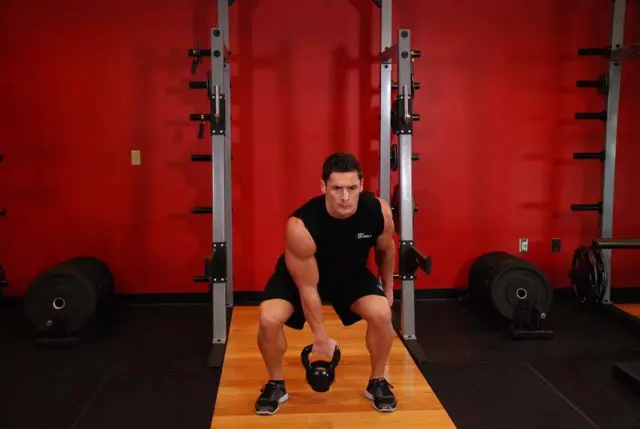 Kettlebell Hang Clean vs Kettlebell Dead CleanThe Kettlebell Hang Clean starts with the bell swinging between your legs, while the Kettlebell Dead Clean starts from a stop on the floor.Power Clean vs Dumbbell CleanThe Power Clean uses a barbell, while the Dumbbell Clean uses two dumbbells.Hang Clean vs Kettlebell Hang CleanThe Hang Clean uses a barbell and brings it to both shoulders, while the Kettlebell Hang Clean brings one bell to your shoulder.Hip Thrust vs Cable Pull-ThroughIn Hip Thrust you drive a barbell up with your back on a bench, and in Cable Pull-Through you pull a cable between your legs and stand up.
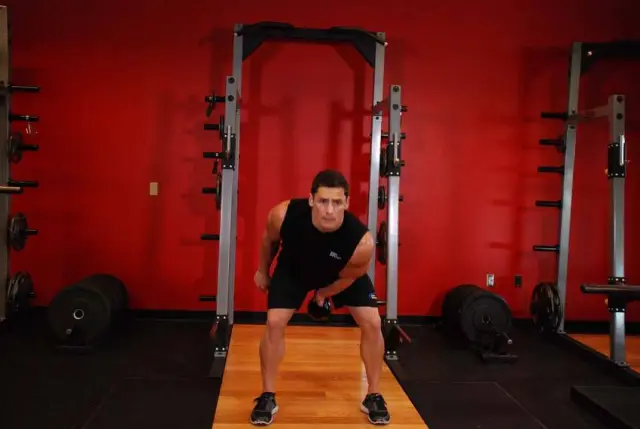 One-Arm Kettlebell Swing vs Dumbbell SwingOne-Arm Kettlebell Swing swings a kettlebell in one hand to chest height, while Dumbbell Swing swings one dumbbell in both hands up over your head.Sumo Deadlift vs Trap Bar DeadliftIn Sumo Deadlift you stand wide and pull the bar between your legs, and in Trap Bar Deadlift you stand inside a hexagon bar.
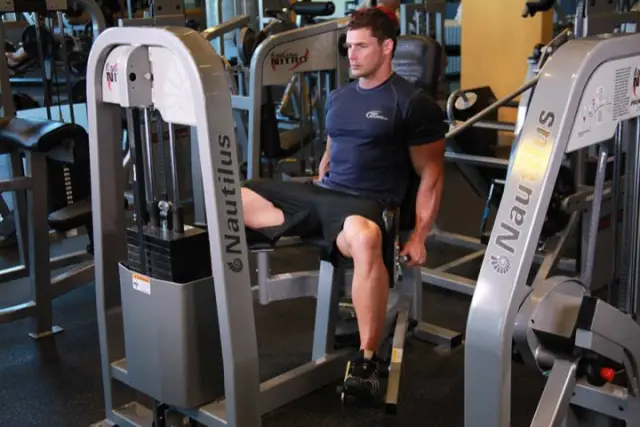 Hip Abduction Machine vs Hip Adduction MachineThe Hip Abduction Machine pushes your legs outward and works the outer side of your glutes, while the Hip Adduction Machine pulls your legs together and works your inner thighs.
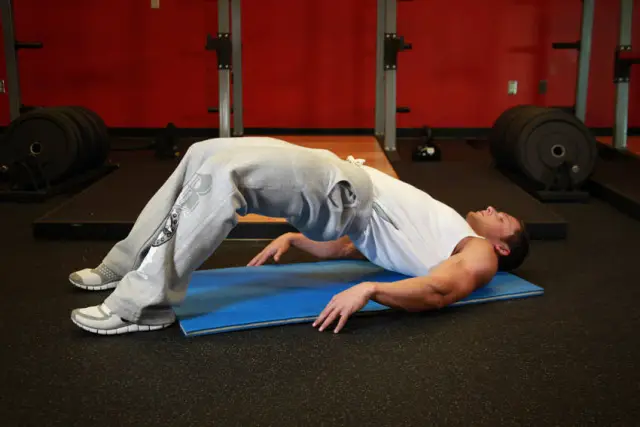 Glute Bridge vs Barbell Glute BridgeThe Glute Bridge uses your body weight on the floor, while the Barbell Glute Bridge adds a loaded bar over your hips.Glute Bridge vs Single-Leg Glute BridgeThe Glute Bridge uses both legs, while the Single-Leg Glute Bridge works one leg at a time.Glute Bridge vs Banded Glute BridgeThe Glute Bridge uses your body weight only, while the Banded Glute Bridge adds a band over your hips that pulls you down.Glute Bridge vs Donkey KicksThe Glute Bridge lifts your hips from the floor with both feet down, while Donkey Kicks lift one bent leg on all fours.Hip Thrust vs Barbell Glute BridgeHip Thrust has your upper back on a bench, so your hips travel through a long range.Hip Thrust vs Glute BridgeHip Thrust puts your upper back on a bench and usually uses a barbell.Hip Thrust vs Sumo DeadliftHip Thrust isolates hip extension with your back on a bench.Hip Thrust vs Reverse HyperextensionHip Thrust drives your hips up from the floor with a bar on your lap.Hip Thrust vs Donkey KicksHip Thrust is a heavy two-leg lift for the whole glute.Hip Thrust vs Hip Abduction MachineHip Thrust extends your hips and works the main glute mass.Sumo Deadlift vs Romanian DeadliftSumo Deadlift starts from the floor with a wide stance and a more upright torso.Barbell Clean vs SnatchBarbell Clean pulls the bar to your shoulders in a front rack.Power Clean vs Power SnatchPower Clean catches the bar at your shoulders, and Power Snatch catches it overhead.Hang Clean vs Barbell CleanHang Clean starts with the bar at your thighs, and Barbell Clean starts from the floor.Hang Clean vs Hang SnatchHang Clean ends with the bar on your shoulders.Hang Snatch vs SnatchHang Snatch starts with the bar at your thighs, and Snatch starts from the floor.
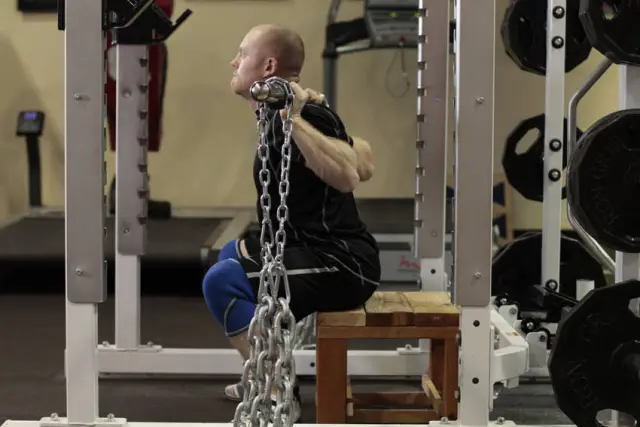 Box Squat With Chains vs Box Squat With BandsBox Squat With Chains adds weight as you stand up, because more chain lifts off the floor.
Calf Exercises
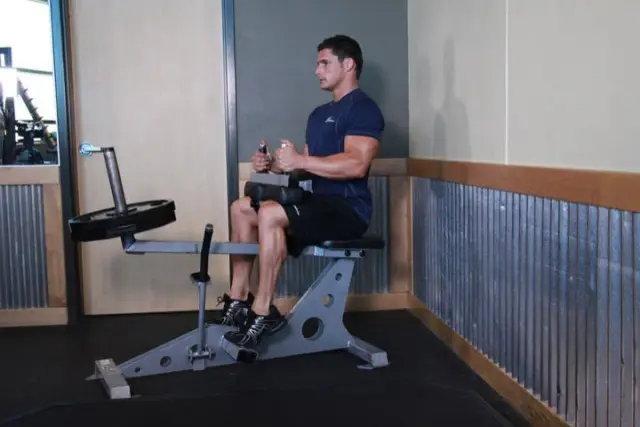 Seated Calf Raise vs Standing Calf RaiseThe Seated Calf Raise trains your calves with bent knees, and the Standing Calf Raise trains them with straight knees.
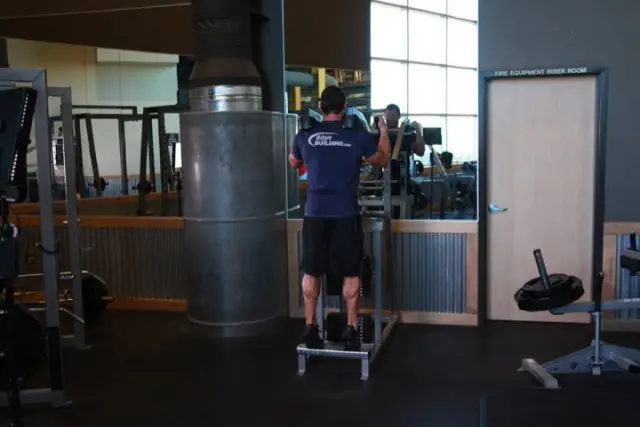 Standing Calf Raise vs Leg Press Calf RaiseThe Standing Calf Raise has you push up with a pad on your shoulders, while the Leg Press Calf Raise has you push a platform from a seat.Standing Calf Raise vs Donkey Calf RaiseThe Standing Calf Raise keeps your torso upright with weight on your shoulders, while the Donkey Calf Raise has you lean forward with the weight on your hips.Standing Calf Raise vs Standing Barbell Calf RaiseThe Standing Calf Raise uses a machine with a pad on your shoulders, while the Standing Barbell Calf Raise uses a free bar on your upper back.Standing Calf Raise vs Standing Dumbbell Calf RaiseThe Standing Calf Raise uses a machine with a pad on your shoulders, while the Standing Dumbbell Calf Raise uses a dumbbell in each hand.Standing Calf Raise vs Smith Machine Calf RaiseThe Standing Calf Raise uses a calf machine, while the Smith Machine Calf Raise uses the guided bar of a Smith machine.
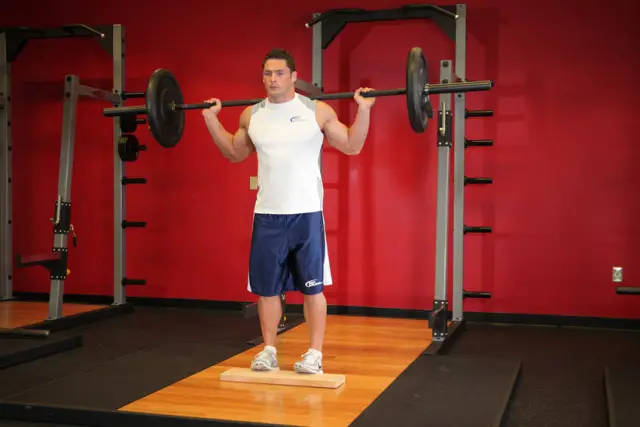 Standing Barbell Calf Raise vs Smith Machine Calf RaiseThe Standing Barbell Calf Raise uses a free bar in a squat rack, while the Smith Machine Calf Raise guides the bar on a track.Seated Calf Raise vs Barbell Seated Calf RaiseThe Seated Calf Raise uses a machine with a pad on your thighs, while the Barbell Seated Calf Raise uses a barbell resting on your thighs.
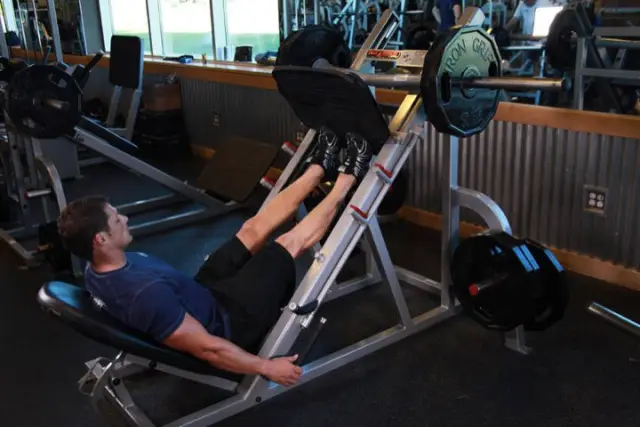 Leg Press Calf Raise vs Donkey Calf RaiseThe Leg Press Calf Raise pushes the platform from a seat with a lot of weight, while the Donkey Calf Raise has you lean forward with the weight on your hips.Standing Calf Raise vs Resistance Band Calf RaiseThe Standing Calf Raise loads your calves with heavy weight on a machine, and the Resistance Band Calf Raise uses a band that gets harder as you rise.
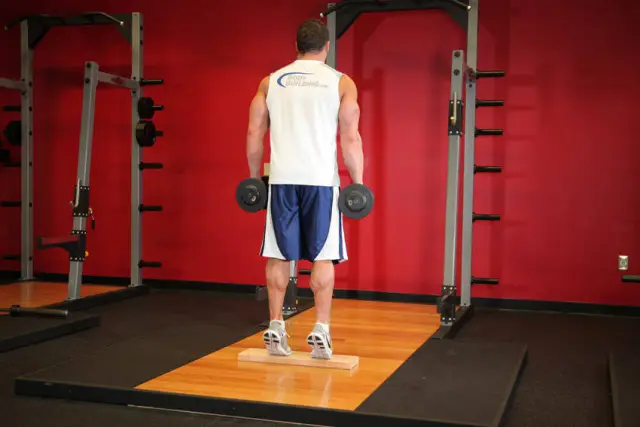 Standing Dumbbell Calf Raise vs Standing Barbell Calf RaiseThe Standing Dumbbell Calf Raise holds a weight in each hand, and the Standing Barbell Calf Raise puts a bar on your back.Seated Calf Raise vs Dumbbell Seated Single-Leg Calf RaiseThe Seated Calf Raise uses a machine with a pad on both knees, and the Dumbbell Seated Single-Leg Calf Raise puts a dumbbell on one knee while you work one leg.Leg Press Calf Raise vs Seated Calf RaiseThe Leg Press Calf Raise uses the leg press with straight legs, and the Seated Calf Raise uses bent knees on a seated machine.
Ab Exercises
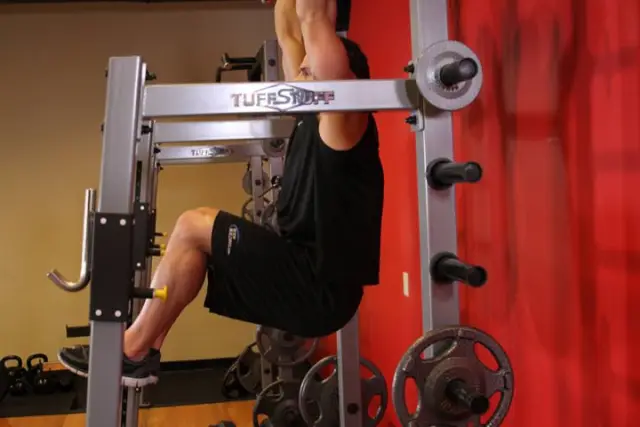 Hanging Leg Raise vs Captain's Chair Knee RaiseIn the Hanging Leg Raise you hang from the bar and raise your legs, while in the Captain's Chair Knee Raise you rest on your forearms against a pad.Hanging Leg Raise vs Lying Leg RaiseIn the Hanging Leg Raise you hang from a bar, while in the Lying Leg Raise you lie on your back.
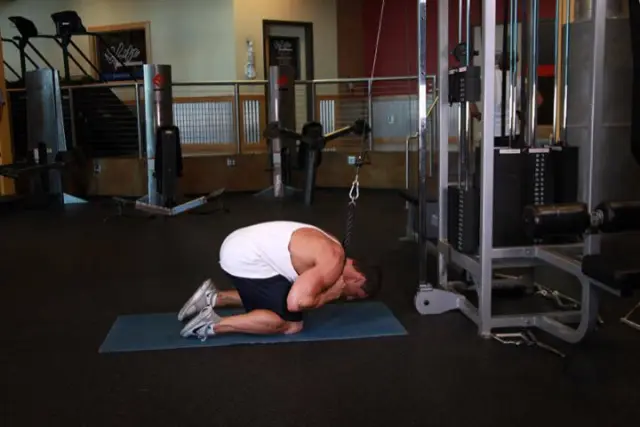 Cable Crunch vs CrunchThe Cable Crunch loads your abs with a cable you can adjust, while the Crunch uses only your body weight.Cable Crunch vs Ab Crunch MachineThe Cable Crunch has you kneel and curl down against a cable, while the Ab Crunch Machine guides the curl on a seat with foot pads.
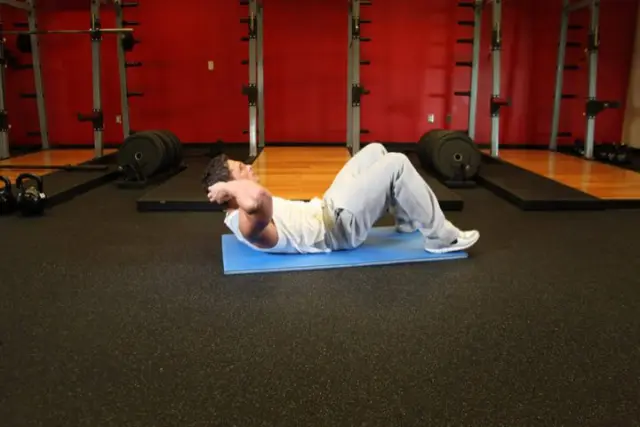 Crunch vs Sit-UpsThe Crunch curls only your upper body, while the Sit-Up raises your whole torso to sitting.
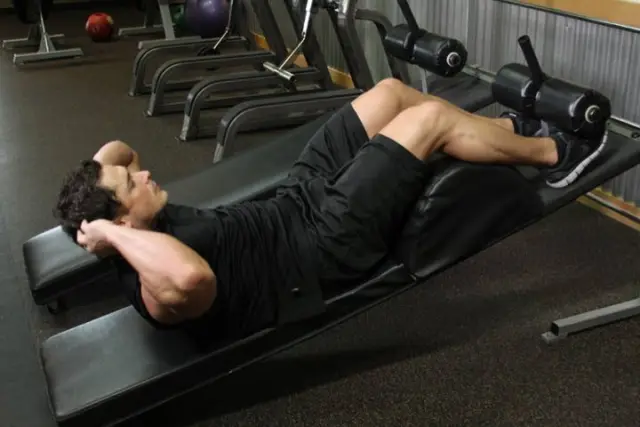 Decline Sit-Ups vs Sit-UpsThe Decline Sit-Up puts your head below your hips, while the Sit-Up is done flat.Crunch vs Reverse CrunchThe Crunch curls your upper body toward your hips, while the Reverse Crunch curls your hips toward your chest.
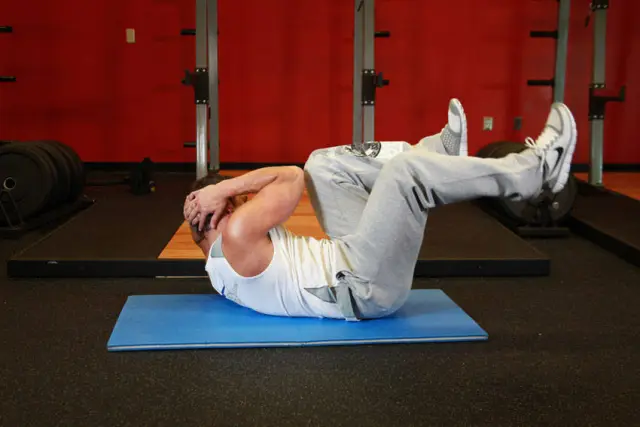 Bicycle Crunch vs CrunchThe Bicycle Crunch pedals your legs and twists your elbows to the opposite knee, while the Crunch curls straight up.Hanging Leg Raise vs Reverse CrunchThe Hanging Leg Raise lifts your legs from a hang, while the Reverse Crunch curls your hips up on the floor.Cable Crunch vs Hanging Leg RaiseThe Cable Crunch curls your torso down against a cable, while the Hanging Leg Raise lifts your legs from a hang.
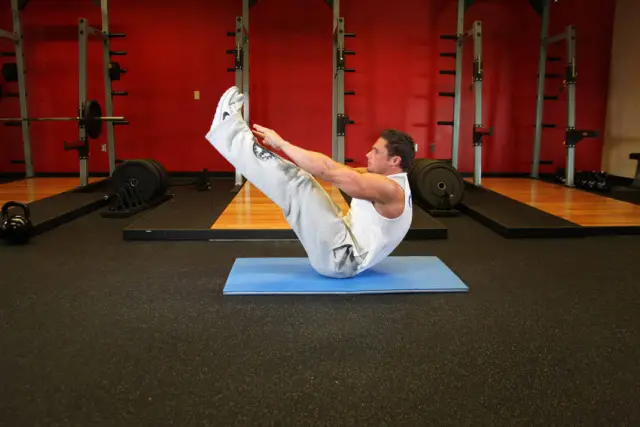 Jackknife Sit-Up vs Sit-UpsThe Jackknife Sit-Up (V-Up) lifts your arms and legs together over your hips, while the Sit-Up lifts only your torso.
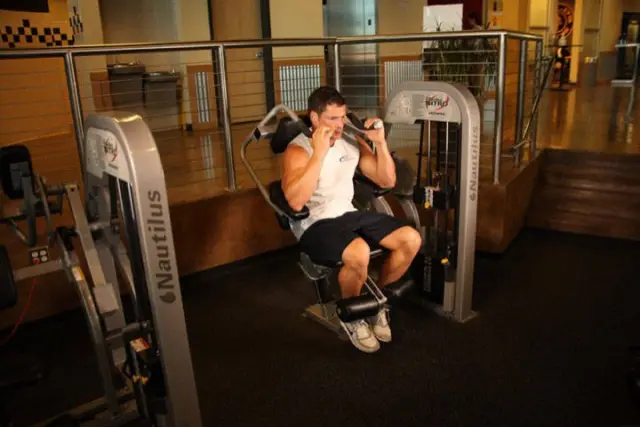 Ab Crunch Machine vs Seated Crunch MachineThe Ab Crunch Machine has handles by your head and foot pads, while the Seated Crunch Machine has a pad on your chest and fixed legs.Cable Crunch vs Standing Cable CrunchThe Cable Crunch is done kneeling, while the Standing Cable Crunch is done on your feet against a high cable.Crunch vs Exercise Ball CrunchThe Crunch is done on the floor, while the Exercise Ball Crunch puts your back on a large ball.
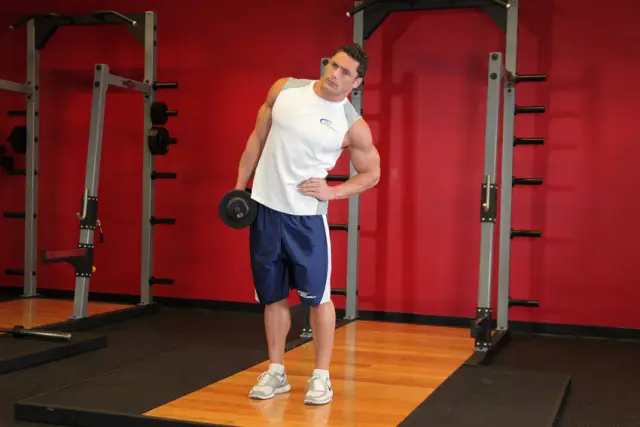 Dumbbell Side Bend vs One-Arm Cable Side BendThe Dumbbell Side Bend uses one dumbbell and gravity, while the One-Arm Cable Side Bend uses a cable that pulls in a steady line.
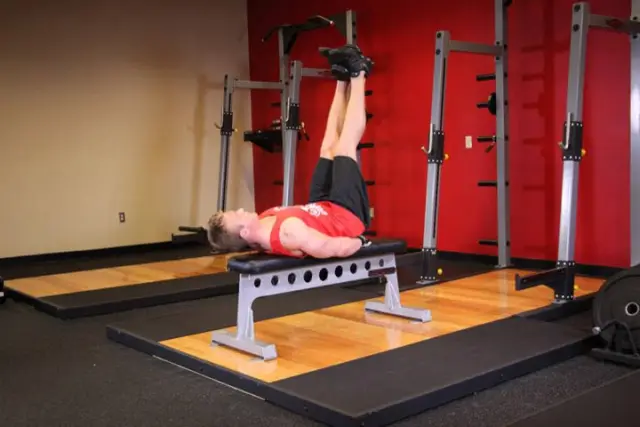 Lying Leg Raise vs Reverse CrunchThe Lying Leg Raise lifts your straight legs while you lie flat, while the Reverse Crunch curls your hips off the floor.
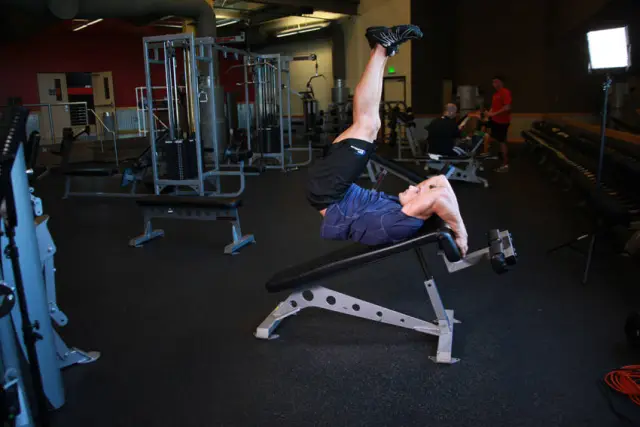 Decline Reverse Crunch vs Reverse CrunchThe Decline Reverse Crunch is done on a decline bench, while the Reverse Crunch is done flat on the floor.
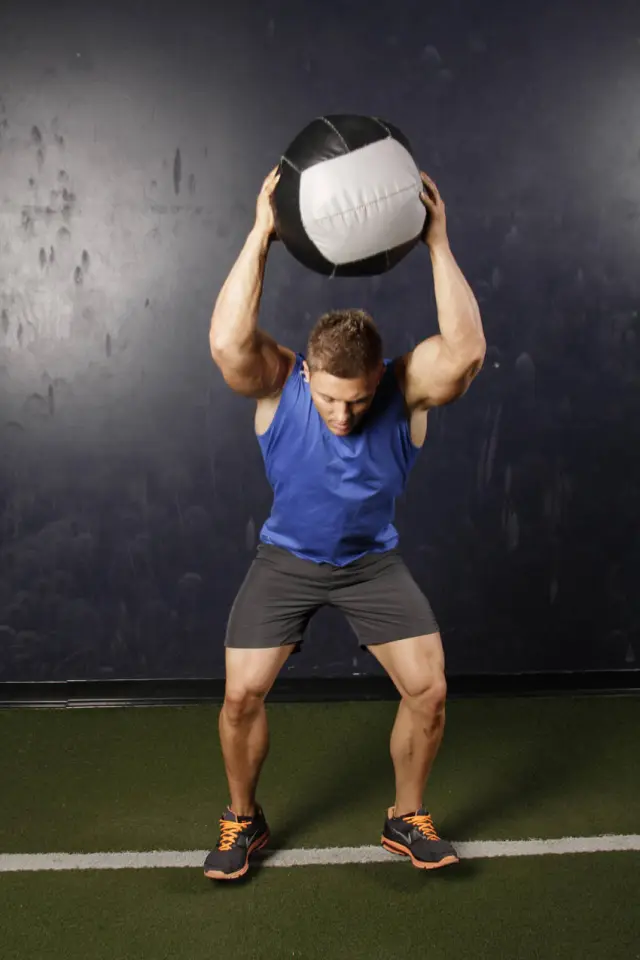 Medicine Ball Slam vs One-Arm Medicine Ball SlamThe Medicine Ball Slam throws the ball down from overhead with both hands, while the One-Arm Medicine Ball Slam uses one arm at a time.Medicine Ball Slam vs Medicine Ball Overhead ThrowThe Medicine Ball Slam drives the ball down into the floor, while the Medicine Ball Overhead Throw sends the ball forward from behind your head.
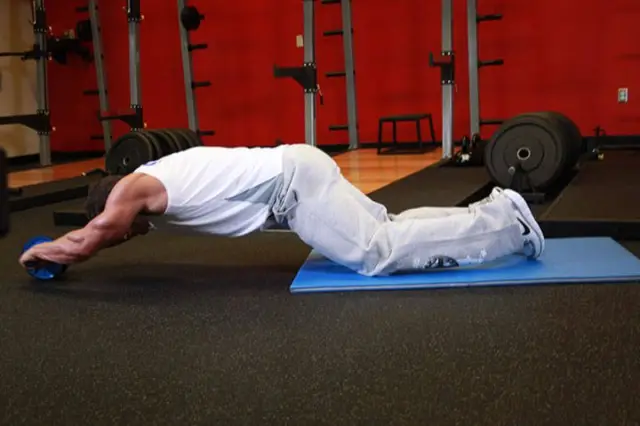 Ab Wheel Rollout vs PlankThe Ab Wheel Rollout moves your body forward and back, and the Plank holds you still in a straight line.Ab Wheel Rollout vs Barbell RolloutThe Ab Wheel Rollout uses a small wheel, and the Barbell Rollout uses a loaded barbell that you roll forward from your knees.
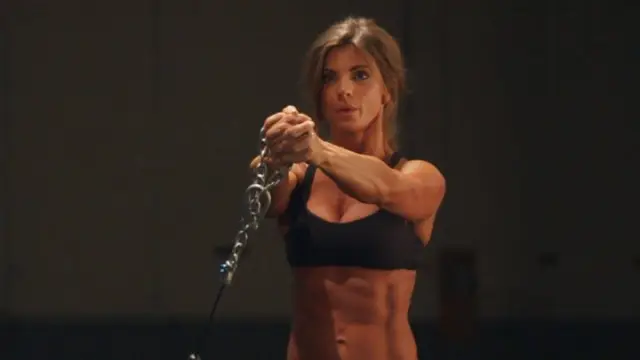 Pallof Press vs Cable WoodchopThe Pallof Press makes your core resist rotation while you stand still, and the Cable Woodchop rotates your torso through a diagonal path.
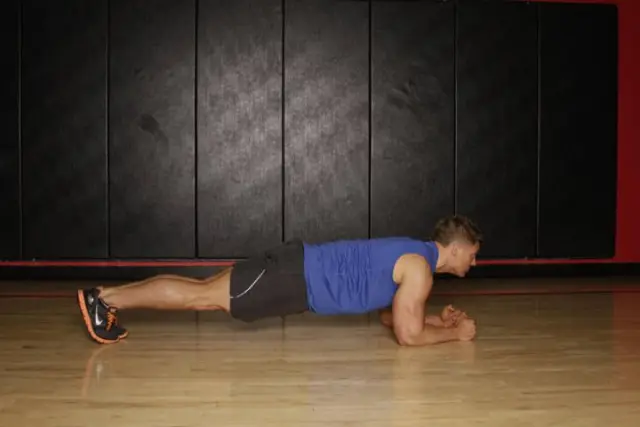 Plank vs Dead BugThe Plank holds your body in a straight line on your forearms, and the Dead Bug has you lower one leg at a time while your back stays flat.
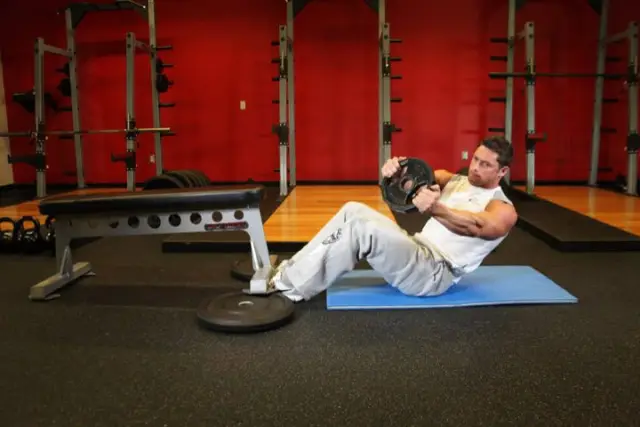 Russian Twist vs Cable Russian TwistThe Russian Twist uses your body weight or a weight in your hands, while the Cable Russian Twist rotates against a cable.Russian Twist vs Oblique CrunchThe Russian Twist rotates your torso from side to side while you sit, while the Oblique Crunch lifts and twists you toward the opposite knee on your back.
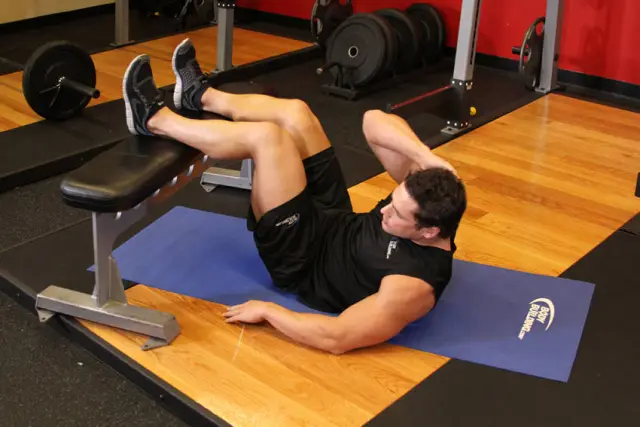 Oblique Crunch vs Decline Oblique CrunchThe Oblique Crunch is done on the floor, while the Decline Oblique Crunch is done on a decline bench with more range.
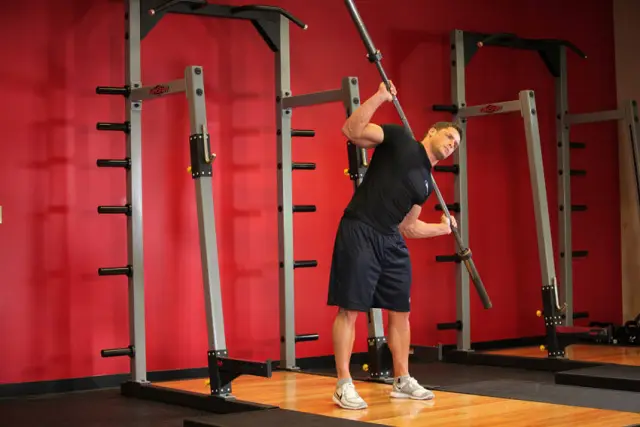 Barbell Side Bend vs Oblique CrunchThe Barbell Side Bend bends your torso sideways under a bar, while the Oblique Crunch twists and crunches you on the floor.Plank vs Side PlankThe Plank holds your whole trunk straight while you face the floor, while the Side Plank turns that hold to one side and loads your obliques.Ab Wheel Rollout vs Hanging Leg RaiseThe Ab Wheel Rollout makes you resist your hips sagging as you roll out, while the Hanging Leg Raise has you lift your legs from a bar.Crunch vs PlankThe Crunch curls your upper body up in short reps, while the Plank holds your trunk still against gravity.Cable Crunch vs Decline Sit-UpsThe Cable Crunch lets you add weight with a rope while you curl your trunk down, while the Decline Sit-Ups use your body weight on a slanted bench.Russian Twist vs Pallof PressThe Russian Twist turns your trunk from side to side, while the Pallof Press makes you stop the cable from turning you.Russian Twist vs Cable WoodchopThe Russian Twist turns your trunk while you sit, while the Cable Woodchop moves the cable diagonally across your body from a stand.Bicycle Crunch vs Russian TwistThe Bicycle Crunch pairs a twist with a leg drive while you lie on your back, while the Russian Twist turns your trunk in a seated position.Ab Wheel Rollout vs Dead BugThe Ab Wheel Rollout is a hard move where you roll out on your knees, while the Dead Bug has you move your arms and legs slowly on your back.Hanging Leg Raise vs Hanging PikeThe Hanging Leg Raise lifts your legs up to about hip height, while the Hanging Pike drives straight legs up toward the bar.Crunch vs Ab Crunch MachineThe Crunch uses your body weight on the floor, while the Ab Crunch Machine adds weight you can set with a pin.Cable Crunch vs Seated Crunch MachineThe Cable Crunch has you kneel and pull a rope down, while the Seated Crunch Machine fixes your body and moves a pad on your chest.Crunch vs Decline Sit-UpsThe Crunch curls your upper back off the floor, while the Decline Sit-Ups lift your whole trunk on a slanted bench.Cable Crunch vs Sit-UpsThe Cable Crunch loads your abs with a cable while you kneel, while the Sit-Ups use only your body weight on the floor.Plank vs Pallof PressThe Plank holds your trunk still against gravity, while the Pallof Press holds it still against a cable that pulls you sideways.Ab Wheel Rollout vs Cable CrunchThe Ab Wheel Rollout trains your abs as a brace while you roll out, while the Cable Crunch trains them as a curl against a weight.Barbell Side Bend vs Dumbbell Side BendThe Barbell Side Bend places the bar on your upper back, while the Dumbbell Side Bend holds a weight in one hand at your side.Medicine Ball Slam vs Sledgehammer SwingsThe Medicine Ball Slam throws a ball down from overhead, while the Sledgehammer Swings bring a heavy hammer down onto a tire.Plank vs Mountain ClimbersThe Plank holds your trunk still, while Mountain Climbers keep it still as your knees drive in and out.Bicycle Crunch vs Reverse CrunchThe Bicycle Crunch twists your trunk toward each knee, while the Reverse Crunch lifts your hips off the floor with your knees bent.
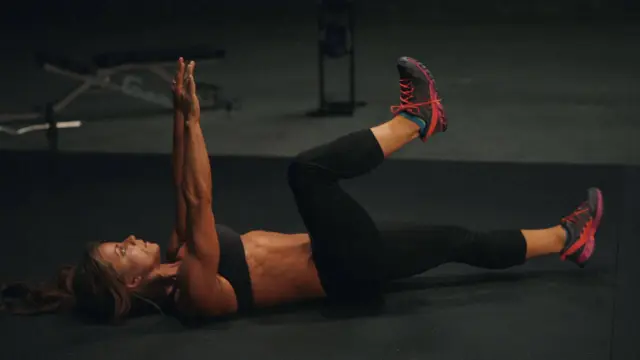 Dead Bug vs Bicycle CrunchThe Dead Bug keeps your lower back flat while your arms and legs move slowly, while the Bicycle Crunch lifts your shoulders and twists with each knee.
